How Willie Walsh and Tewolde Gebremariam intend to reshape India’s aviation landscape
Kamal Shah
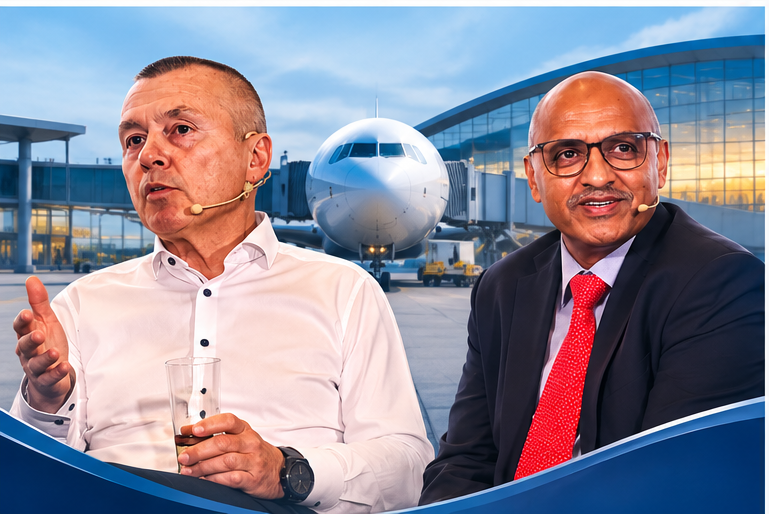
By bringing two internationally experienced aviation executives to the helm of its largest airlines, India has entered an interesting new phase in its civil aviation journey. Willie Walsh at IndiGo and Tewolde Gebremariam at Air India are not merely expected to manage two expanding airline businesses; they are being entrusted with ambitions that could redefine India’s position in global aviation. Their approaches are different, their challenges are unequal, but their shared objective is unmistakable: to make India a much more influential player in international air transport.
A leadership transition with global implications
India’s aviation sector is entering a defining decade. A fast-growing economy, rising incomes, an expanding middle class, increasing business travel and a young population are driving demand on a scale few markets can match. Yet India’s international aviation presence remains far smaller than its domestic potential suggests.
That gap makes the recent appointments of two globally recognised aviation leaders especially significant. On 3 August 2026, Willie Walsh took charge as IndiGo’s Chief Executive Officer, following his appointment by the airline’s board in March. With more than four decades of experience, Walsh has led Aer Lingus, British Airways and International Airlines Group, and served as Director General of the International Air Transport Association. Just two days later, Air India announced Tewolde Gebremariam as its Chief Executive Officer and Managing Director, succeeding Campbell Wilson. Tewolde led Ethiopian Airlines for 11 years, overseeing its rise as Africa’s largest airline group and strengthening Addis Ababa’s role as an international aviation hub. He later advised Delta Air Lines.
These appointments mark an important new chapter for India’s airlines, not simply because both executives come from abroad, but because of the experience they bring. Walsh understands the demands of competing across large international networks, while Tewolde has shown how an airline in an emerging economy can build global connections around its location. Together, their perspectives reflect a powerful shift: India is no longer just a market where international airlines compete for passengers. It has the potential to become a launchpad for global aviation networks. Their interviews at the Aviation India Summit 2026 offer an exciting glimpse of how they plan to turn that ambition into reality.
Two different airlines, two different transformation agendas
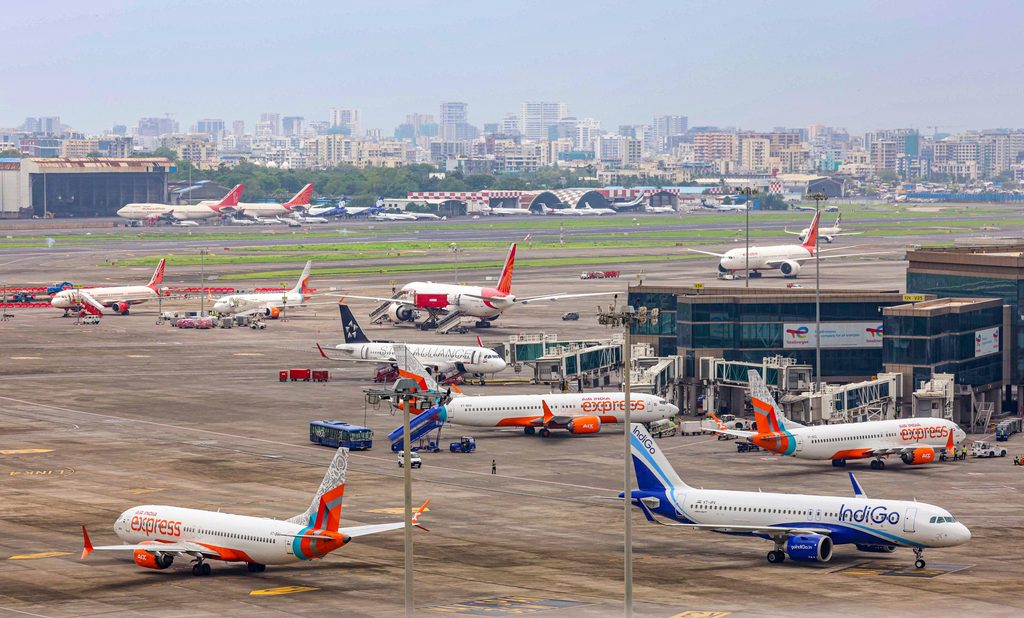
Although both executives are working to expand India’s presence in international aviation, they are starting from very different positions and that contrast makes the industry’s next chapter especially compelling. IndiGo is already India’s dominant domestic airline, supported by a highly efficient operating model, an extensive network and a commanding share of the home market. Its next great test is to turn that domestic strength into international relevance while preserving the cost discipline that has powered its success.
Air India, meanwhile, is pursuing a far broader transformation: rebuilding its international competitiveness, improving operational reliability, winning back customer confidence, streamlining costs and creating a sustainable financial foundation, all while making major investments in aircraft and infrastructure. The scale of the difference is clear in the numbers: government data put IndiGo’s domestic market share at approximately 64 per cent in 2025, compared with 27 per cent for the Air India Group. Together, the two airlines accounted for around 91 per cent of India’s domestic aviation market. Their challenge, then, is about much more than carrying more passengers. It is about how two very different strategies can reshape India’s aviation landscape, intensify competition and elevate the country’s standing on the global stage.
Willie Walsh: Taking IndiGo from domestic dominance to international ambition
For Willie Walsh, IndiGo represents a chance to be part of an exceptional aviation growth story. After observing India’s aviation sector for around three decades, he sees a rare combination: IndiGo’s operational strengths and enormous untapped potential for international travel. One comparison he shared was especially striking: India’s annual international passenger traffic was lower than that of a single major European airport. His point was clear; India has significant room to expand its global connections.
Walsh wants IndiGo to do more than fly from Indian cities to established overseas destinations. His ambition is to build a network that connects India more effectively with global markets, business centres and cultures, a significant shift for an airline known for its domestic scale, efficient operations and competitive costs.
The Airbus A321XLR is central to this next phase. Its extended range could let IndiGo serve longer routes without immediately taking on the cost and complexity of a wide-body fleet, while preserving the flexibility of narrow-body operations. Walsh sees the aircraft as a valuable tool for opening direct routes that have often depended on connections through European, Middle Eastern or Southeast Asian hubs.
At the Aviation India Summit, Walsh outlined a plan to grow IndiGo’s A321XLR fleet to 14 aircraft by December 2027. In November, he said four were already in service, with another expected before the end of 2026. Beyond adding aircraft, the strategy could help IndiGo test new city pairs, increase frequencies and create more direct links from India. For passengers, that could mean fewer stops through foreign hubs and more convenient ways to reach the world.
The A350 & IndiGo’s transition to long-haul aviation
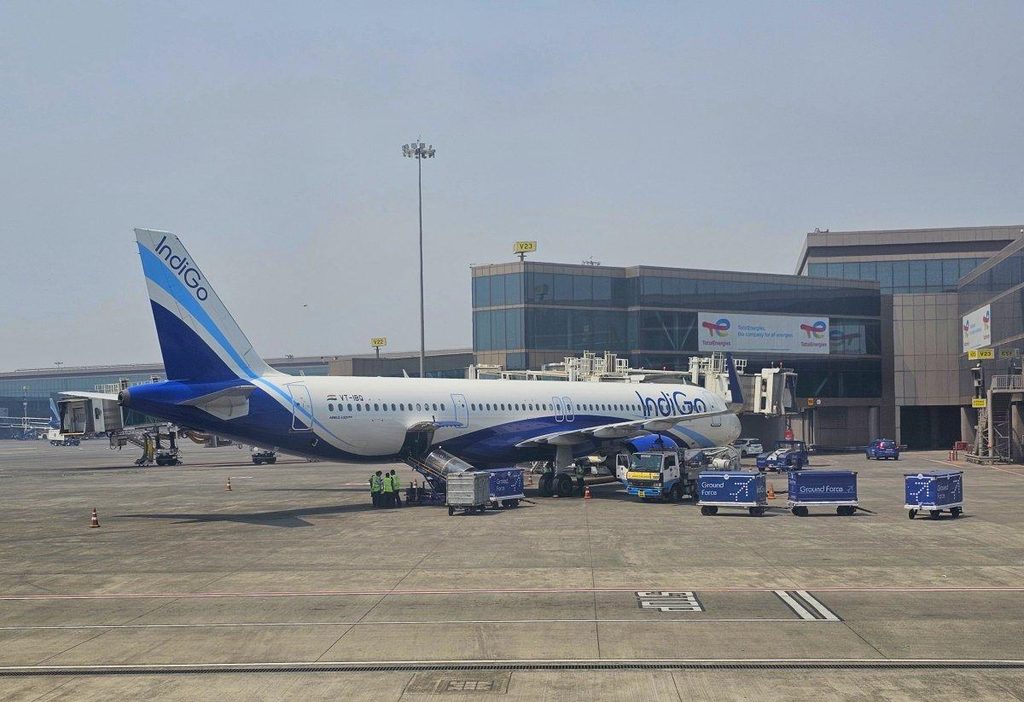
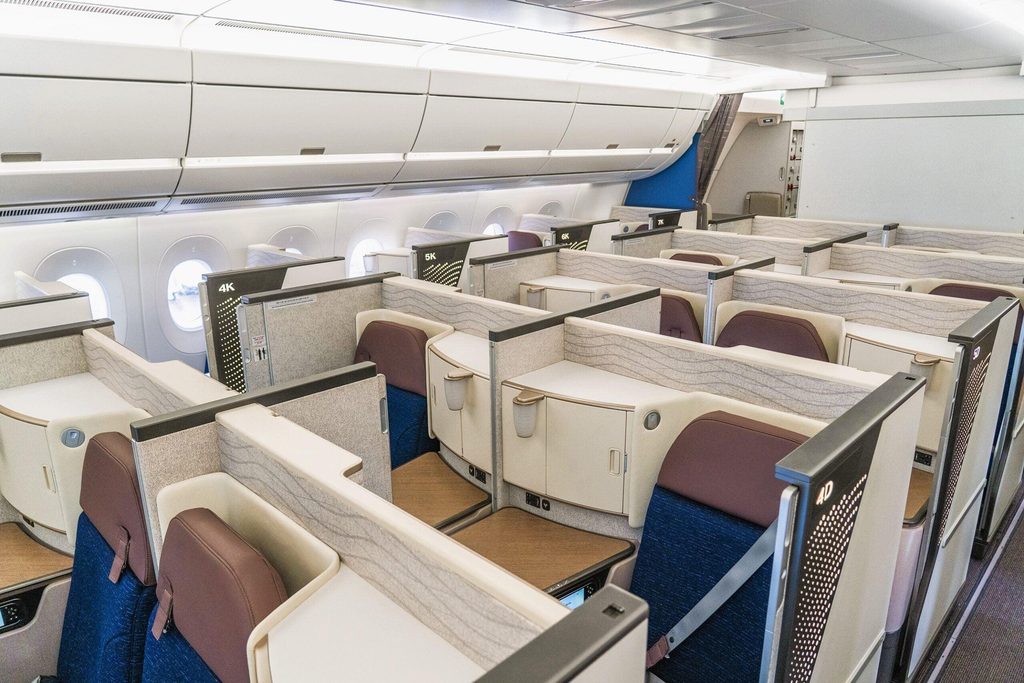
The most ambitious phase of Pieter Elbers’s strategy for IndiGo will take shape with the arrival of the Airbus A350-900. Deliveries are expected to begin in the second quarter of 2028, with 60 aircraft currently on order. The first A350s are expected to offer three cabin classes—business, premium economy and economy, marking a significant step beyond the airline’s established short-haul model. This is more than a fleet expansion: it signals IndiGo’s intention to compete in a new and demanding segment of the global aviation market.
Operating wide-body aircraft on long-haul routes will require far more than acquiring new planes. IndiGo will need to build sophisticated revenue-management systems, strengthen its premium passenger services and develop international sales networks and global distribution partnerships. It will also have to master the complex demands of long-range crew planning, engineering support and connecting itineraries. Elbers’s experience at British Airways and IAG could prove invaluable. His background in international airline economics, alliances, network planning and competitive positioning gives IndiGo access to considerable global expertise at a crucial moment.
The central challenge will be to develop these new capabilities without losing the efficiency and discipline that have defined IndiGo’s low-cost operation. The A350 programme should therefore be seen not simply as a major aircraft purchase, but as an organisational transformation. IndiGo must create a culture and operating model suited to long-haul travel while preserving the cost-conscious approach that has driven its success in India. The ambition is considerable: Elbers has said he wants IndiGo’s fleet to reach approximately 600 aircraft by 2030, up from more than 440 reported in November 2026. If achieved, that scale would make IndiGo one of the world’s largest airline operations.
International partnerships & the hub strategy
IndiGo’s international ambitions will depend on more than aircraft. In a summit interview, Elbers expressed openness to commercial partnerships, including codeshares, joint ventures and revenue or profit-sharing arrangements. Rather than prioritising overseas investment from other airlines, IndiGo is focused on partnerships that can extend its commercial reach. It is a practical strategy: the airline’s extensive domestic network can feed international services, while partners can connect passengers to destinations that would not yet support standalone IndiGo flights.
The broader goal is to make Indian cities effective gateways for international travellers, not merely the starting or ending points of point-to-point journeys. Achieving that vision will require a carefully designed network and several efficient hubs across the country, rather than dependence on a single airport. Navi Mumbai International Airport could play an especially important role, providing capacity for IndiGo’s growth in the Mumbai metropolitan region and easing pressure on existing infrastructure.
Yet expansion also brings a crucial question: whether the cost of new infrastructure delivers genuine value. Elbers has stressed that airport investment should be commercially justified and should lead to better capacity and stronger outcomes for airlines and passengers. That concern matters across India’s aviation ecosystem. Rising airport charges, landing fees and passenger-related costs can quickly affect airline economics and may ultimately weaken the affordability that has helped bring more people into the skies. Policymakers and airport operators will therefore need to strike a careful balance: building the modern infrastructure India needs while maintaining the competitive cost environment that supports continued growth in air travel.
Protecting the IndiGo business model
Walsh’s most important principle may be that international growth must never come at the expense of IndiGo’s core business. He has highlighted the pressure from higher fuel prices, unusually wide refining margins and currency movements, underscoring why airlines need to review costs continually, especially in narrow-body operations. The caution is well founded: long-haul flying requires substantial investment and brings greater exposure to fuel and foreign-exchange volatility, geopolitical shifts and intense competition.
IndiGo’s short-lived wide-body trial with leased Boeing 787s offers a timely reminder. The airline ended those operations in October 2026, moving its Mumbai–Amsterdam service to the A321XLR and suspending London Heathrow flights until its own A350s arrive. The experience reinforces a clear lesson: international expansion must be commercially sustainable, not simply appealing as a strategic ambition. Walsh’s exciting challenge is to build an airline that can compete on the global stage while preserving the financial discipline behind IndiGo’s domestic success.
Tewolde Gebremariam: Restoring the Maharaja’s global stature
Tewolde Gebremariam faces a very different challenge from Walsh: rather than taking an already successful domestic airline into a new international phase, he must help restore Air India as a globally competitive carrier. His appointment brings the airline the experience of an executive who has already overseen an impressive transformation in an emerging economy. During his 11 years at Ethiopian Airlines, Tewolde helped turn Addis Ababa into a major international transit hub, expand the fleet and global network, and invest in the infrastructure needed to support long-term growth. One of the clearest lessons from that experience was the power of patient, strategic planning. Speaking at the Aviation India Summit, he described how Ethiopian Airlines followed a 15-year plan that enabled steady investment in fleet modernisation, infrastructure, employee training and international market development. Tewolde sees promising parallels between Ethiopia’s opportunities and India’s considerable advantages: a vast domestic market, a strategic position between major world regions, a large diaspora and a rapidly expanding economy. Together, these strengths give India an exciting foundation for international aviation growth, but Air India must first overcome serious financial and operational challenges.
Tewolde has made clear that Air India cannot focus solely on expansion. His management philosophy balances two essential priorities: keeping a firm eye on immediate profitability while also building towards the airline’s future over the next 15 to 20 years. That balance is vital because a strong international network cannot be sustained without dependable operations and healthy finances. New aircraft, premium cabins and international routes must go hand in hand with better aircraft utilisation, reliable service, sharper revenue management and disciplined cost control. Among the priorities he has identified are creating multifunctional cost-management teams across the business, improving the balance between domestic and international sales, adjusting routes and frequencies as conditions change, developing synergies between Air India and Air India Express, and strengthening both commercial and operational capabilities. He has also highlighted the need to respond to the closure of Pakistani airspace, which has disproportionately affected Air India’s westbound flights by forcing them onto longer routes. For an airline competing with carriers that benefit from Gulf and other international hubs, those extra distances can mean higher fuel costs, longer crew duty periods and less productive aircraft. Tewolde’s task is therefore not simply to grow Air India’s network, but to build a resilient, efficient airline that can turn India’s remarkable potential into lasting global competitiveness, even as geopolitical realities reshape the routes on which its success depends.
A Two-Brand Strategy: Premium Air India & Value-Driven Air India Express
A key part of Tewolde’s vision is to give Air India and Air India Express clearly distinct roles. Air India is being positioned as a premium full-service airline, with greater emphasis on long-haul international travel and a more refined passenger experience. Air India Express, by contrast, will focus on value-conscious travellers, particularly on domestic and short-haul international routes. It’s a sensible strategy for a market as diverse as India, where passengers range from budget-minded leisure travellers and students to business customers and high-spending international flyers.
For Air India, moving upmarket will take more than refreshed cabins and new aircraft. The airline will need to deliver dependable operations, smoother ground handling, better catering, stronger digital services and attentive customer care from booking through arrival. In premium travel, every part of the journey matters, and consistent delivery will be essential to making the brand promise real.
Building an Indian Global Aviation Hub
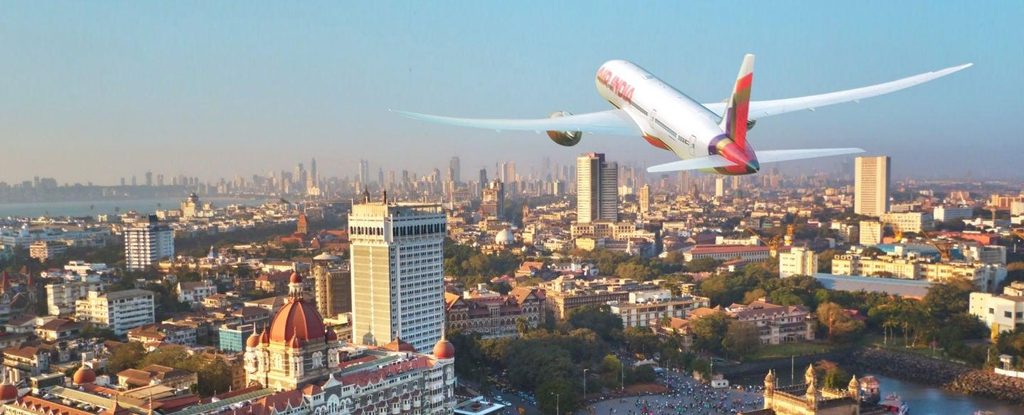
Perhaps the boldest element of Tewolde’s vision is the ambition to make India a global aviation hub, competing with established centres in the Middle East. His experience at Ethiopian Airlines offers a compelling reference: Addis Ababa grew into a major connecting point linking Africa with Asia, Europe and the Americas, supported by investment in aircraft, airport infrastructure, engineering, training and cargo.
India’s scale and complexity call for a different model, but the opportunity is substantial. Tewolde has discussed developing multiple hubs, including Mumbai and Bengaluru, and increasing the share of Air India passengers connecting between international destinations. He has put that share at around 10 per cent today, with a long-term ambition of reaching 40–50 per cent. Bengaluru has also been mentioned as a potential third hub, alongside the need for more wide-body aircraft.
The vision is exciting: rather than mainly carrying passengers to and from India, Air India could attract travellers connecting between destinations worldwide. But aircraft alone won’t create a successful hub. That will require coordinated schedules, quick and predictable connections, efficient airport processes, competitive costs, broad route coverage and reliable baggage transfers.
Fleet expansion & the international recovery
Air India’s fleet strategy is a vital engine of its turnaround and international ambitions. Since Tata acquired the airline in 2022, a major renewal programme has brought commitments for Airbus A350s and Boeing 787-9s and 777Xs, alongside a substantial narrow-body fleet. A November 2026 Aviation Week report said Air India had received six A350-900s and its first A350-1000, with more deliveries expected, while discussions on additional wide-body orders with Airbus and Boeing were under way. Tewolde’s case for further wide-body capacity reflects the demands of routes linking India with Europe and North America, where range, operating costs and passenger comfort shape an airline’s competitiveness. But growth depends on much more than aircraft: maintenance, engineering, pilot and cabin-crew training, spare parts and technical support must expand in step. Drawing on his experience at Ethiopian Airlines, Tewolde understands that a strong aviation ecosystem is essential. Air India’s investments in maintenance infrastructure and training, including at Bengaluru, will be especially important as it works to improve dispatch reliability, aircraft availability and overall performance.
The broader Indian aviation opportunity: Beyond the two airlines
India’s aviation sector is entering an exciting but demanding phase. Scheduled airlines carried about 165.5 million domestic passengers in FY2024–25, while international traffic reached 74.14 million, up 11 per cent year on year. Yet the DGCA’s September 2026 report shows domestic traffic was slightly lower during January–September than in the same period of 2025, underscoring that long-term growth does not guarantee uninterrupted expansion.

For Walsh and Tewolde’s ambitions to succeed, India will need airport infrastructure capable of handling more passengers and efficient connections, including new hubs such as Navi Mumbai, alongside stronger air traffic management, ground handling, cargo facilities, and multimodal links. The country must also build a broader aviation ecosystem, expanding MRO, pilot training, engineering, component manufacturing and aviation technology, areas where Air India’s experience and IndiGo’s scale could help create major opportunities. Finally, Indian carriers need a more competitive operating environment to overcome high fuel costs, taxation, airport charges, currency exposure and the network advantages of established global airlines. With effective regulatory support and sustained investment, India can move beyond simply expanding its fleet and strengthen its airlines’ standing in international aviation.
Two global leaders, one shared challenge
The appointments of Willie Walsh and Tewolde Gebremariam highlight the growing importance of international leadership in India’s aviation sector, but not as a simple endorsement of foreign executives over domestic talent. Instead, they reflect the global scale of modern aviation and the specialised experience needed to run complex airline operations. Walsh brings a sharp commercial perspective shaped by British Airways, IAG and IATA; at IndiGo, his key challenge will be expanding into long-haul international travel without weakening the efficient model behind the airline’s success. Tewolde, known for developing Ethiopian Airlines’ network and hub, must adapt that experience to India’s distinct market and competitive landscape.
Their challenges also differ because their airlines operate in very different circumstances. IndiGo is a publicly listed carrier with a dominant domestic position, while Air India—backed by the Tata Group—is undertaking a sweeping transformation amid substantial losses. Aviation Week reported that Air India’s FY2025–26 losses reached about US$2.3 billion, making financial discipline especially urgent. The airlines also face contrasting competitive pressures: IndiGo must grow responsibly while allowing room for rivals, whereas Air India must win back market share, particularly on international routes. With the two groups together accounting for roughly 91 per cent of India’s domestic market, according to a March 2026 government response, their leadership choices matter not only for the airlines themselves but also for competition and the health of India’s wider aviation ecosystem.
The road ahead: From an emerging aviation market to a global aviation power
India’s aviation story is entering an exciting new phase, moving beyond rapid domestic growth toward a bigger global role. The next challenge is to connect the country’s economic centres with the world, attract international transit passengers, strengthen its airlines and build infrastructure capable of supporting global operations.
Willie Walsh and Tewolde Gebremariam bring two compelling visions to this ambition. Walsh aims to build on IndiGo’s domestic success and turn it into a formidable international airline. Tewolde seeks to restore Air India’s standing as a global carrier and make India a more influential hub in international aviation. Their experience beyond India offers valuable perspective, but success will depend on adapting global ideas to the country’s distinctive geography, regulations, infrastructure challenges and price-sensitive market.
Big aircraft orders, new hubs, premium cabins and international partnerships can create momentum, but ambition must be matched by consistent execution. Operational reliability, customer confidence, financial discipline and genuine value will determine whether growth lasts. If IndiGo and Air India’s rivalry drives better service, stronger connections and investment across the aviation ecosystem, the whole industry stands to gain. Ultimately, their leadership will be judged not by fleet size, but by how successfully they turn India’s global aviation potential into sustainable commercial success.