

By Bikram Vohra

The brief, glancing contact between the wingtips of an Air India Airbus A320neo and an IndiGo Airbus A320 at Mumbai’s Chhatrapati Shivaji Maharaj International Airport on the evening of February 3, 2026, constitutes a critical aviation safety event.
The Mumbai wingtip event is not an anomaly in India’s recent aviation landscape. It occurs amid heightened scrutiny of ground safety and operational incidents. The DGCA is currently examining several other notable events, and action must go beyond the band-aid stage.
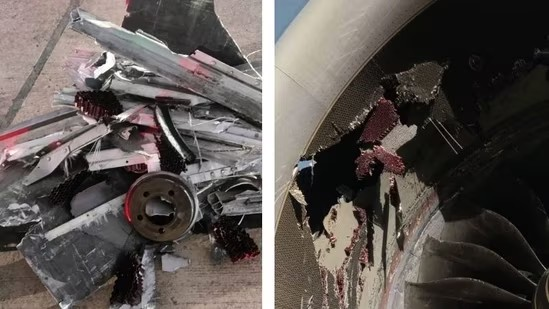
In January 2026, an Air India A350 had a terrifying close call when one of its engines ingested a cargo container while taxiing at Delhi — a stark reminder that fast growth brings growing pains. India’s aviation sector is booming, airlines are snapping up new jets, launching routes, and pushing schedules to keep up with demand. That kind of expansion increases pressure on airports, ground crews, and air traffic controllers, strains already limited infrastructure, and makes ramp and taxiway operations denser and more error-prone. Incidents like the A350 engine strike aren’t just freak accidents; they point to systemic strain that needs coordinated fixes across staffing, training, equipment, and procedures before the pace of growth outruns safety margins.
Ground collisions, or “ramp incidents,” are a persistent and costly threat to global aviation safety. While often less dramatic than in-flight emergencies, they are far more frequent. The International Air Transport Association (IATA) consistently highlights Ground Damage as a major safety focus.
Taxiways and aprons packed shoulder-to-shoulder leave almost no room for error, so a tiny misread between pilots and controllers or a crossed signal with ground handlers can turn into an instant, serious problem; taxiing—despite being a critical phase of flight—often feels routine and low-workload, which breeds small lapses in vigilance right when aircraft are threading through narrow gaps, passing service vehicles, and jockeying for position. Add in modern airliners’ massive blind spots—those areas behind and off to the sides where pilots simply cannot see their own wingtips—and you’ve got a recipe for close calls unless everyone stays relentlessly aware and communicative. On top of that, the congestion issue takes on a bigger dimension as we race to confirm India’s role as the deciding factor in global aviation’s trajectory: ambitions to scale capacity and speed up throughput can’t, mustn’t, come at the expense of the basic, unforgiving realities of ground operations and safety.
Global air traffic is experiencing a sustained and rapid recovery, with passenger numbers projected to double over the next two decades. This surge is testing the limits of airport infrastructure and airspace capacity worldwide, leading to increased delays, operational inefficiencies, and environmental strain.
The primary driver is unprecedented demand. Global passenger traffic is expected to reach 9.4 billion in 2024 and forecasts suggest it could double from pre-pandemic levels by 2045. This growth collides with finite physical and airspace resources. Congestion manifests as longer taxi times, ground-hold delays, inefficient flight paths, and passenger bottlenecks at terminals. The consequences are significant: increased fuel burn and carbon emissions, higher operational costs for airlines, reduced schedule reliability, and a degraded passenger experience.
Old practices are just that. Old and dated.
The integration of artificial intelligence and big data analytics is becoming a force multiplier. AI-powered predictive tools and Digital Twin simulations of airports allow operators to model traffic flows, predict bottlenecks, and test mitigation strategies in a virtual environment before implementing them in real operations. These systems can optimize gate assignments, baggage routing, and security queue management in real-time, squeezing maximum efficiency from existing assets
Managing airport traffic density is not solely about building more infrastructure; it is about intelligently optimizing the entire aviation ecosystem. The path forward requires continuous investment in modern ATM systems, universal adoption of collaborative digital platforms (A-CDM), and supportive policy frameworks that incentivize efficiency. The industry’s ability to scale sustainably depends on this integrated, technology-centric approach to transforming both the passenger journey on the ground and the aircraft’s path in the sky. We need to ensure the ground systems keep pace with growth across all categories. Otherwise, expect an increase in negative incidents.
Bikram Vohra is the Consulting Editor of Indian Aerospace & Defence.

