
Chaitali Bag
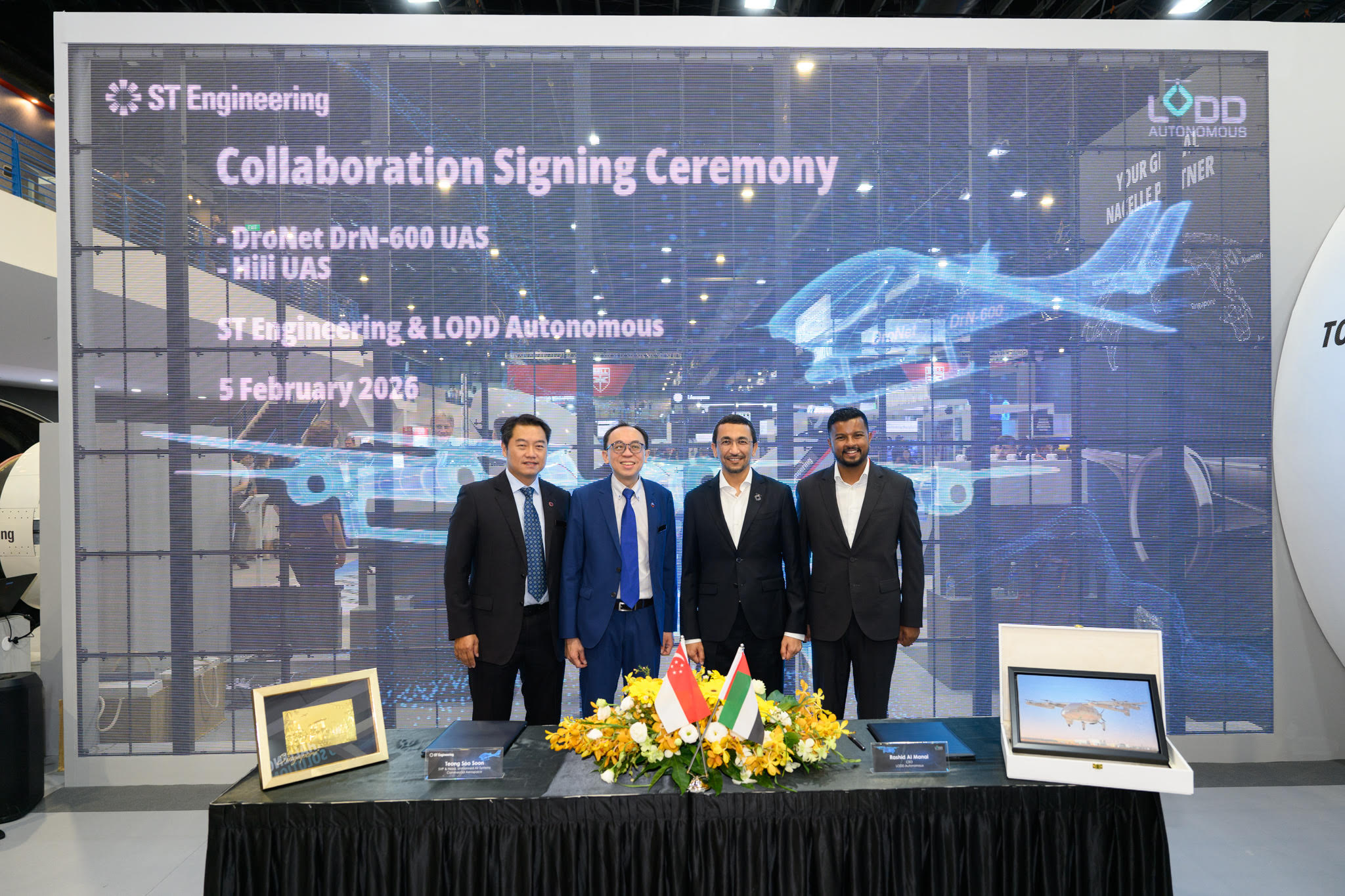
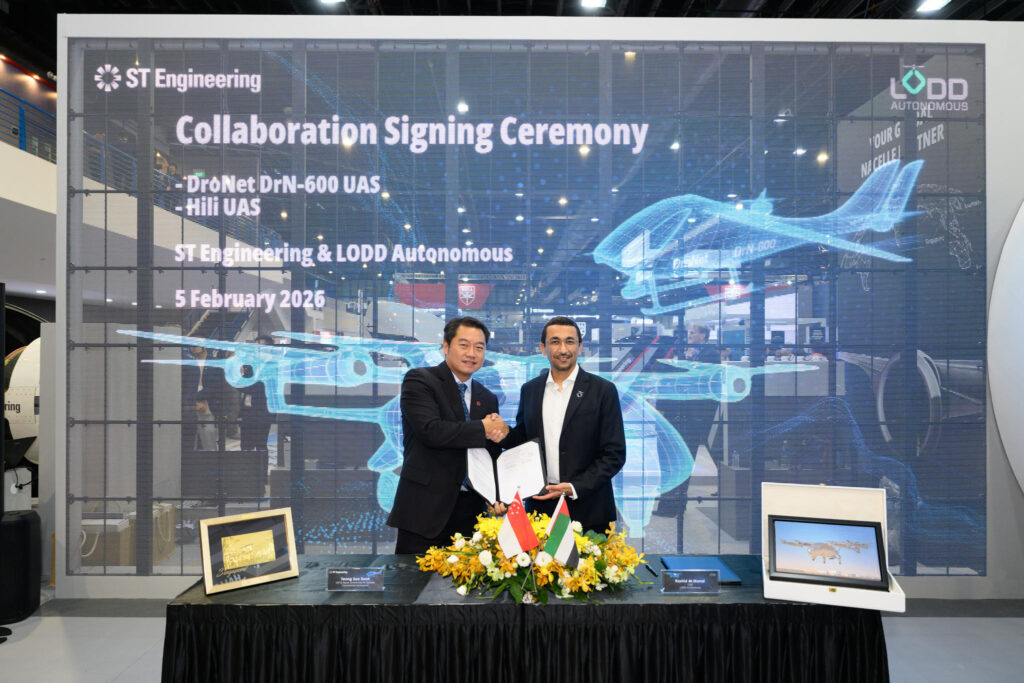
The recent strategic collaboration between LODD Autonomous and ST Engineering marks a significant milestone in the global evolution of autonomous air-cargo operations. Signed by Rashid Matar Al Manai, Chief Executive Officer of LODD Autonomous, and Teong Soo Soon, Senior Vice President and Head of Unmanned Air Systems at ST Engineering, the agreement commits both organizations to export the Hili aircraft—LODD’s flagship unmanned aerial vehicle (UAV)—to Asia‑Pacific markets. Beyond the immediate commercial and operational implications, the partnership signals growing confidence in the United Arab Emirates as a source of advanced aviation technologies and reinforces the commercial viability of autonomous middle‑mile logistics as a transformative element in regional and global supply chains.
The logistics sector is experiencing disruptive change driven by rising e‑commerce demand, labor constraints, sustainability imperatives, and the need for faster, more reliable middle‑mile solutions. Autonomous air systems are uniquely positioned to address many of these pressures: they offer speed and route flexibility, can reduce reliance on congested ground infrastructure, and enable service to underserved or geographically challenging areas. For operators and policymakers in the Asia‑Pacific region—home to some of the world’s most dynamic economies, archipelagic geographies, and rapidly urbanizing populations—the promise of efficient, scalable air‑cargo platforms is especially compelling.
LODD Autonomous’s Hili platform directly targets this market opportunity. Engineered in the UAE to carry payloads up to 250 kilograms over ranges up to 700 kilometres, Hili occupies a practical performance envelope for middle‑mile cargo—bridging the gap between last‑mile drones and conventional manned cargo aircraft. Partnering with ST Engineering, a major global systems integrator with deep regional presence and experience in unmanned air systems, brings complementary strengths: ST Engineering’s market access, regulatory experience, and systems engineering capabilities can accelerate Hili’s commercial deployment across Asia‑Pacific, while LODD contributes a home‑grown, technically capable airframe and operational concept.
Hili’s specifications—substantial payload capacity and long range—enable a diverse set of mission profiles, from inter‑island logistics and intra‑regional express freight to time‑sensitive supplies for healthcare and critical infrastructure. Autonomous operation reduces the need for pilot resources and enables deployment in remote or complex environments where skilled aircrew may be scarce.
From a systems perspective, successful deployment requires more than an airframe: it calls for robust command‑and‑control architectures, reliable detect‑and‑avoid capabilities, secure communications, and integrated logistics management systems. ST Engineering’s experience in unmanned systems and systems integration mitigates many of these technical and certification challenges. Jointly, the partners can develop tailored service models—such as airborne cargo-as-a-service, regional route networks, or hybrid manned‑unmanned logistics corridors—that align with local regulatory frameworks and commercial needs.
The operationalization of autonomous cargo UAVs in the Asia‑Pacific will be governed by a mosaic of national regulations, airspace management regimes, and safety standards. Progress to date varies widely across the region: some jurisdictions have advanced regulatory roadmaps for unmanned traffic management (UTM) and beyond‑visual‑line‑of‑sight (BVLOS) operations, while others remain nascent. A successful rollout of Hili will necessitate proactive engagement with aviation authorities, demonstration of safety cases, and participation in local standards development. ST Engineering’s established regional footprint and regulatory experience will be instrumental in navigating these processes and securing the necessary type certifications, airworthiness approvals, and operational permits.
The collaboration offers several clear commercial advantages for both partners and regional customers. For logistics providers and shippers, autonomous aircraft like Hili can reduce transit times, lower operational costs for specific corridor types, and enable new service propositions—especially where ground infrastructure is limited or congested. For regional economies, the partnership promises technology transfer, skills development, and potential investment in supporting infrastructure, such as vertiports, charging or refuelling facilities, and digitized cargo-handling systems.
For LODD Autonomous, entering the Asia‑Pacific market with a strategic partner accelerates market penetration and validates its product in diverse operational contexts. For ST Engineering, incorporating Hili into its portfolio expands its unmanned air logistics offerings and leverages Hili’s aftermarket, integration, and support capabilities. Collectively, the collaboration can stimulate a nascent ecosystem of suppliers, operators, and service providers around autonomous cargo operations.
Strategic & Geopolitical Significance
This agreement also carries broader strategic resonance. It underscores the UAE’s emergence as an exporter of high‑end aerospace innovation and reflects a maturing domestic industrial base capable of developing competitive autonomous platforms. As countries in the Asia‑Pacific seek diversified technology partners, collaboration with UAE‑based innovators presents an alternative to traditional suppliers, potentially reshaping supply chains and partnerships in the aerospace sector.
Moreover, the partnership aligns with national priorities in both jurisdictions: the UAE’s focus on advanced manufacturing and technology export, and Asia‑Pacific nations’ ambitions to modernize logistics and bolster resilience. By demonstrating operational capability and safety, the collaboration could influence regional standards and encourage further international cooperation on unmanned air systems.
Sustainability & Long‑Term Prospects
LODD’s business model emphasizes sustainability, scalability, and operational efficiency—attributes that resonate in a global era of decarbonization and resource optimization. Autonomous electric or hybrid propulsion, optimized routing, and fleet-level efficiencies can reduce per-tonne-mile emissions relative to traditional road or short‑haul manned air-freight modes, particularly in constrained geographies. As battery and hybrid technologies mature, payload and range trade-offs will continue to improve, expanding the scope of viable missions for platforms like Hili.
In the longer term, the successful deployment of Hili could catalyze ancillary developments, including integrated logistics platforms combining air and ground assets, automated cargo-handling systems, and new regulatory frameworks for routine autonomous cargo flights. The commercial success of such ventures will hinge on demonstrable reliability, competitive unit economics, and seamless integration with existing supply chains.
The LODD–ST Engineering collaboration is well-positioned to address these items. ST Engineering’s experience with large‑scale deployments and systems assurance complements LODD’s platform innovation, enabling rigorous testing regimes, phased operational rollouts, and the establishment of maintenance and training infrastructures across partner markets.
The strategic collaboration between LODD Autonomous and ST Engineering to export the Hili aircraft to Asia‑Pacific countries represents a significant step in the commercialization of autonomous air‑cargo systems. It combines innovative UAE‑designed aerospace technology with a seasoned regional integrator to accelerate market entry, address regulatory and technical challenges, and unlock new logistics capabilities across a diverse and fast‑growing region. If executed effectively, the partnership could not only deliver practical commercial benefits—improved speed, reach, and resilience of cargo movements—but also reinforce the UAE’s role as a global exporter of next‑generation aviation technologies and contribute to the maturation of a sustainable, scalable air mobility ecosystem.

