
By Vijay Grover

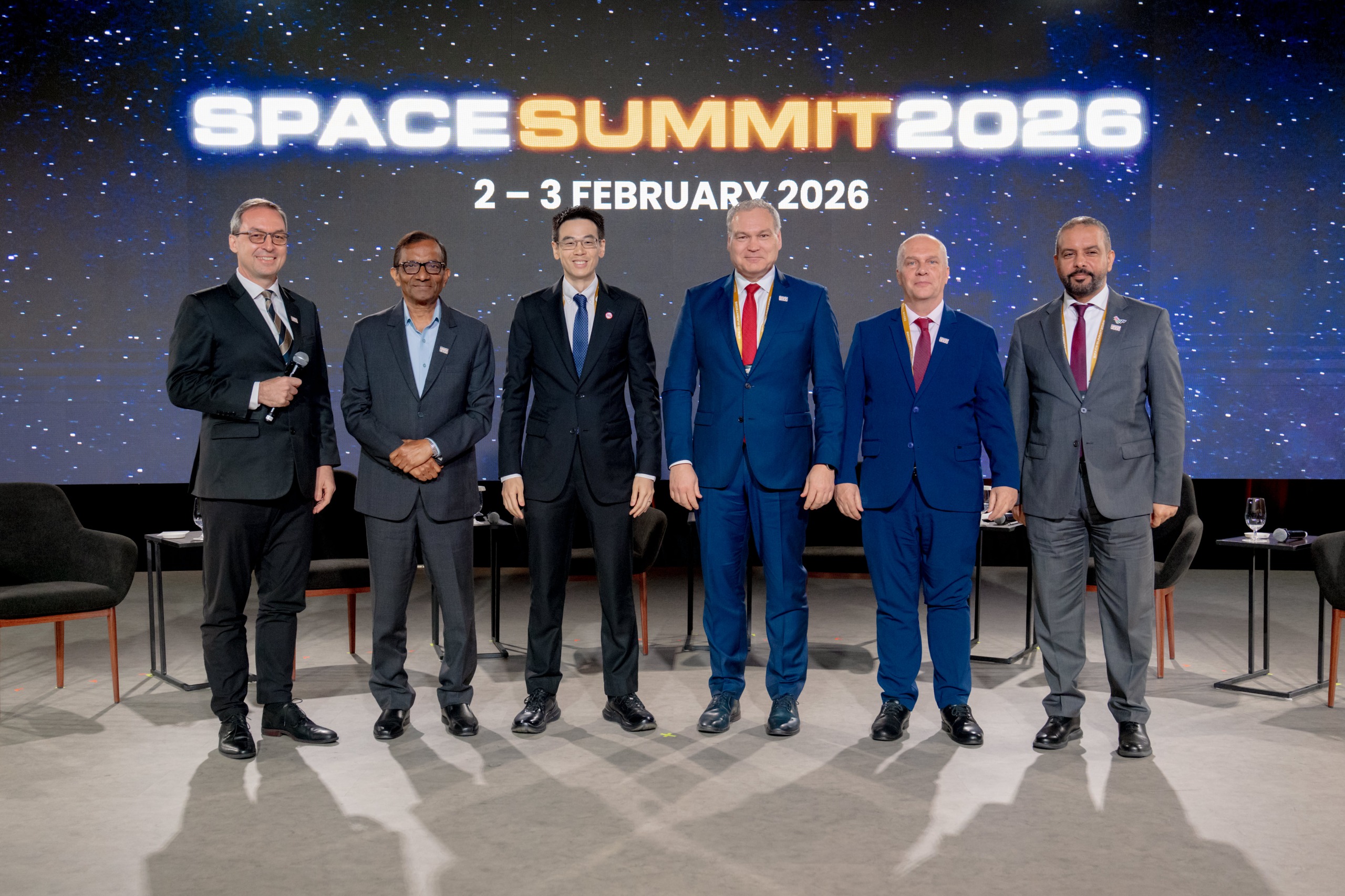
Space Summit 2026 in Singapore closed its doors to widespread acclaim after two days of vigorous, forward-looking dialogue that brought together a remarkably diverse cross-section of the global space community. Government leaders, national space agency delegations, established industry executives, emerging commercial teams, researchers and investors converged to interrogate the priorities shaping an increasingly interconnected space ecosystem. With more than 60 speakers representing 20 national space agencies and delegations from 43 countries and regions, the Summit made plain the growing centrality of space technologies to economic development, national resilience, sustainability and the fabric of everyday life.
An energetic sense of purpose infused the event. Participants included senior leadership from government ministries, space agencies, legacy aerospace firms and nimble startups, enabling exchanges that bridged policy, commercial strategy and technology development. Session formats intentionally encouraged cross-sector dialogue: panels mixed policymakers with technologists, investors with researchers, and regional leaders with international partners. That structure reflected a clear recognition — shared by speakers and delegates alike — that contemporary space activity is no longer siloed but deeply interdependent, and that progress depends on alignment across many actors and domains.
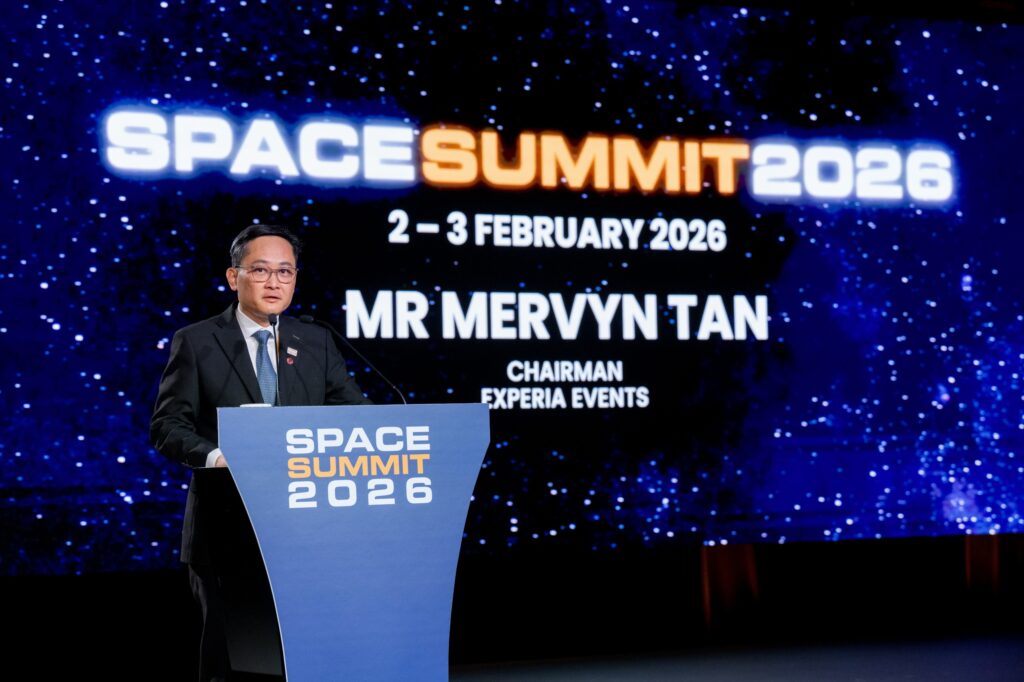
Why alignment mattered was underscored repeatedly. “Space systems are now fundamental to how economies function and societies operate,” observed Leck Chet Lam, Managing Director of Experia Events. The Summit’s conversations, he emphasized, were practical and problem-oriented: how can governments, industry and partners align approaches as space activity scales, and as space capabilities increasingly intersect with critical infrastructure, environmental sustainability and national security?
Several major themes emerged over the course of plenaries and panel discussions, each pointing to the urgent need for coordinated responses across policy, technology and partnerships.
Asia-Pacific’s rising prominence
One of the Summit’s most striking threads was the recognition of the Asia-Pacific region’s rapid rise in the global space economy. What only a few years ago looked like experimental activity is maturing into an operational capability that addresses pressing regional needs. Speakers across panels highlighted the importance of clear national policies that attract investment, scalable supply chains that support manufacturing and launch, and robust regional and international partnerships that can deepen capability while spreading risk. Private capital is following credible policy and market signals; therefore, coherent regulatory frameworks and transparent procurement strategies are crucial to sustain momentum and realise the region’s potential as a hub of innovation and production.
Coordination across national programmes & stakeholders
Closely related to regional growth was the palpable appetite for stronger coordination. Panellists argued that without alignment across national priorities, industry goals, and research agendas, the sector risks duplication of effort, fragmented standards, and inefficiencies that slow progress. Shared technical standards, interoperable systems, and long-term partnership models were presented as essential mechanisms to harmonize efforts, enabling nations to pool resources, accelerate innovation cycles, and ensure that space systems are resilient and safe. This call for coordination extended beyond governments to include private firms, academic institutions, and civil society actors, reflecting the pluralistic nature of today’s space ecosystem.
From data collection to actionable impact: Earth observation’s evolving role
A second major theme centered on the transition from data accumulation toward delivering actionable insights. Earth observation was repeatedly highlighted as an area where space capabilities can deliver tangible, immediate benefits: environmental monitoring, disaster response, climate resilience planning, and infrastructure management. But speakers cautioned that the mere availability of data is insufficient. To maximise societal benefit, the community must develop robust data-sharing frameworks, interoperable analytics platforms and collaborative models that convert raw observations into decision-ready information for governments, businesses and communities. Doing so will amplify the societal return on space investments and help tether high-tech capabilities to the lived needs of people on the ground.
Alignment as the throughline
Across the Summit’s broad sweep of topics, the concept of alignment emerged as the throughline: alignment of policy with market incentives, of technical standards with operational needs, of national strategies with regional and international cooperation, and of private-sector innovation with public-interest outcomes. Alignment is both a technical and political project — one that requires trust, predictable governance, and mechanisms for cooperative problem-solving. The Summit demonstrated that stakeholders increasingly understand this imperative and are willing to experiment with new partnership models to achieve it.
Practical energy & optimism
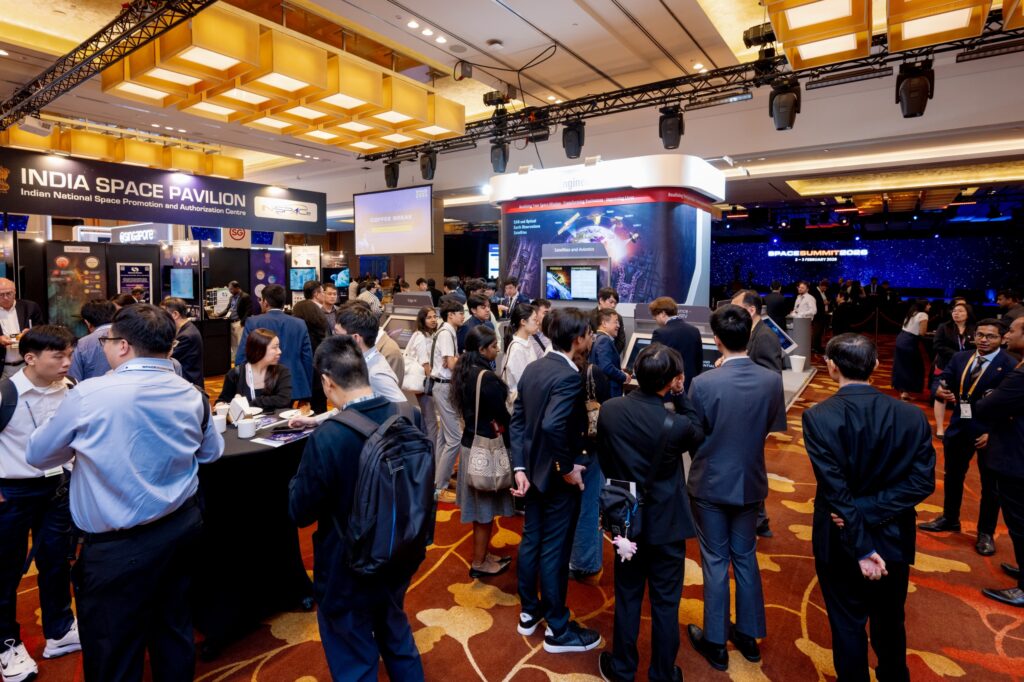
Beyond high-level themes, the Summit was notable for its practical orientation and upbeat tone. Participants were not merely diagnosing challenges; they were sketching pathways forward: pilot projects for joint satellite missions, public–private partnership models to accelerate services, and initiatives to foster talent and supply-chain resilience across the region. The dynamism of emerging companies was matched by the experience of legacy firms and the convening power of national agencies — a combination that generated constructive debates and concrete commitments.
Looking ahead
Building on the discussions and connections forged at this inaugural edition, Space Summit will return on 25–26 February 2027 to continue serving as a platform for international engagement on the opportunities and responsibilities shaping the global space sector. The momentum from Singapore signals a potential convergence: with clear policy frameworks, harmonised standards, and cooperative business models, the sector can scale in ways that are commercially viable, socially beneficial, and environmentally responsible.
Space Summit 2026 highlighted the vital role of convening spaces in shaping the future of the global space ecosystem. As space becomes increasingly entwined with national economies, critical infrastructure, and environmental stewardship, the need for multi-stakeholder alignment grows more urgent. Singapore’s Summit made an emphatic case for collaboration — practical, sustained and inclusive — as the pathway to translating space capabilities into tangible benefits for societies worldwide. With the Asia-Pacific region accelerating its ascent and stakeholders across the spectrum demonstrating a readiness to work together, the future of space looks both exciting and eminently achievable.
Vijay Grover is the Editor of Indian Aerospace & Defence. He is a veteran Indian journalist whose work has significantly influenced television newsrooms at outlets such as Zee News, NewsX, and TRT World. Renowned for shaping newsroom practices and ethical standards, he has critiqued the decline of field reporting and the rise of desk-driven propaganda.

