
Staff Correspondent
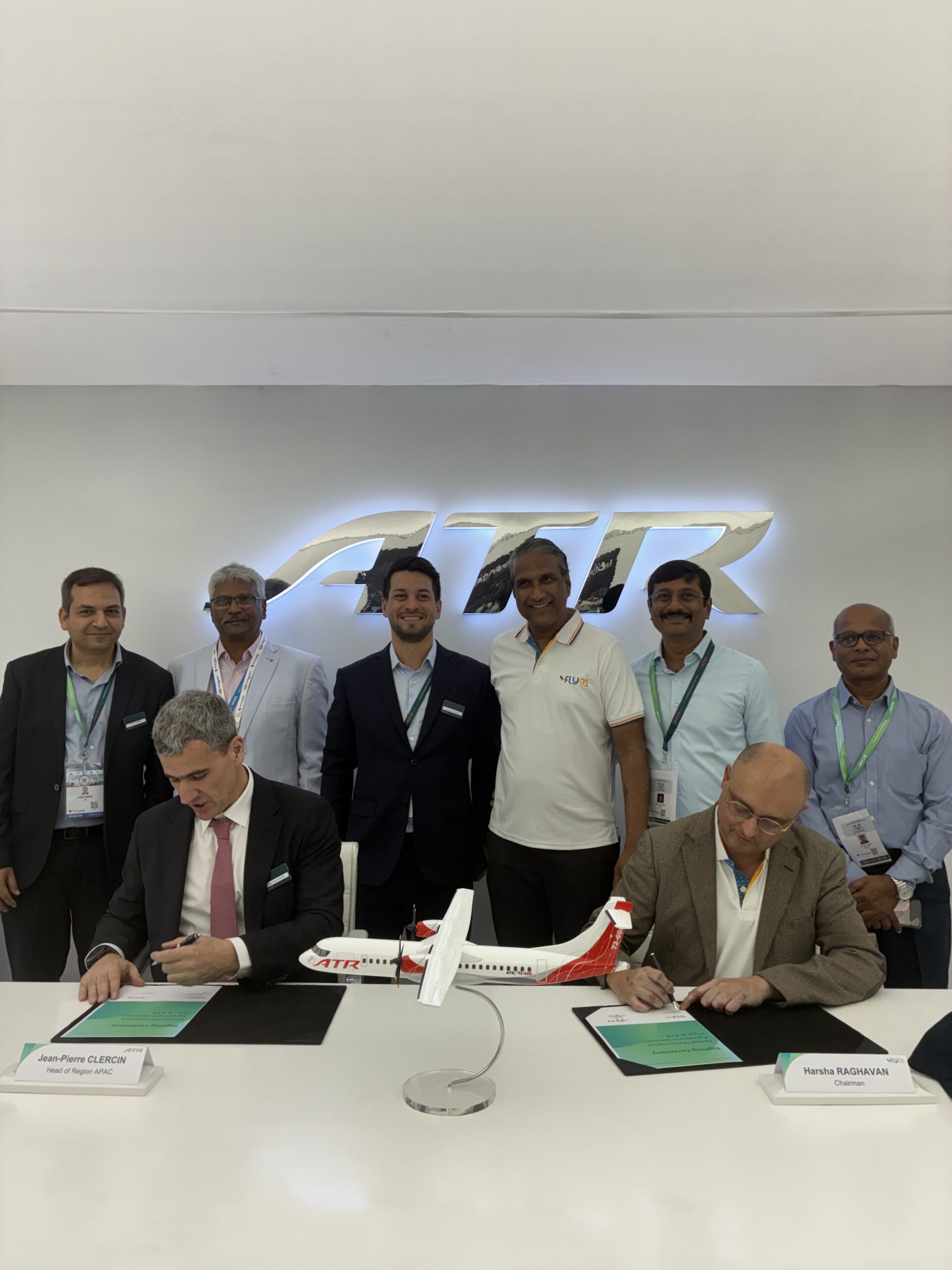
The recent signing of an eight‑year Global Maintenance Agreement (GMA) between ATR, the turboprop aircraft manufacturer, and Fly91, an Indian pure‑play regional airline, marks a significant milestone in the evolution of regional aviation in India. This development builds on a relationship established at Fly91’s launch in 2024 and aligns closely with the airline’s measured growth strategy, operational ambitions, and emphasis on cost discipline. The extended GMA—designed to support an expanding ATR 72‑600 fleet and rising utilization—illustrates how long‑term manufacturer‑led maintenance partnerships can underpin network expansion, enhance reliability, and provide the financial and operational predictability necessary for sustainable regional air service growth.
Regional Aviation in India and the Role of Turboprops
India’s domestic aviation market continues to evolve from a focus on trunk routes to a more nuanced network that emphasizes connectivity to tier‑2 and tier‑3 cities. Public policy, airport infrastructure development and rising regional demand have combined to create opportunities for new carriers and network models that prioritize point‑to‑point connectivity over hub‑and‑spoke architectures. Within this environment, turboprop aircraft such as the ATR 72‑600 have emerged as an efficient and practical solution for short and medium‑haul segments: they offer superior fuel efficiency on short sectors, lower operating costs compared with many regional jets, and the ability to operate from shorter runways and smaller airports—attributes that match the needs of underserved regional markets.
For nascent carriers like Fly91, which seek to rapidly and prudently scale a network across a diverse array of secondary cities, selecting a turboprop platform is both operationally rational and strategically coherent. However, aircraft selection is only one element; equally critical is the assurance that the fleet will be available, reliable and predictable in its cost profile—conditions that allow route planning, yield management and capital deployment to be undertaken with confidence.
The GMA: Structure, Scope & Strategic Value
Fly91’s ongoing GMA relationship with ATR, in place since May 2024 and now extended for eight years, encompasses a comprehensive suite of support services: lease stock and standard exchange units, repair of line‑replaceable units (LRUs), propeller availability and maintenance services. Such agreements place the manufacturer at the center of the airline’s maintenance ecosystem, leveraging OEM knowledge, global logistical networks and inventory pooling to deliver a higher degree of operational continuity.
From a strategic perspective, the GMA offers several concrete benefits for a regional carrier in expansion mode:
– Fleet availability and reliability: By ensuring access to spare components, propeller services and rapid repair solutions, ATR GMA provisions reduce aircraft on ground (AOG) time and improve dispatch reliability—critical metrics for maintaining schedules and protecting passenger confidence.
– Cost visibility and risk mitigation: Long‑term maintenance agreements translate variable and sometimes unpredictable maintenance expenditures into a more linear and foreseeable cost stream. For a lean, cost‑focused airline such as Fly91, this predictability supports financial planning, fare structuring and investor confidence.
– Supply‑chain resilience: Global supply‑chain disruptions in recent years have underscored the vulnerability of airlines that rely solely on ad hoc parts procurement. An OEM‑managed GMA leverages manufacturer inventories and global service centers to mitigate delays caused by constrained aftermarket channels.
– Technical and operational integration: Close collaboration with the OEM facilitates the rapid dissemination of engineering directives, updates and best practices, while streamlining training, line maintenance standardization and technical oversight.
Fly91’s Growth Trajectory & the Operational Imperative
Since commencing operations, Fly91 has demonstrated a rapid utilization profile—exceeding 2,500 flight hours per aircraft per year—and has grown from four ATR 72‑600s to 6, with two additional deliveries scheduled for early 2026. This utilization rate reflects an aggressive yet focused deployment of capacity on short sectors where turboprops excel. As Fly91 pursues its stated objective of connecting over 50 cities within five years and expanding its fleet to approximately 30 aircraft, the operational imperative is clear: maintain high daily aircraft utilization while minimizing unscheduled downtime and preserving unit costs.
In this environment, the extended GMA serves as an operational enabler. It reduces the risk that maintenance contingencies will disrupt network growth; it supports schedule integrity on thin routes, where a single aircraft delay can have outsized network effects; and it enables Fly91 to offer reliable service to communities that may be experiencing scheduled air service for the first time. The resulting service predictability both advances the airline’s commercial proposition and supports broader public policy goals of improving regional connectivity.
Manufacturer‑Operator Alignment & the Broader Industry Implications
The ATR‑Fly91 GMA is emblematic of an enduring trend in commercial aviation: deeper alignment between airframe manufacturers and operators through long‑term support agreements. Such partnerships reflect the reality that an aircraft’s value to an operator is a function not only of airframe performance but also of the support ecosystem that sustains daily operations. For manufacturers, these agreements strengthen customer ties, provide recurring revenue streams, and incentivize investment in aftermarket infrastructure and technical capabilities—an outcome that benefits the broader operator base.
For India’s regional aviation sector, the agreement signals maturation. As more operators commit to long‑term, cost‑predictable maintenance solutions, the market can expect greater operational reliability, improved investor confidence, and a more conducive environment for route experimentation and expansion. Turboprop platforms, when backed by robust OEM support, can therefore accelerate the opening of secondary markets, stimulate local economies and increase overall accessibility.
Challenges & Considerations
While the advantages of the GMA are substantial, several considerations warrant attention. Long‑term contracts require careful calibration of scope, performance metrics and escalation mechanisms to ensure that both parties achieve their objectives as operational realities evolve. For Fly91, maintaining flexibility to adapt to changing route structures, utilization patterns, or unforeseen technological developments will be important. For ATR, sustaining inventory levels, service response times, and cost structures amid fluctuating global supply dynamics will be essential to meet contractual commitments.
Furthermore, as fleet size and network complexity grow, Fly91 will need to invest in complementary capabilities—line-maintenance training, regional hubs, data‑driven prognostics, and robust operational control systems—to fully capture the benefits of the GMA and maintain high service standards across decentralized operations.
The eight‑year Global Maintenance Agreement between ATR and Fly91 is more than an operational contract; it is a strategic instrument that aligns the manufacturer’s capabilities with the carrier’s growth ambitions. In the context of India’s expanding regional market, where turboprop aircraft play a central role in connecting smaller cities and stimulating new travel demand, such partnerships provide the reliability, cost transparency, and supply‑chain resilience necessary for sustainable expansion.
As Fly91 proceeds with a disciplined fleet build‑out and network rollout, the GMA will underpin its capacity to offer dependable service, manage maintenance costs predictably, and scale operations without compromising reliability. Simultaneously, ATR’s commitment to comprehensive maintenance support underscores the evolving role of OEMs as long‑term partners in airline growth. Collectively, these dynamics bode well for the continued strengthening of India’s regional connectivity and the broader objective of inclusive, sustainable aviation development.

