
Kamal Shah
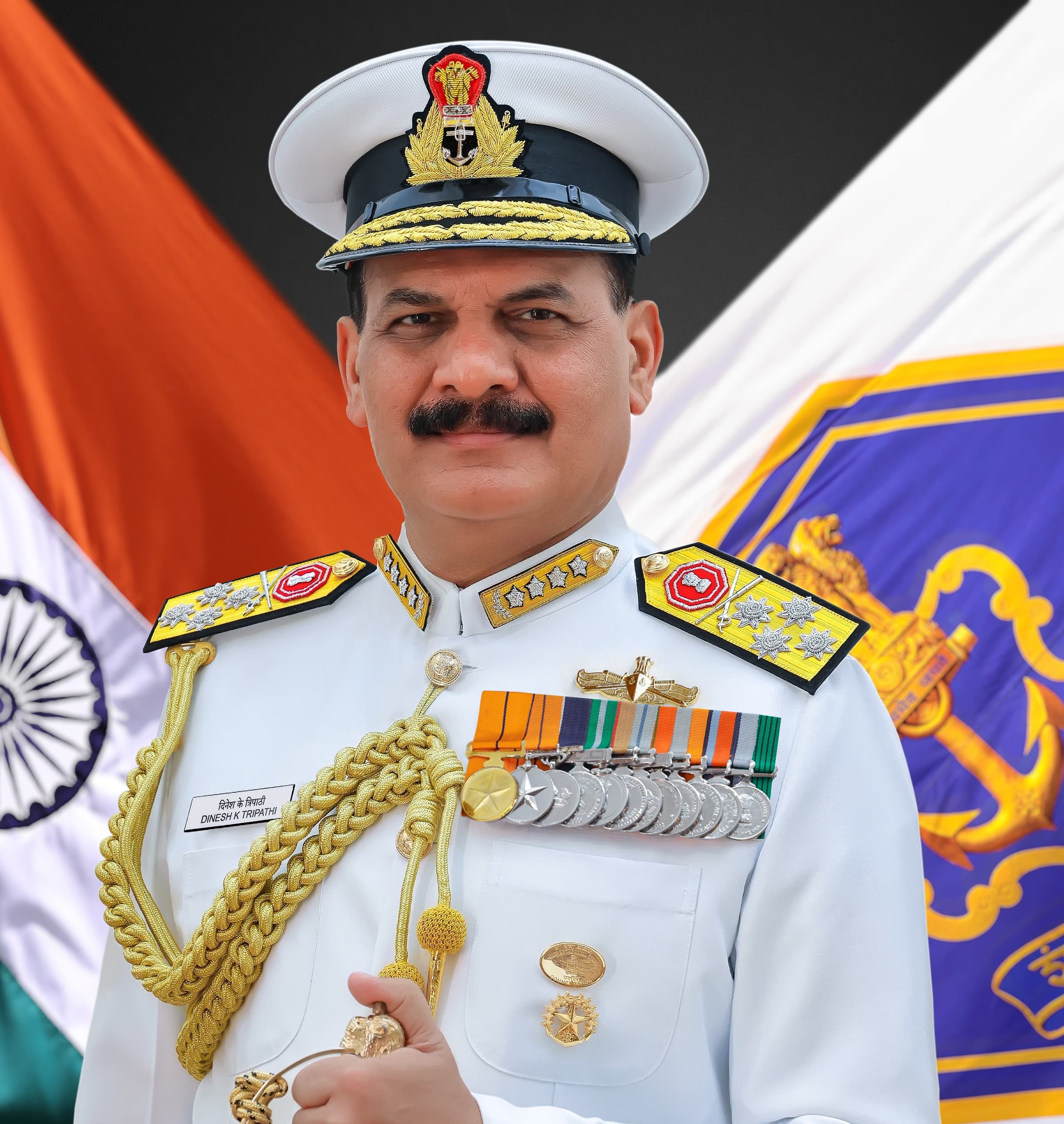
Celebrating the 54th Indian Navy Day, Admiral Dinesh Kumar Tripathi, PVSM, AVSM, NM, Chief of Naval Staff, conveyed an energizing vision in his exclusive interview to Indian Aerospace & Defence: facing rising hybrid and asymmetric threats—exemplified by the surge of autonomous and uncrewed systems in the Red Sea—the Navy is rapidly evolving its tactics, training, force posture and procurement to stay ahead. Realistic, hard‑edged exercises, including GPS‑denial scenarios, iterative force augmentation and modernization, and close collaboration with industry, academia, and agile start‑ups to build indigenous uncrewed platforms, sensors, and countermeasures, all underscore a pragmatic, innovation‑driven response. With a clear roadmap to strategic autonomy by the 2030s, Directorate‑led plans for foreign‑origin equipment, rigorous oversight of 139 major DRDO projects, and a relentless push for deep‑component self‑reliance in systems, subcomponents and R&D signal the Navy’s confident march toward technological sovereignty and operational resilience.
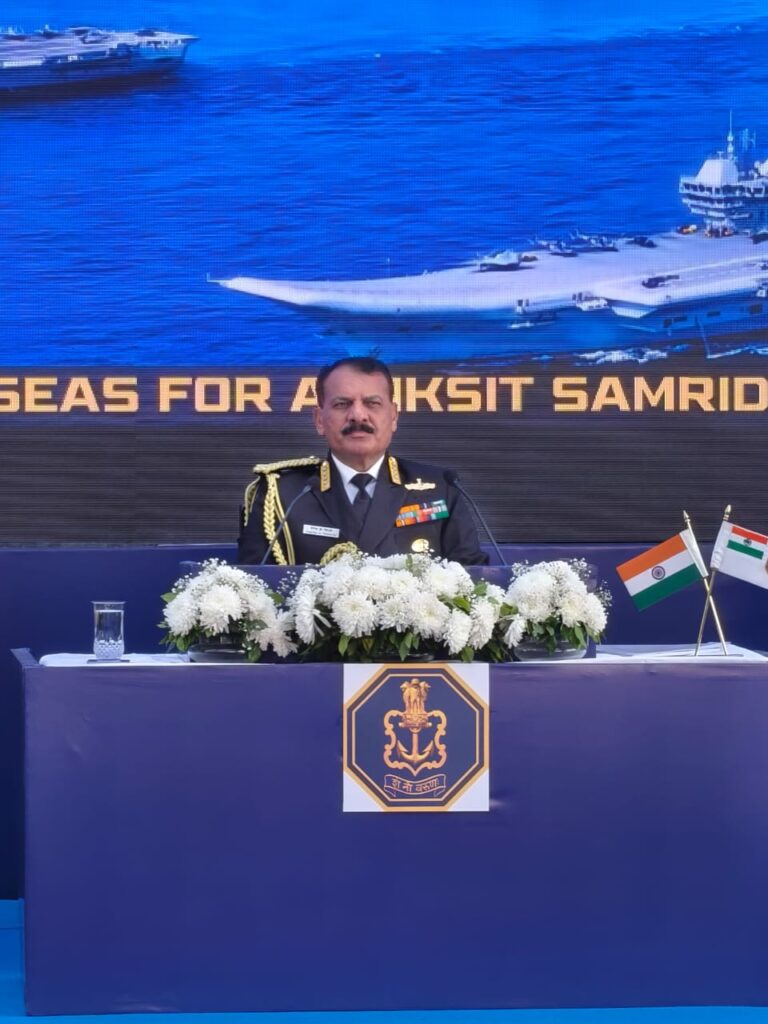
Q. Given Somalia’s delegation of key maritime security functions to Pakistan, what are the Indian Navy’s assessments of the risks to operational freedom, ISR integrity, and maritime domain awareness in the western Indian Ocean and the Horn of Africa?
A. Somalia’s recent decision to collaborate on maritime security functions with Pakistan does not materially affect India’s operational freedom, intelligence, surveillance, and reconnaissance (ISR) missions, or Maritime Domain Awareness (MDA) in the Western Indian Ocean and off the Horn of Africa. It is understood that its scope presently appears limited to training and technical assistance, without evidence of exclusionary security arrangements or denial of lawful maritime access to other nations.
The Indian Navy’s operational posture in the region remains strong, underpinned by sustained naval deployments, well-established linkages with regional partners, and active participation in multinational security frameworks. The Indian Navy’s MDA architecture, bolstered by the Information Fusion Centre – Indian Ocean Region (IFC-IOR), with linkages to 28 partner nations and 54 maritime centres, continues to provide resilient, comprehensive situational awareness through real-time information sharing.
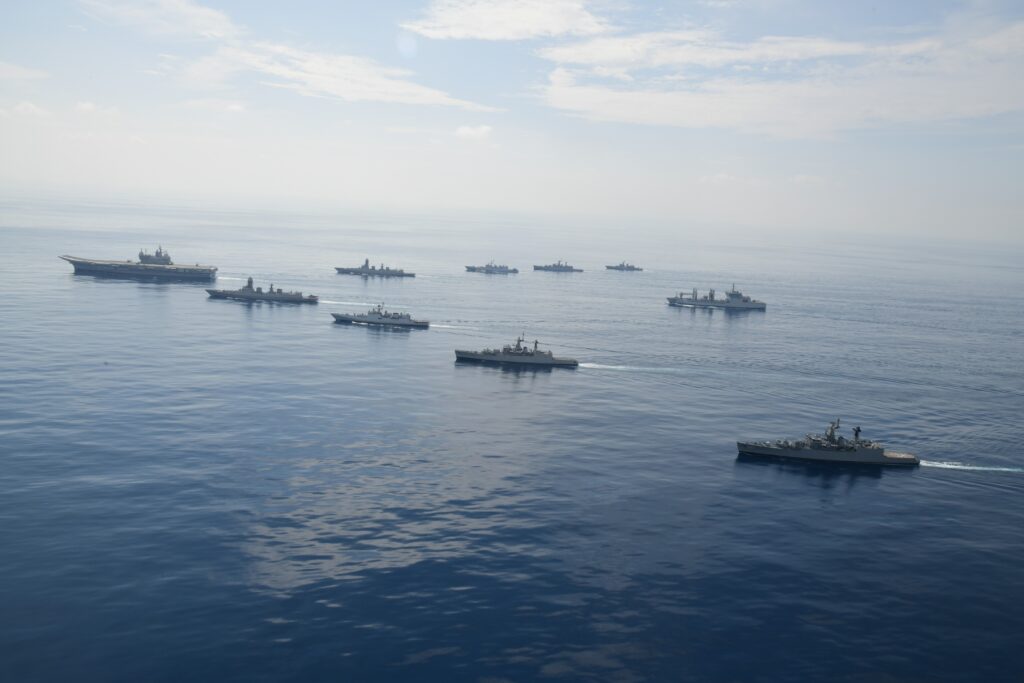
Our operational footprint, combined with sustained Mission-Based Deployments, provides assured freedom of manoeuvre and the ability to respond swiftly to evolving maritime contingencies. We therefore continue to closely monitor such activities in coordination with relevant national security agencies and take appropriate action.
Q. In light of recent attacks and piracy incidents targeting commercial shipping in the Red Sea and Indian Ocean—particularly those leveraging evolving hybrid threats and asymmetric tactics—how is the Navy adapting its operational protocols and force posture to safeguard maritime commerce, enhance situational awareness and interdiction capabilities?
A. The proliferation of uncrewed systems, especially the autonomous variants, is reshaping the battlespace at sea. The Red Sea has witnessed frequent use of such systems to target maritime shipping. These systems are becoming more prevalent, cost-effective, and adaptable, driving a fundamental shift in capabilities and tactics.
The Indian Navy continuously assesses these evolving scenarios and the entire spectrum of evolving threats and challenges. Accordingly, our force levels are augmented and modernized in an iterative plan aligned with emerging trends in warfare. On the operational front, we are evolving our training environment by conducting exercises in realistic conditions against hybrid and asymmetric threats, GPS-denial environments, and more to enhance our response capabilities.
At the same time, the Indian Navy is harnessing niche technologies by engaging with industry/ academia/ start-ups to find effective indigenous solutions to various challenges. Uncrewed solutions, autonomous vehicles, and next-generation weapons and sensors are part of our development and capability-accretion plans to counter threats such as drones and missiles, as seen in West Asia.
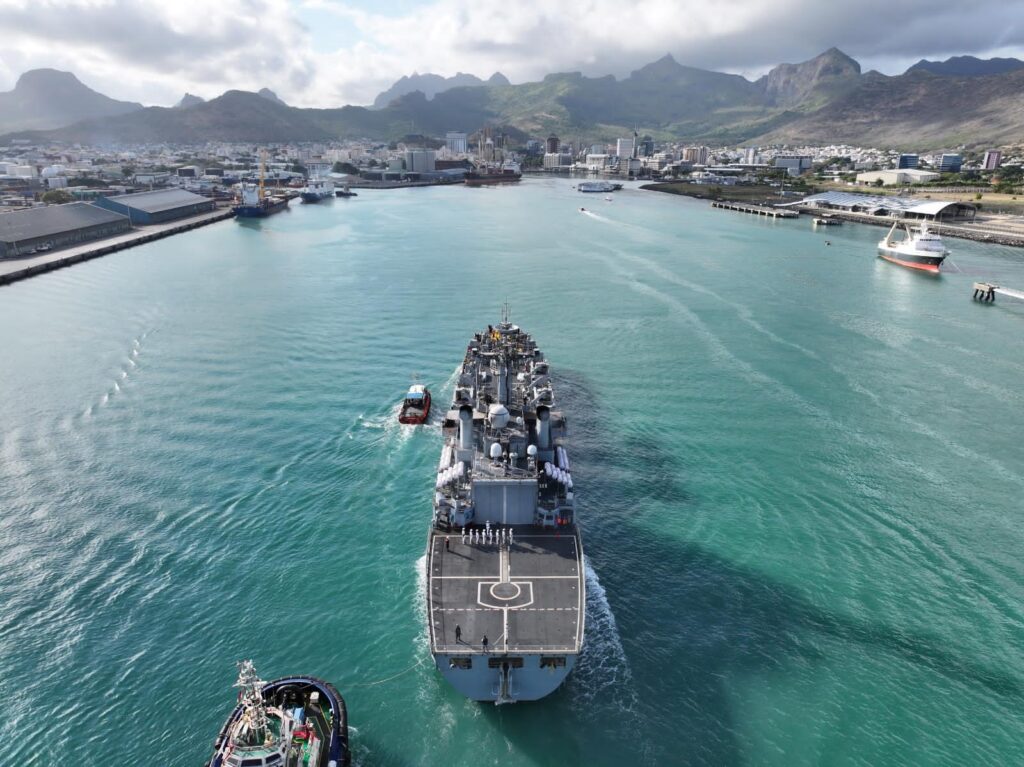
Q. With the final foreign-origin warship now commissioned, what specific policy, industrial, and R&D measures are being instituted to accelerate indigenisation and close critical technology gaps, ensuring credible strategic autonomy through the 2030s?
A. The Indian Navy is committed to the vision of ‘Aatmanirbharta’. Having transitioned from a ‘Buyer’s Navy’ to a ‘Builder’s Navy’, the Navy is redefining self-reliance beyond the acquisition of indigenous platforms and is pursuing ‘Aatmanirbharta’ at the deep component and sub-component levels.
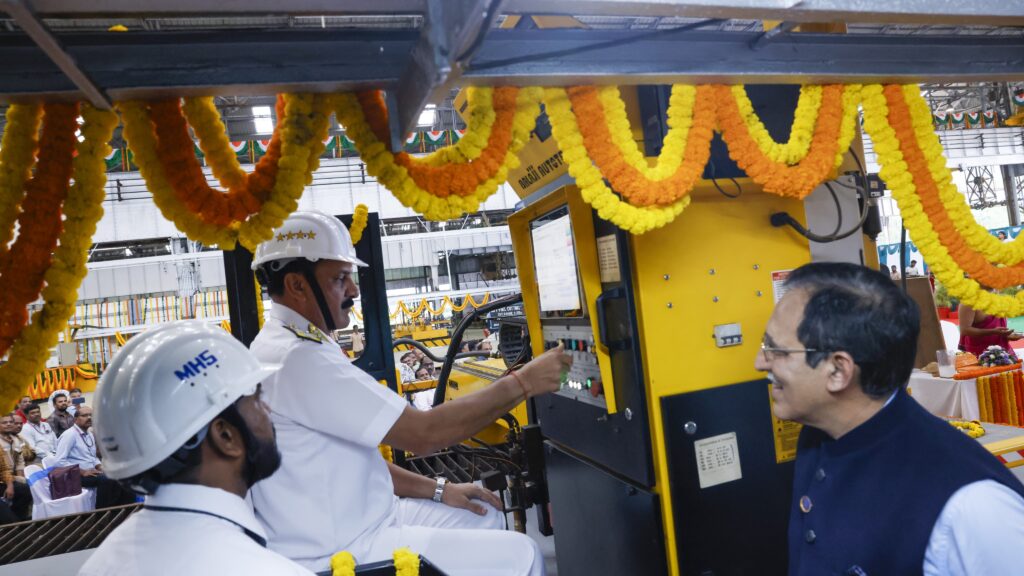
To achieve complete self-reliance, the Directorate of Indigenization of the Indian Navy has issued indigenization roadmaps for foreign-origin equipment. Additionally, the Indian Navy is steering 139 major projects across 25 DRDO labs, encompassing research areas such as Aeronautical systems, Armament & Combat Engineering systems, Electronics and Communication systems, Micro Electronic Devices and Computational systems, Missile & Strategic systems, Naval systems & Materials, System Analysis Modelling, etc. Furthermore, 248 items for the Indian Navy have been indigenized to date through the SRIJAN portal, and orders totaling approximately ₹335 Cr have been placed. The Positive Indigenization List includes 111 items, and orders for 60 items have been placed, totaling approximately ₹84000 Cr.
Q. How will the Chief prioritize countering hybrid maritime threats—piracy, smuggling, IUU fishing, and irregular migration—in the Indian Ocean Region, and what specific future acquisitions, international partnerships, and doctrinal updates are planned?
A. The Indian Navy’s role extends beyond deterrence and warfighting to include maintaining good order at sea, safeguarding the maritime commons, and fostering regional stability. Accordingly, the approach to countering non-traditional threats is rooted in a comprehensive framework anchored in Maritime Domain Awareness (MDA), interagency coordination, and international cooperation. It underscores the imperative to transform maritime security from a purely defensive construct into a proactive, collaborative enterprise that guarantees the freedom, safety, and sustainability of the seas.
About future acquisitions, the Indian Navy has kept pace with the developing security situation in the region. To that end, the current force levels are being augmented/ modernized in accordance with a long-term plan, implemented incrementally. Modernization of the Navy is driven by an undiluted focus on Combat Readiness and the acquisition of mission-capable platforms that are fully combat-capable and can undertake diverse missions, including anti-piracy and anti-narcotics.
To enhance international partnerships, the Indian Navy cooperates with FFCs to improve maritime security through capacity building, capability enhancement, information sharing, joint EEZ patrols, and operational interaction, where required and feasible, to tackle non-traditional threats collectively. In this regard, the Indian Navy’s collaborative efforts with our partner nations are guided by the Hon’ble PM’s vision of MAHASAGAR – Mutual and Holistic Advancement for Security and Growth Across Regions. In furtherance of this vision, the Indian Ocean Ship (IOS) Sagar is a unique initiative to enhance Navy-to-Navy cooperation with IOR nations, undertaken earlier this year. As part of the initiative, INS Sunayna was deployed to the South-West IOR with a multinational, embedded crew comprising personnel from IN and nine Friendly Foreign Countries (FFCs) (Comoros, Kenya, Madagascar, Maldives, Mauritius, Mozambique, Seychelles, Sri Lanka, and South Africa).
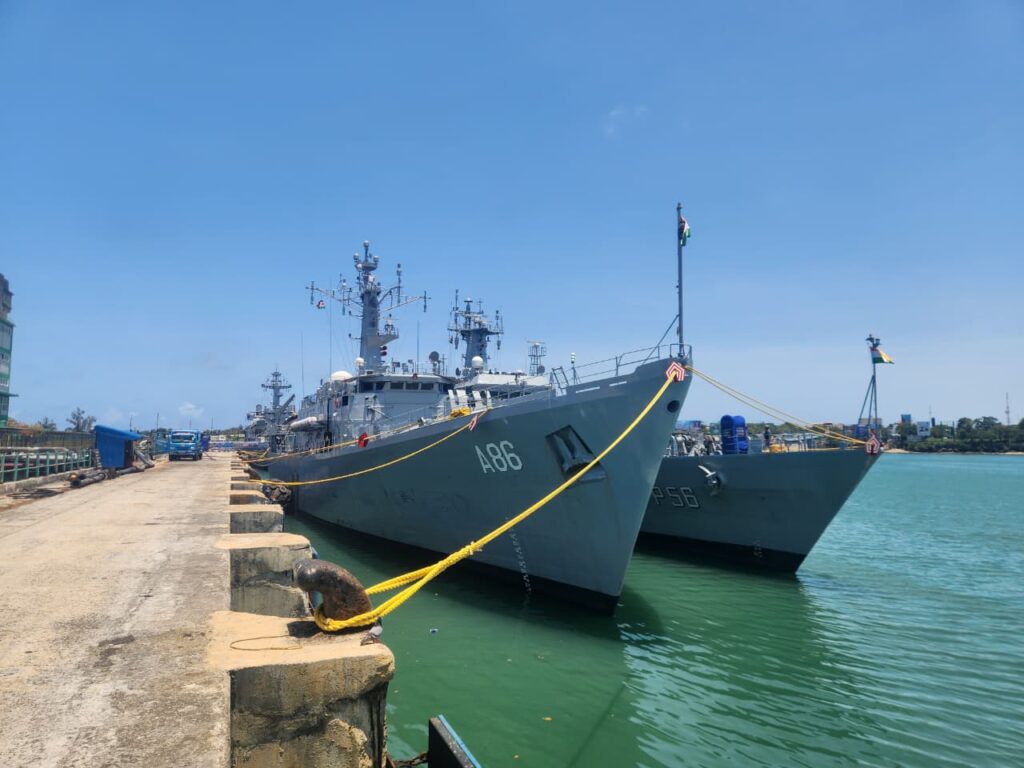
Further, a large-scale multilateral maritime exercise with East African countries, titled ‘Africa India Key Maritime Engagement’ aka ‘AIKEYME’, which means ‘Unity’ in Sanskrit, is an initiative to enhance interoperability with the navies/ maritime agencies of Africa towards tackling non-traditional maritime security threats. The inaugural edition of the exercise was co-hosted by the Indian Navy and the Tanzania People’s Defence Force (TPDF) and was held in Dar es Salaam, Tanzania. The exercise spanned over six days and also included participation from Comoros, Djibouti, Kenya, Madagascar, Mauritius, Mozambique, Seychelles, and South Africa. Looking ahead, AIKEYME plans to expand its scope and participation to include more African countries in future editions.
Going forward, we will assume the Chairmanship of the Indian Ocean Naval Symposium (IONS) and assume command of Combined Task Force (CTF) 154 next year. Further, alongside the forthcoming IFR-26 at Visakhapatnam in February 2026, we look forward to hosting over 55 navies for Exercise MILAN-26, with the core purpose of fostering professional interaction and meaningful exchange of best practices.
Our participation in CMF, our leadership roles in IONS, and the growing relevance of MILAN reinforce India’s standing as a trusted and credible maritime partner.
Q. How is the Naval Flight Test Squadron enhancing stakeholder value to expedite safe induction and operational clearance of new unmanned platforms for the fleet?
A. NFTS collaborates and synergizes with private industry partners, depending on the project’s type and stage of development. NFTS has partnered with firms at the design stage and is guiding them on design for navy-specific roles, including, but not limited to, ship stowage, marinization, improved modularity, and design efficiency, to ensure best performance in aspects most critical to IN’s CONOPS.
Furthermore, NFTS is assisting designers in establishing early engagement with the Centre for Military Airworthiness and Certification (CEMILAC) and guiding them through the rigorous certification process to Military standards. NFTS is also evaluating and partnering with existing UAV and sensor designers to deliver the best products for IN’s CONOPS, while ensuring designers receive the insights they need to design products that best suit the Service’s needs.
Q. In light of the Indian Navy’s recent sanctioning of ambitious unmanned systems programs—spanning 100–500 tonne XLUUVs, multi-utility long-endurance drones, and shipborne UAVs—what specific operational gaps are these acquisitions designed to close?
A. Uncrewed/ autonomous systems have significant potential to strengthen the Indian Navy’s operations across the surface, sub-surface, and air domains. The Indian Navy has been employing uncrewed aerial systems for maritime surveillance missions for about two decades, to build maritime domain awareness in our areas of interest.
Looking forward, uncrewed assets are being acquired across the surface, sub-surface and air domains to enhance current IN operational capabilities. These uncrewed systems would enhance our operational effectiveness by enabling access to areas denied to crewed platforms, providing persistent surveillance, and allowing precise targeting through advanced autonomous and AI-based capabilities.


