
Cdr Rahul Verma (r)

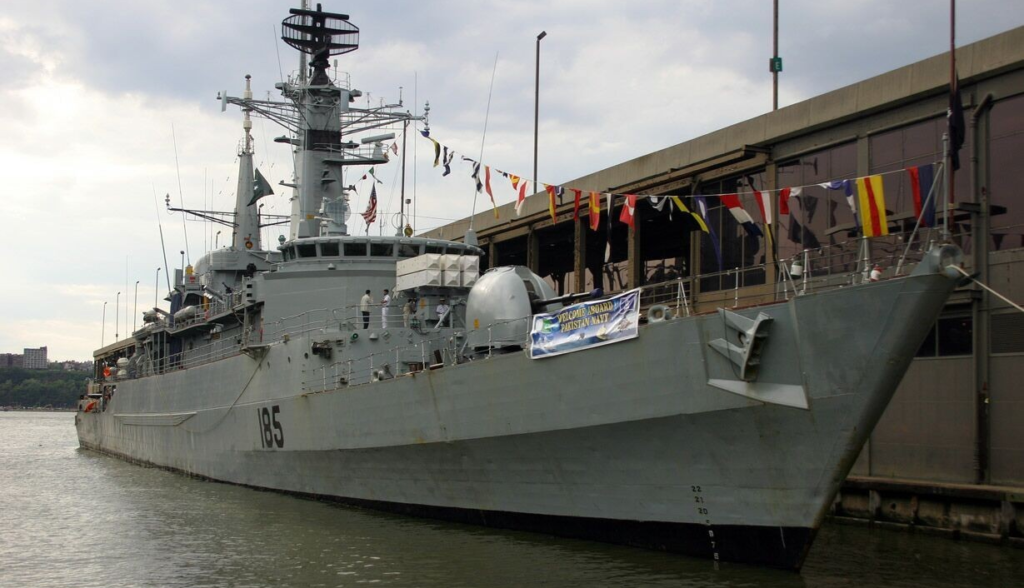
On 25 November 2025, the Pakistan Navy test-fired what it triumphantly portrayed as a “historic” ship-launched anti-ship ballistic missile (ASBM) named SMASH, supposedly capable of striking naval targets 350 kilometers away at hypersonic speed. The footage of a projectile lifting off from an angled launcher on PNS Tippu Sultan became an instant social media spectacle in Pakistan. Commentators proudly proclaimed that Islamabad had entered the elite club of maritime missile powers, capable of holding India’s aircraft carriers at risk far out into the Arabian Sea.
But behind the theatrics, the test inadvertently revealed something more profound: the obsolescence of single-platform thinking in modern naval warfare.
Not because India lacks the capacity to counter such a weapon, but because Pakistan lacks the kill chain required to make any ASBM meaningful. As the demonstration, if examined in detail, reveals, Pakistan has no over-the-horizon radar network, no indigenous maritime ISR satellite constellation, no long-endurance oceanic surveillance UAVs, no hardened data-link architecture, and no autonomous targeting infrastructure to cue such a missile in real time. Even the launcher, a tilted rail meant for cruise missiles, exposed the technical inconsistency of the claim. The SMASH was a statement of intent, not a demonstration of capability.
Even the Change is Changing, and that contrast is the ideal gateway to the article’s central argument. The Indian Navy is not merely adapting to change; the very speed and nature of adaptation itself is accelerating. This is why the title of my article captures something deeper than technological transition. It signals a shift from a world in which weapons defined strategy to one in which information, autonomy, and adaptation define advantage. Modern maritime competition is no longer shaped by who has the largest missile or the most tonnage at sea. It is shaped by who can see first, think fastest, collaborate seamlessly across manned and unmanned assets, act in a distributed manner, and adapt at a tempo the adversary cannot match. And India is re-architecting its naval power equation around exactly this principle across the Indian Ocean Region (IOR).
The First Wave: When ISR Was the Revolution
Barely a decade ago, maritime transformation still moved at a predictable pace. Navies modernised in cycles aligned with platform life, 20–30 years for ships, 10–15 years for aircraft, and gradual upgrades to radars and weapons. Change was linear, sequential and comfortably understood.
At that time, ISR (Intelligence, Surveillance and Reconnaissance) was seen as the first significant shift:
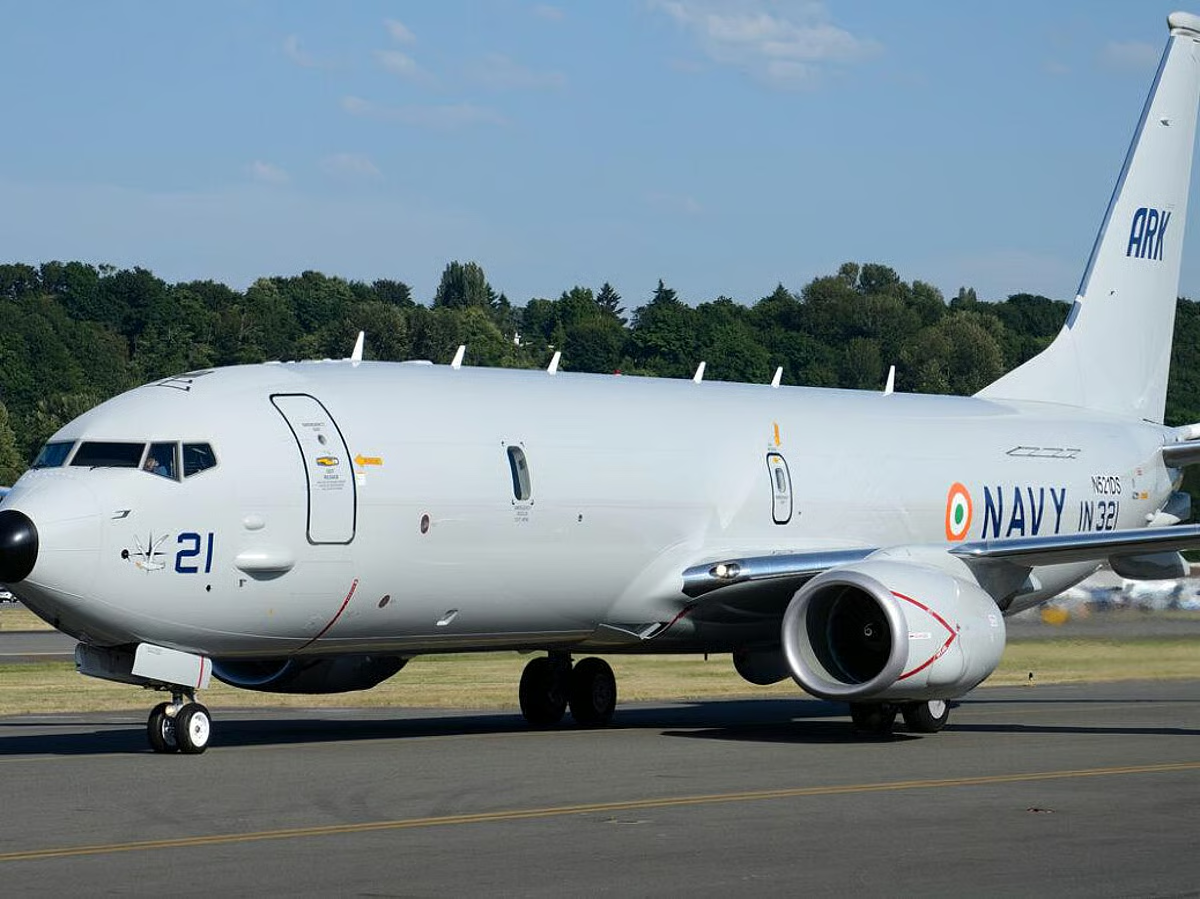
- P-8I Poseidon’s expanded India’s oceanic surveillance footprint from the Gulf of Aden to the Malacca Strait.
- Coastal radar chains created a 360-degree view of littoral waters.
- GSAT-7 and later GSAT-7R gave India secure maritime communications independent of foreign networks.
- INCCS (Integrated Naval Command and Control System) fused ship, submarine and aircraft sensor feeds into a unified maritime picture.
This was the first wave: the Indian Navy developed the capacity to see, and in doing so, quietly laid the foundation for a far more radical shift. Even then, Indian planners sensed that ISR was no longer just a support function but the operational brainstem of future naval combat. It was the beginning of a shift from platform-centric warfare to information-centric warfare. As autonomous loitering munitions, tactical swarms and decoy-supported suppression missions entered the battlespace, visible most clearly during Operation Sindoor in 2025, it became evident that maritime power was shifting from platform-centric to sensor-centric and information-centric warfare. India’s early investments in ISR laid the cognitive groundwork for the subsequent acceleration.
The Acceleration: When Manned–Unmanned Teaming Leapt Ahead
Most navies would have followed a predictable curve: first build ISR drones, then weaponize them, then add loyal wingmen, and eventually integrate manned–unmanned teaming (MUM-T). India did something different. It collapsed the entire timeline. Instead of incremental adoption, India pursued ISR, strike drones, electronic-warfare swarms, and loyal wingmen simultaneously. The development cycles of unmanned systems, which progress at 12–18-month intervals, began to outpace and then redefine doctrinal cycles. This was also the impact of organisational changes, such as the formation of NIIO and TDAC.
This is why “the change is changing” is not just a clever phrase.
It describes a structural shift; technology now moves faster than doctrine, and India is aligning itself to keep pace. Three developments illustrate this acceleration:
1. The Abhimanyu Loyal Wingman. Proposed Abhimanyu specifications include an autonomous SEAD (per the January 2025 Navy Statement), though the detailed ISR range and stealth RCS remain undisclosed. Comparable Western loyal wingman systems (Boeing MQ-25 Stingray) achieve 500+ nm endurance and multi-hour loiter, potentially similar parameters for Abhimanyu, who will accompany Rafale-Ms and MiG-29Ks with:
- Autonomous SEAD (Suppression of Enemy Air Defence)
- Stealth-optimised ISR at 400+ km
- Modular strike weapons
- Onboard decision-making
- Swarm-control algorithms
- EW escort functionality
It is not merely a drone; it is a distributed extension of the pilot’s consciousness.
2. Air-Launched Swarms from P-8I. The P-8I, India’s maritime flagship, will soon deploy 10–20 autonomous anti-radiation swarm drones per sortie. Weighing 8.5 kg (as per iDEX PDS PRU statements) each, these drones provide:
- 130–150 km strike reach
- AI-based radar emission homing
- Autonomous target ranking
- Real-time manoeuvre adaptation
- Network resilience even under jamming
A single P-8I sortie suddenly becomes a multi-vector swarm strike package.
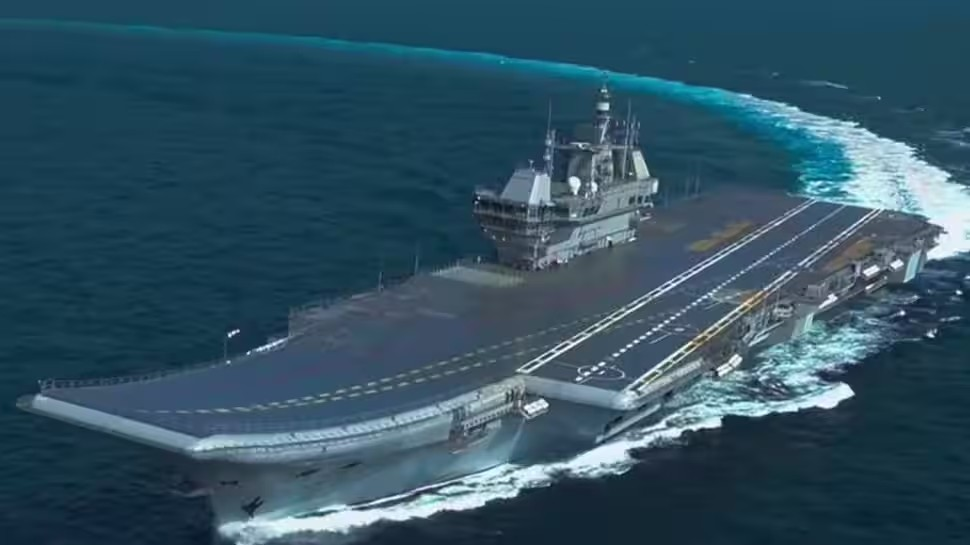
3. LPDs and Carriers Built for MUM-T from Day One. India’s new Landing Platform Docks and INS Vikrant‘s future air wing are not merely “adding” drones, they are built around distributed manned–unmanned operations:
- Loyal wingmen
- Tactical swarms
- Autonomous logistic drones/ Unmanned Carrier Onboard Delivery
- Onboard C4ISR fusion
- Continuous offboard sensing
India no longer regards unmanned systems as “assets.” They are ecosystems. And ecosystems consistently outperform individual platforms.
The Multiplier Effect: When ISR Becomes Cognition
In the first wave, ISR was a sensor layer. During the acceleration phase, ISR serves as the cognitive layer that integrates all other layers.
Today, the Indian Navy’s kill chain looks like this:
- Satellite and aerial ISR detect movement across 7.6 million sq km.
- AI algorithms classify vessel patterns and threat vectors.
- Swarm drones autonomously plan engagement geometry.
- Manned fighters receive real-time fused recommendations, not raw data.
- Distributed launch platforms adjust firing solutions dynamically.
- Autonomous strike drones degrade enemy defences minutes before manned assets enter range.
This is no longer “sensor to shooter.”
It is sense → think → decide → distribute → overwhelm.
Three effects redefine naval combat:
1. Tempo Dominance. In Operation Sindoor (May 2025), India defeated multiple waves of Pakistani drones because its Integrated Air Command and Control System (IACCS) fused radar, satellite and tactical feeds into a predictive model. Pakistan’s semi-isolated air defence units were simply outpaced.Tempo, not technology, won the exchange. Even the Change is Changing
2. Autonomy as Resilience. If communication degrades, swarms continue. If radars go silent, anti-radiation drones hunt passively. If platforms are lost, the kill chain reroutes dynamically.
3. Exponential Adaptation. Each swarm operation generates data → improves algorithms → improves the next mission. Warfare becomes a continuous learning loop rather than a static doctrine.This feedback loop is what Pakistan’s SMASH test lacked. A missile without infrastructure is a gesture, not a capability.
Anti-Piracy and the Indian Ocean: The Living Laboratory of Transformation
Nowhere is this transformation more visible and more consequential than in the Indian Ocean itself. This makes the IOR the perfect living laboratory for India’s new manned–unmanned maritime architecture. In anti-piracy operations, for instance, swarm-enabled ISR enables the Commander at Sea to map tens of thousands of square kilometres in hours, analyse vessel behaviour in real time, and identify suspicious clusters long before they pose a threat. Loyal wingmen operating from carriers or LPDs extend SIGINT and EO/IR coverage far beyond the reach of manned aviation alone. When an anomaly is detected, such as a dhow altering course against prevailing traffic or a transponder going dark, autonomous Drones can immediately establish pattern-of-life analysis, relay information to surface units, and even maintain continuous overwatch until interception is possible. What once required multiple Dornier or P-8I flights over several days can now be accomplished through a persistent network of Unmanned assets that serve as an always-on maritime nervous system.
Beyond security, the same architecture revolutionises humanitarian assistance and disaster relief (HADR). After a cyclone, autonomous drones can survey damaged coastlines, identify stranded populations, map inundation, and relay live data to naval command centres coordinating relief supplies. During mass-casualty maritime emergencies, swarms can search debris fields, mark survivors and guide rescue boats with unrivalled speed. In essence, unmanned systems enable India not only to respond to crises but also to proactively shape outcomes in a region increasingly vulnerable to climate shocks. Through continuous deployment in these real-world missions, the Indian Navy is validating and refining its autonomous doctrine under operational conditions, ensuring that when high-end conflict ever threatens, its systems, algorithms and personnel have already matured through thousands of hours of practical use. The Indian Ocean becomes not just an area of responsibility but also a training ground, proving ground, and deterrence space.
The Institutional Challenge: Matching Technological Tempo With Organisational Agility
Yet, the most profound challenge India faces is not technological; it is institutional. Autonomous systems evolve in 12- to 18-month cycles. Naval doctrine has historically evolved in five- to ten-year intervals. Bridging this gap demands a fundamental rethinking of how militaries adapt. In a world where algorithms improve weekly, training pipelines must equip pilots and operators to function as human–machine collaborators, not mere platform managers. Procurement processes designed around long-gestation capital assets must shift towards spiral development, iterative testing and rolling software updates. Doctrine can no longer wait for platforms to mature; it must evolve in tandem with them.
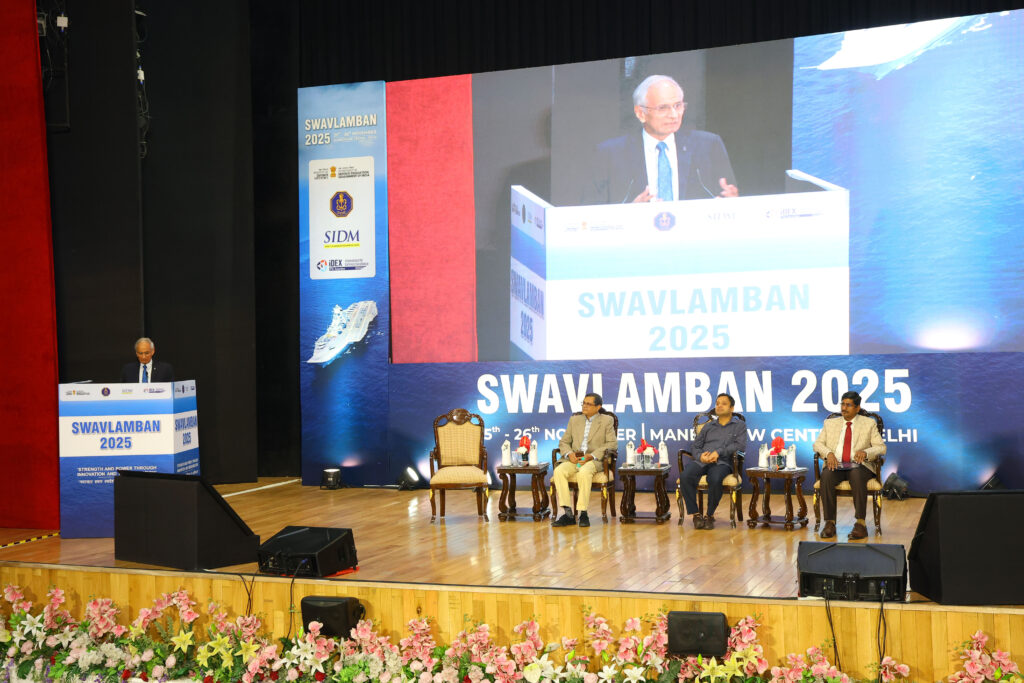
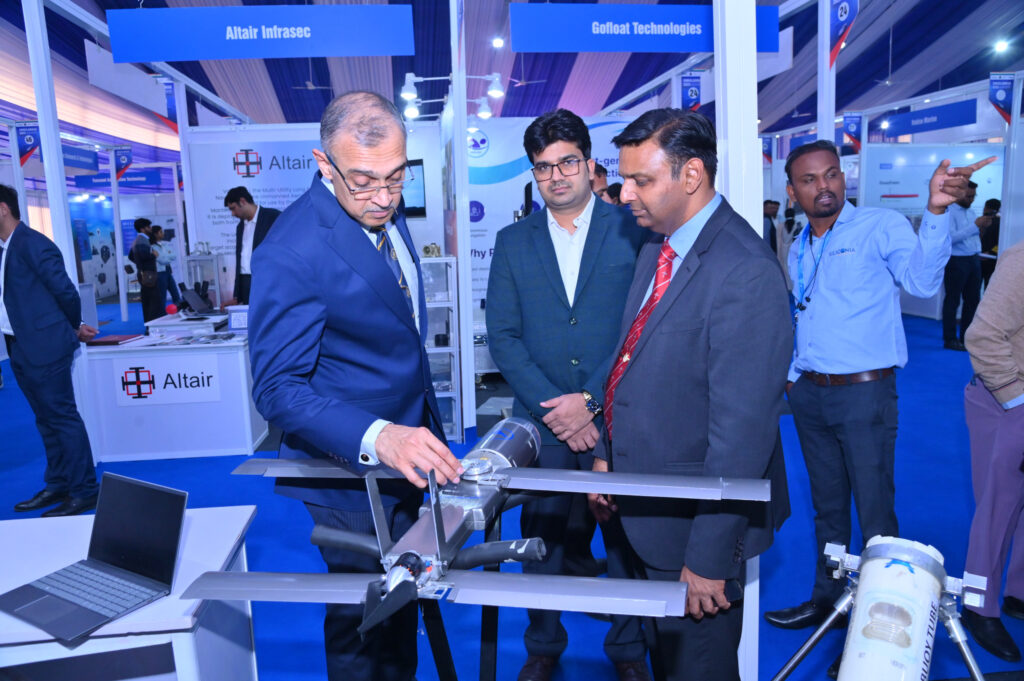
The Indian Navy has already begun this transition. NIIO- TDAC iDEX-enabled innovators shorten the path from prototype to operational evaluation. Bilateral and multilateral exercises stress-test autonomous behaviours in diverse environments. MUM-T experimentation units push new technologies directly into frontline squadrons. Naval training establishments increasingly emphasise cognitive skills, data interpretation, swarm coordination, and autonomous oversight, rather than relying solely on traditional cockpit workload. Still, the shift must become structural rather than initiative-driven. The Navy must build an institutional culture in which adaptation is not an event but an atmosphere, in which doctrine is continuously updated, in which procurement embraces iteration and Spiral Development, and in which operational learning feeds directly into design. Upgrading the NFTS towards the Unmanned domain could be one of the first steps.
This is the deeper meaning behind “Even the Change Is Changing.” It is not only that threats and technologies are evolving faster; it is that success now depends on the Navy’s ability to evolve at the same pace.
Conclusion: The Navy That Learns Fastest Will Prevail
Pakistan’s SMASH missile was marketed as a symbol of strategic empowerment. Yet, its very unveiling underscored a strategic truth it did not intend to reveal: weapons without networks, missiles without ISR, and platforms without autonomy have diminishing relevance in a battlespace defined by cognition and connectivity. The Indian Navy’s response, instead of matching missile for missile, is to build a force structured around persistent ISR, autonomous swarms, distributed kill chains, manned–unmanned teaming, and adaptive doctrine, the pillars not just of deterrence, but of maritime dominance in the information age.
In the Indian Ocean, one of the world’s most contested and consequential maritime spaces, the Navy that prevails will not be the one with the heaviest displacement or the fastest missile. It will be the one that sees more, understands faster, decides earlier and adapts continuously. India is designing its maritime future around precisely this logic. The transformation underway is not linear; it is exponential. And this is the strategic inflection point the region must understand: those who cling to old doctrines will discover that in modern warfare, obsolescence moves faster than ships.
The Navy is now building not just better ships or more intelligent drones, but a force that can out-think, out-learn and out-adapt any adversary. That is why the phrase “Even the Change Is Changing” is not merely a title. It is the defining strategic reality of 21st-century naval power. And India is not just keeping up with that change; it is shaping it.
Cdr Rahul Verma (r), former Cdr (TDAC) at the Indian Navy, boasts 21 years as a Naval Aviator with diverse aircraft experience. Seaking Pilot, RPAS Flying Instructor, and more, his core competencies span Product and Innovation Management, Aerospace Law, UAS, and Flight Safety. The author is an Emerging Technology and Prioritization Scout for a leading Indian Multi-National Corporation, focusing on advancing force modernization through innovative technological applications and operational concepts. Holding an MBA and Professional certificates from institutions such as Olin Business School, NALSAR, Axelos, and IIFT, he’s passionate about contributing to aviation, unmanned technology, and policy discussions. Through writing for various platforms, he aims to leverage his domain knowledge to propel unmanned and autonomous systems and create value for Aatmannirbhar Bharat and the Indian Aviation industry.

