
Chaitali Bag
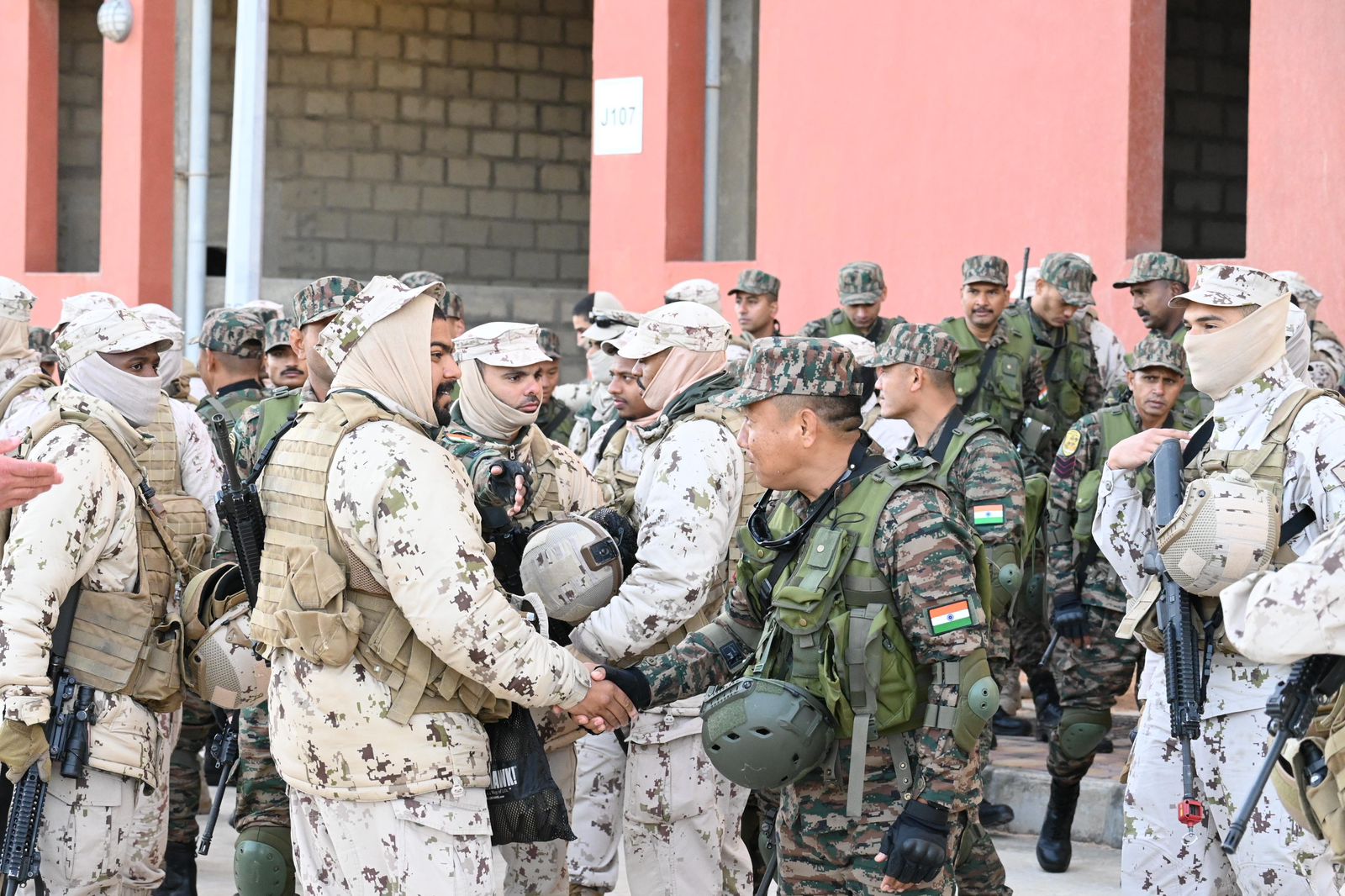
Exercise DESERT CYCLONE–II, the second edition of the India–UAE Joint Military Exercise, represents a deliberate and timely effort to strengthen bilateral defence cooperation through focused, realistic training in urban operations. Conducted in the United Arab Emirates from 18 to 30 December 2025, the exercise brings together a compact but highly capable Indian contingent—45 personnel primarily from a battalion of the Mechanised Infantry Regiment—and the UAE Land Forces’ 53 Mechanised Infantry Battalion. The programme’s concentrated emphasis on built-up area operations, sub-conventional contingencies and UN-mandated missions underscores the contemporary operational priorities for both militaries: interoperability, standardisation of tactics, and readiness for crisis response in complex urban environments.
Rationale and Strategic Context
Urbanisation has transformed the character of conflict and peace operations. Modern military planners and practitioners confront environments where combat, stabilization and humanitarian tasks converge in densely populated cities and towns. Such environments amplify the presence of non-combatants, complicate identification of hostile actors, increase the risk of collateral damage, and impose severe demands on command, control and force protection. In this context, bilateral exercises that replicate the constraints and complexities of urban operations are indispensable for building shared procedures, mutual understanding and trust.
DESERT CYCLONE–II is therefore more than a tactical drill: it is a strategic exercise in interoperability. By developing standard techniques for building clearance, casualty evacuation, explosive threat mitigation and mission planning, the partners aim to reduce friction in combined operations, whether under a UN mandate, in counter-terrorism campaigns, or in stability and peacekeeping roles. The choice of a mechanised infantry framework further enables rehearsal of combined-arms manoeuvres in constrained terrain, integrating manoeuvre elements with supporting logistics, medical, and engineering assets in urban settings.
Training Design and Curriculum
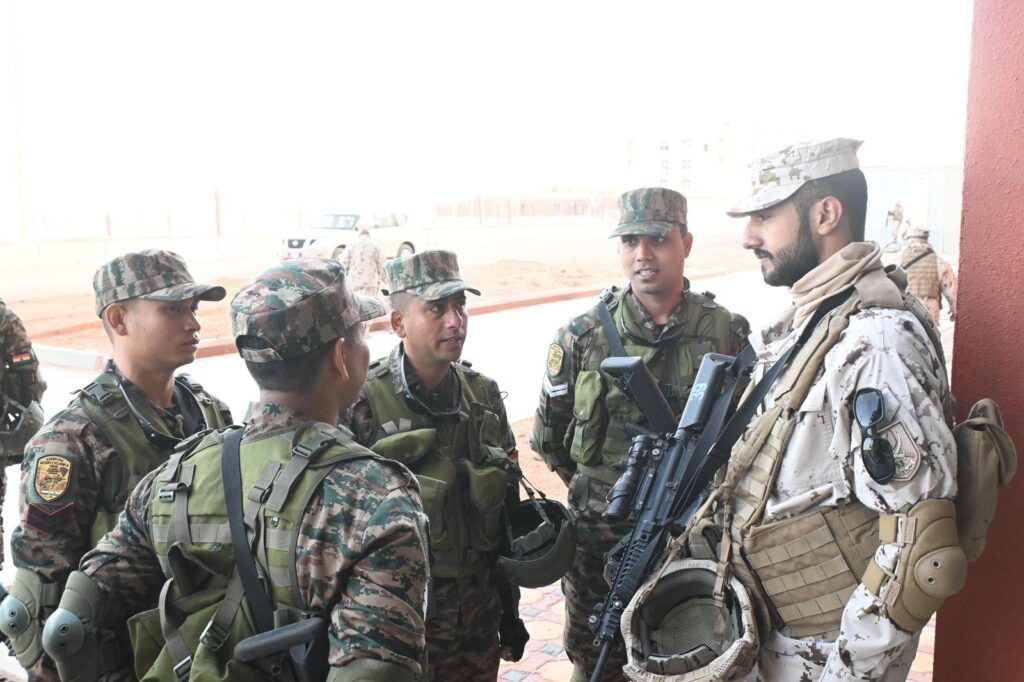
The exercise structure at Al-Hamra encompasses a balanced mix of classroom instruction and rigorous field-based modules. Classroom sessions provide doctrinal harmonisation: legal and ethical considerations in urban warfare, rules of engagement for UN-mandated operations, medical protocols for casualty treatment and evacuation, and procedures for identifying and responding to improvised explosive devices (IEDs). These theoretical foundations are critical to ensuring that field actions are informed, lawful, and aligned with international norms for the protection of civilians and non-combatants.
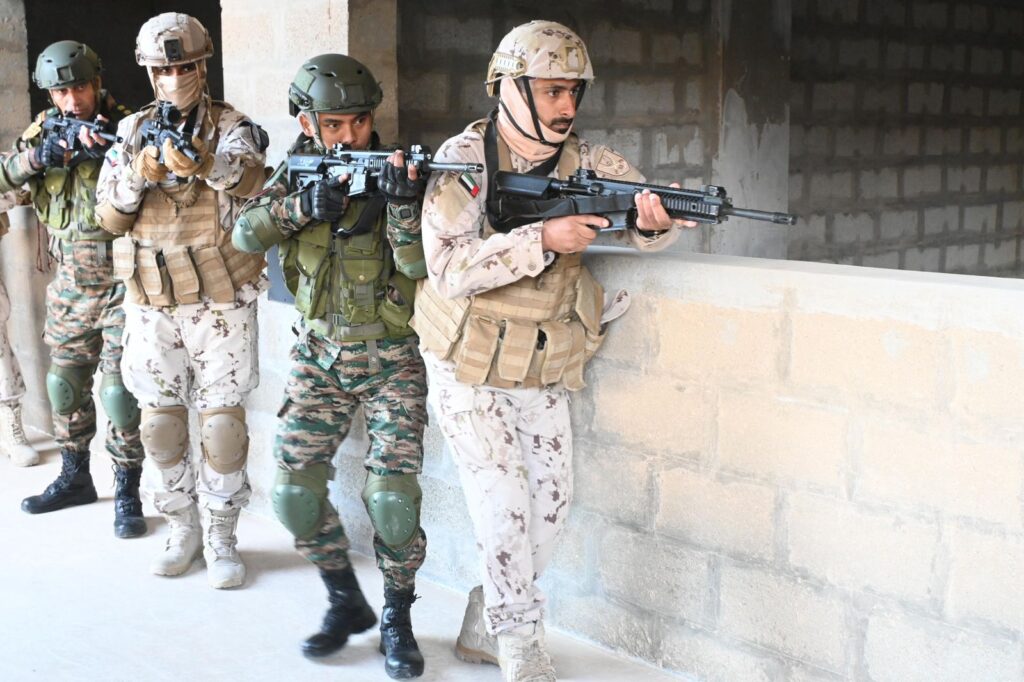
Field modules translate theory into practice. Progressive practical drills are staged in urban terrain, calibrated to increase in complexity and realism. Initial drills concentrate on core individual and small-unit skills—room entry and clearing techniques, immediate casualty care under fire, movement and communications in confined spaces, and IED recognition and immediate action drills. Subsequent exercises scale up to platoon-level joint assaults and coordinated building-clearance missions, integrating fire support, manoeuvre coordination, and casualty evacuation in contested environments. The training culminates in integrated offensive and defensive urban operations designed to test command relationships, sustainment and the ability to transition rapidly between combat and stabilization tasks.
Technical and Tactical Focus Areas
– Building marking and clearing: Training emphasises standardised marking procedures for searched and cleared structures, systematic clearance techniques to reduce fratricide and civilian harm, and coordinated use of entry points, stairwells and roof routes to deny the adversary advantage in vertical spaces.
– IED awareness and countermeasures: Given the prevalence of improvised explosive devices in sub-conventional conflicts, IED recognition, clearing procedures, and immediate-action drills form a central pillar of the curriculum. Troops practice route reconnaissance, threat visual signatures, and coordination with engineering and explosive ordnance disposal (EOD) assets.
– Casualty evacuation and first aid: Tactical combat casualty care (TCCC) is integrated into all drills, with emphasis on haemorrhage control, airway management, rapid triage and movement of wounded under fire. Evacuation procedures, both ground and (if available) helicopter-mediated, are rehearsed to ensure continuity of care and sustainment of combat power.
– Structured mission planning: The formulation of mission orders, brief-backs, rehearsal techniques, and contingency planning is practised to develop shared mental models and a common operational picture. Emphasis is placed on synchronising manoeuvre, fires, protection and logistics in constrained, populated environments.
Interoperability & Standardisation of Procedures
A principal objective of DESERT CYCLONE–II is to develop and consolidate standard operating procedures (COPs) appropriate for urban and sub-conventional contingencies. To that end, both armies exchanged drills on room intervention and clearance, rehearsing them together to standardise tactics, techniques and procedures (TTPs). Such exchanges yield mutual benefits: they reveal doctrinal differences that must be reconciled, surface equipment and communications compatibility issues, and create opportunities to refine joint SOPs for combined deployments.
Standardisation in tactics and procedures enhances predictability and reduces the risk of miscommunication in high-tempo operations. It also streamlines combined logistics, medical evacuation, and reporting mechanisms—critical elements when multinational forces are tasked with peacekeeping, counterterrorism, or humanitarian protection under an international mandate.

Operational Readiness & Force Integration
The progressive nature of the training—from individual skills to integrated platoon assaults—validates command and control arrangements and tests the ability of junior leaders and commanders to operate together under stress. Practising both offensive and defensive urban operations ensures that forces are prepared to seize and hold terrain, protect civilians, conduct searches, and respond to asymmetric threats.
Beyond purely tactical proficiency, the exercise fosters mutual trust and professional rapport—a soft capability essential to cohesive multinational operations. Shared hardship, repeated rehearsals, and collaborative planning cultivate interpersonal relationships between officers and soldiers, improving inter-unit coordination and enabling rapid decision-making in joint missions.
Relevance to UN-Mandated & Sub-Conventional Operations
A notable emphasis of DESERT CYCLONE–II is preparing participants for sub-conventional operations under a United Nations mandate. Urban peacekeeping, counter-insurgency support, protection of civilians, and stability operations require a nuanced application of force, cultural awareness, and strict adherence to international humanitarian law. Training that integrates these elements alongside combat drills better equips forces to operate within the legal and ethical frameworks demanded by UN missions.
Counter-terrorism operations in urban environments also demand precise, intelligence-driven action, minimal collateral damage and rapid stabilization following kinetic engagements. The exercise’s focus on IED threat mitigation, casualty care and building clearance directly contributes to capabilities indispensable for such missions.
Outcomes & Future Implications
By the planned culmination of DESERT CYCLONE–II, participating contingents will have rehearsed a broad spectrum of urban tasks—from room-level interventions to coordinated offensive and defensive operations—under unified procedures. The immediate outcomes include improved tactical proficiency, refined joint TTPs, and strengthened interpersonal and institutional links between the Indian Army and UAE Land Forces.
In the medium to long term, these outcomes have practical implications for bilateral defence cooperation: smoother collaboration in multinational operations, more effective combined response to crises, and an enhanced capacity to contribute to regional stability. The modular, repeatable design of the exercise also creates a template for future iterations that can progressively incorporate other domains—such as intelligence sharing, cyber-electromagnetic considerations, urban logistics, and joint air-ground integration—to broaden the scope of interoperability.
Exercise DESERT CYCLONE–II exemplifies a focused, professional approach to preparing armed forces for the demanding realities of urban and sub-conventional operations. Through a disciplined combination of classroom instruction, progressive field drills, and integrated offensive and defensive scenarios, the exercise advances shared capabilities in building clearance, IED mitigation, casualty care, and structured mission planning. Beyond technical gains, it fosters the mutual trust and procedural standardisation necessary for effective joint action under complex mandates. As urbanisation and asymmetric threats continue to shape operational environments, such bilateral initiatives play a vital role in enhancing readiness, strengthening partnerships and improving the likelihood of successful, lawful outcomes in future multinational operations.

