
By Vijay Grover
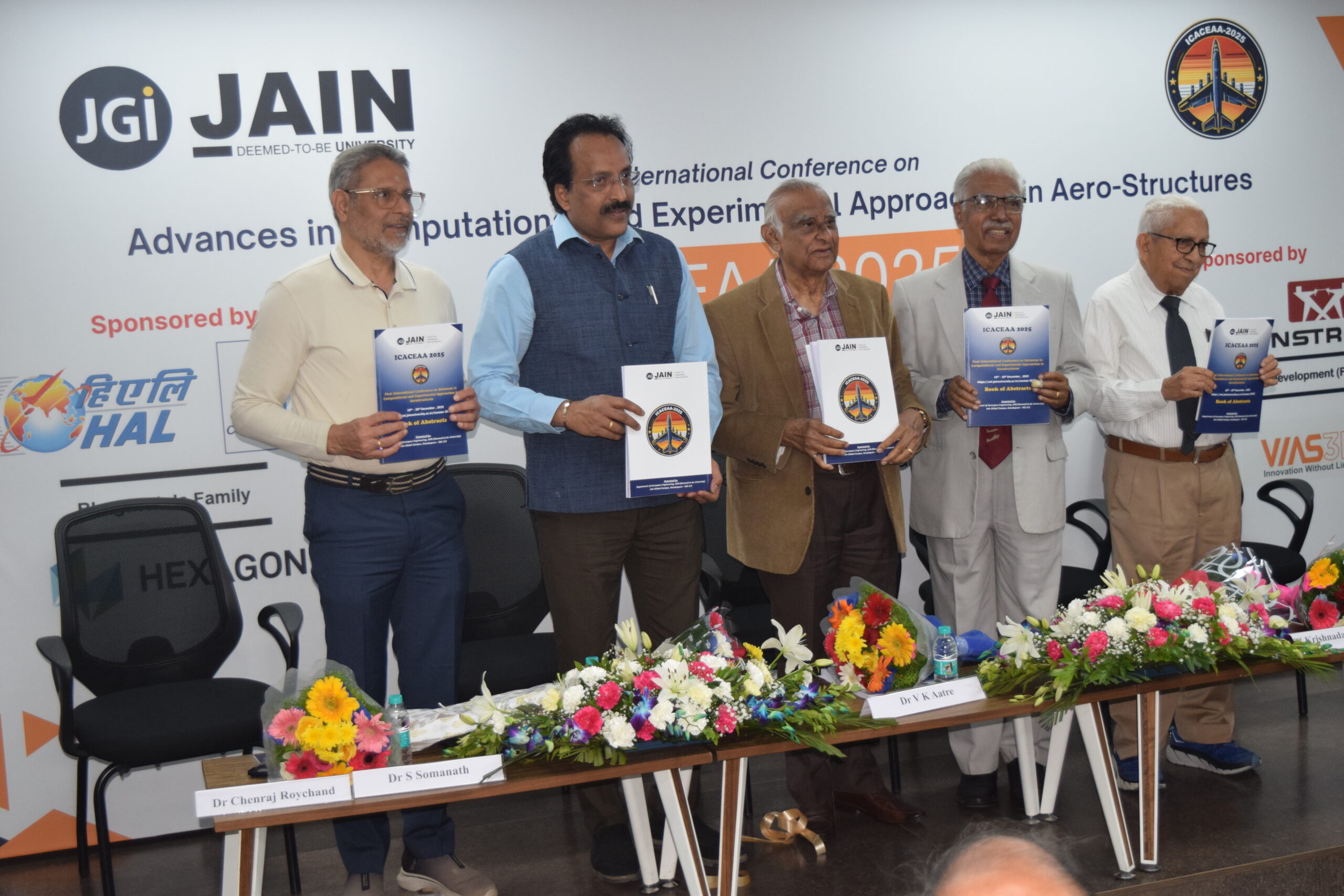
The International Conference on Advances in Computational and Experimental Approaches in Aerostructures (ICACEAA-2025), organized by the School of Aerospace Engineering at JAIN (Deemed-to-be University), commenced at the university’s Seshadri Road campus. This three-day assembly of leading scientists, researchers, and industrial practitioners represents a concerted effort to examine, synthesize and project the trajectory of aerospace technology at a moment when rapid advances in computational capability, experimental technique and systems-level integration are reshaping the field. By convening established authorities alongside emerging investigators and industry stakeholders, ICACEAA-2025 aims to provide both a reflective forum for consolidating recent accomplishments and a proactive platform for charting near-term research and development priorities that will shape the future of flight.
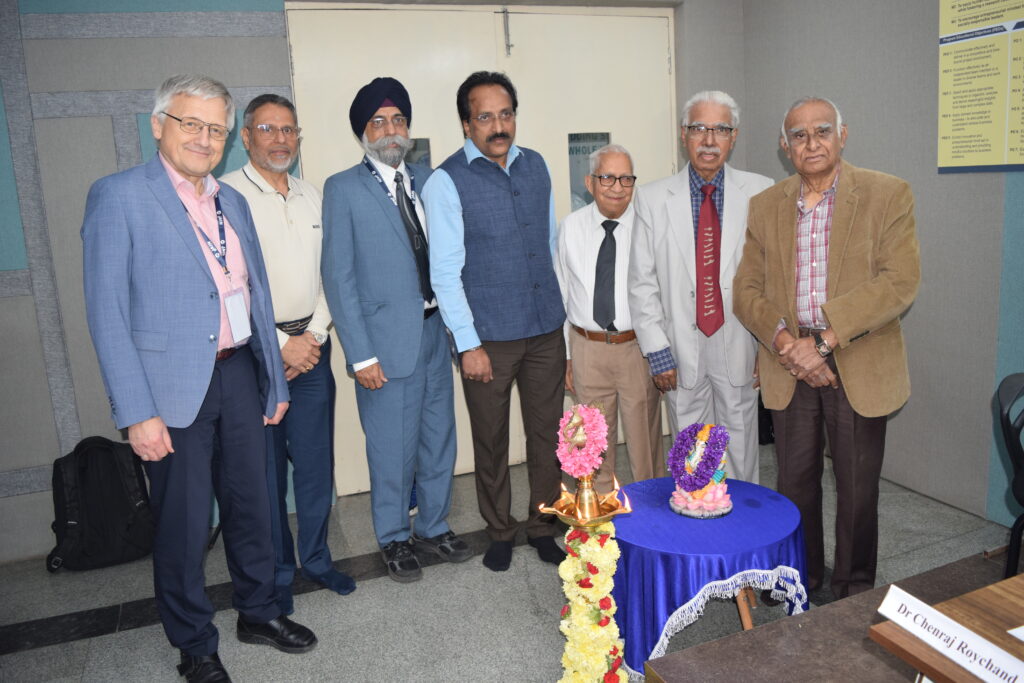
The inaugural ceremony brought together a distinguished roster of dignitaries and experts, whose participation signalled the conference’s national and international importance. Dr. Chenraj Roychand, Chancellor of JAIN (Deemed-to-be University), presided over the opening proceedings. The presence of luminaries such as Prof. B. Dattaguru — a distinguished professor at JAIN and Padma Shri awardee — and Dr. C.G. Krishnadas Nair, former Chancellor of JAIN and former Chairman of Hindustan Aeronautics Limited, lent historical depth and institutional gravitas to the event. Senior figures from India’s defence and space establishments, including Dr. V.K. Aatre (former Scientific Adviser to the Raksha Mantri, DRDO), Dr. S. Somanath (former Chairman of ISRO), and Dr. Prahlada Ramarao (former Head of the Akash missile programme at DRDO), were also present. Their attendance reflects not merely ceremonial endorsement but also the practical synergy among academic research, state institutions, and industry that is essential to translating aerospace innovation into operational capability.
Dr. C.G. Krishnadas Nair delivered the inaugural address, underscoring the pivotal role of indigenous technology development in the evolution of both space vehicles and aeroplanes. His remarks recalled the historical arc of aerospace achievement in India and emphasized the strategic necessity of domestic capability across design, manufacturing and systems integration. Such indigenization, he observed, strengthens national technological sovereignty while fostering an ecosystem in which academic inquiry can be aligned with industrial and defence imperatives. Following this, Dr. S. Somanath provided a forward-looking perspective on the next generation of aerospace developments, articulating a vision that placed systems thinking, cross-disciplinary collaboration and mission-driven research at the centre of future progress.
A central theme of the inauguration and the conference more broadly is the rapid integration of Artificial Intelligence (AI), Machine Learning (ML), and Digital Twin technologies into the aerospace domain. Presenters and panellists repeatedly emphasized that these capabilities are no longer speculative or peripheral: they are becoming core enablers of improved safety margins, optimized designs, predictive maintenance regimes, and more efficient operational practices for both manned and unmanned aerial systems. AI and ML methods are being applied to problems ranging from aerodynamic optimization and structural health monitoring to sensor fusion for navigation and guidance, anomaly detection in flight systems, and the creation of real-time digital replicas of complex assets through Digital Twins. When coupled with advances in high-fidelity computational modelling, additive manufacturing and experimental diagnostics, these methods permit an iterative, data-driven approach to design and validation that can shorten development cycles and reduce lifecycle costs.
The technical breadth of ICACEAA-2025 is reflected in its programmatic scale: the conference will feature over nine plenary lectures, thirty-five keynote addresses and some sixty research papers, spanning traditional subjects in structural mechanics and materials science to emergent topics in computational aeroelasticity, multiphysics simulation, uncertainty quantification, robust and adaptive control, and the application of AI in design and operations. The inaugural sequence continued with a technical session delivered by Dr. Prahlada Ramarao, whose practical experience in high-performance missile systems brings operational insight to discussions of reliability, guidance and systems integration. Such contributions illustrate the essential interplay between experimental validation and computational prediction—a recurring theme of the conference—where empirical data both inform and validate increasingly sophisticated numerical models.
Another objective of the conference is to accelerate the translation of academic research into commercially viable and societally beneficial technologies. To that end, ICACEAA-2025 includes industry-focused sessions that bridge the gap between theoretical innovation and practical application. These sessions are designed to foster dialogue between researchers and industry engineers on topics including certification pathways for AI-enabled systems, the manufacturing readiness of novel materials and processes, supply chain resilience, and regulatory frameworks for autonomous and remotely piloted platforms. The presence of leaders from aerospace firms, defence R&D organizations and regulatory bodies ensures that technical discussions remain grounded in the realities of deployment, certification and lifecycle management.
The conference’s focus on interdisciplinary cooperation also addresses a pressing workforce imperative: preparing the next generation of aerospace professionals who can operate at the intersection of classical engineering disciplines and data-driven approaches. The Chancellor, Dr. Chenraj Roychand, captured this ethos in his remarks, asserting that the future of aerospace depends on the integration of disciplines, technologies and generations. He framed ICACEAA-2025 as a vital platform where “legendary scientists and emerging researchers collaborate, translate research into real-world impact, and inspire innovation that advances India’s scientific leadership while contributing solutions for global development.” This sentiment highlights both a national ambition — to advance indigenous scientific capability — and a recognition of the inherently international nature of contemporary aerospace challenges, from climate-constrained aviation to global airspace management and the peaceful use of outer space.
Methodologically, the conference foregrounds the complementarities between computational and experimental approaches. Advances in computational methods — including high-performance computing, reduced-order modelling, probabilistic design, and machine-learning-augmented solvers — enable the exploration of vast design spaces and the rapid iteration of concepts. Yet experimental methods remain indispensable for validating numerical predictions, uncovering unforeseen failure modes, and generating high-quality data to train and calibrate data-driven models. The Digital Twin paradigm seeks to unify these approaches by creating continuous, bidirectional links between physical assets and their virtual counterparts: experimental measurements update the twin, which in turn supports predictive maintenance, operational optimization and future design refinements. Within the aerostructures domain, this synthesis is critical because structural performance and safety are governed by complex, often nonlinear interactions among materials, geometry, loading spectra and environmental factors.
The technical program’s diversity also reflects growing attention to sustainability and resilience. Aerostructures research increasingly addresses the twin imperatives of reducing aviation’s environmental footprint and ensuring system robustness under uncertain operating conditions. Lightweighting through advanced materials and structural topology optimization, integration of alternative propulsion, fatigue-life extension strategies, and the deployment of sensors for continuous structural health monitoring are among the convergent avenues through which aerospace engineering seeks to reconcile performance with sustainability. In the context of drones and unmanned aerial systems, where distributed operations and low-cost manufacturing pose distinct challenges, integrating AI for mission planning and fault-tolerant control is especially relevant.
By convening academia, industry, and government stakeholders, ICACEAA-2025 helps build collaborative networks needed to translate research outcomes into certified products and services. Conferences such as this one serve multiple functions: they disseminate state-of-the-art knowledge, expose early-career researchers to critical feedback, catalyse new collaborations, and inform policymakers about emerging technical trajectories that may merit investment or regulatory attention. The presence of senior figures from DRDO, ISRO, and the national industry underscores the conference’s role as a nerve centre for strategic dialogue on capability development, standards, and the prioritization of research goals that align with national objectives.
JAIN (Deemed-to-be University) has articulated an institutional commitment to fostering such platforms. As a leading institution headquartered in Bengaluru with a multidisciplinary orientation, JAIN has invested in curricular and infrastructural capabilities that support industry-aligned education, laboratory research and entrepreneurship. The university’s emphasis on interdisciplinary learning, modern laboratories and industry collaborations complements the goals of ICACEAA-2025 by ensuring that academic inquiry is both rigorous and relevant to industrial needs. The conference further reinforces the university’s vision of nurturing an environment in which theoretical advances can be rapidly prototyped, tested, and translated into practice.
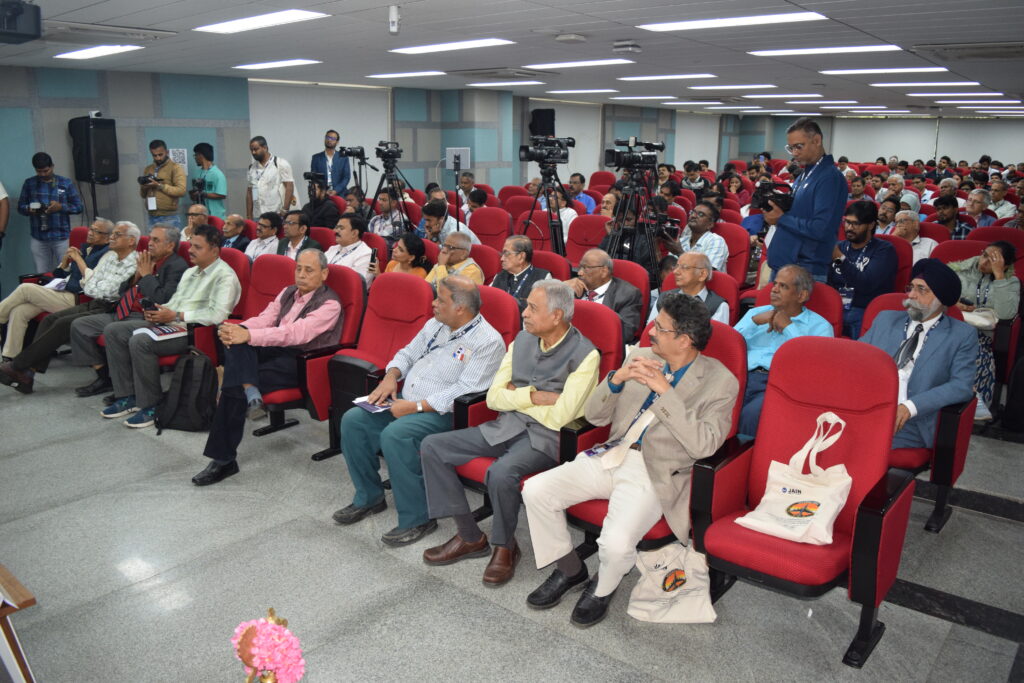
As ICACEAA-2025 proceeds through its scheduled sessions through December 20, the anticipated outcomes extend beyond the immediate exchange of technical papers and presentations. The event is positioned to yield enduring impacts in the form of collaborative research proposals, industry–academic partnerships, and the acceleration of projects that embed AI, digital twins and advanced computational-experimental methods into the design, testing and maintenance of aerostructures. More broadly, the conference’s dialogues will inform curricular priorities, inspire younger researchers to engage with mission-relevant problems, and help shape national and international research agendas.
ICACEAA-2025 represents a timely and consequential convergence of expertise at the intersection of computational science, experimental mechanics and systems engineering within the aerospace sector. By emphasizing indigenous capability, interdisciplinary integration and the pragmatic adoption of AI-driven tools and Digital Twin methodologies, the conference embodies a comprehensive response to contemporary technical and societal challenges. Its success will be measured not only by the breadth and depth of the technical discourse it facilitates over the coming days, but by the tangible collaborations and innovations that emerge thereafter — innovations that promise to enhance safety, efficiency and sustainability in aerospace systems and to contribute to India’s evolving role in the global scientific and technological landscape.
Vijay Grover is the Editor of Indian Aerospace & Defence. He is a veteran Indian journalist whose work has significantly influenced television newsrooms at outlets such as Zee News, NewsX, and TRT World. Renowned for shaping newsroom practices and ethical standards, he has critiqued the decline of field reporting and the rise of desk-driven propaganda.

