

Chaitali Bag
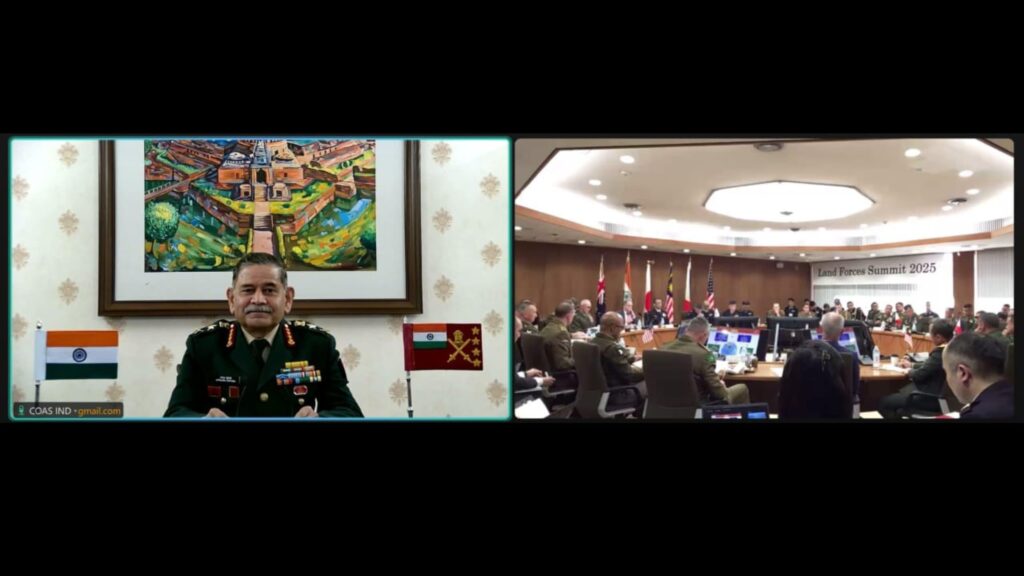
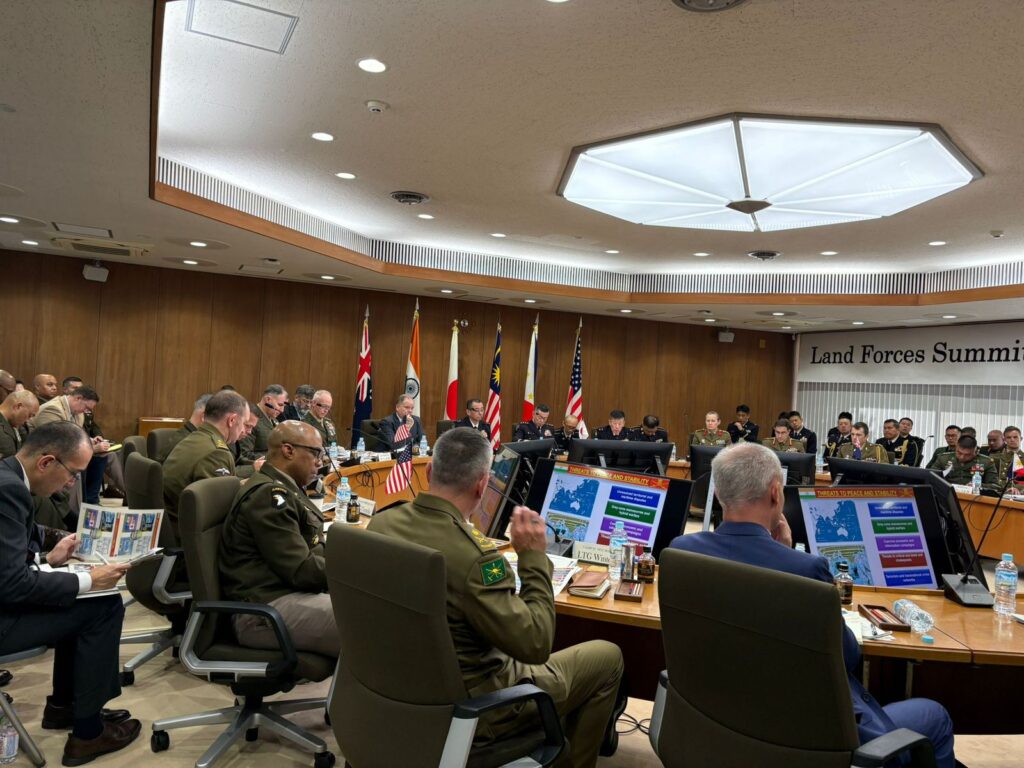
The Indo-Pacific region, a dynamic theatre of geopolitical and economic significance, requires robust, collaborative security architectures to ensure sustained peace, stability, and prosperity. In this context, the 3rd Land Forces Summit, hosted by the Japan Ground Self-Defense Force (JGSDF), provided a critical platform for senior military leaders to engage in structured dialogue and deepen understanding. General Upendra Dwivedi, Chief of the Army Staff (COAS) of the Indian Army, delivered a compelling address, articulating a novel framework – the ‘IKIGAI Framework’ – as a comprehensive roadmap for enhancing Indo-Pacific land power cooperation. This framework, drawing on the Japanese concept of finding purpose and fulfilment, offers a pragmatic, structured approach to strengthening multilateral military collaboration, ultimately contributing to a more secure and prosperous region.
The IKIGAI Framework, comprised of six interconnected pillars, serves as a practical guide for nations seeking to enhance their collective land power capabilities. Each pillar addresses a critical aspect of modern military collaboration, ensuring a holistic and integrated approach to regional security challenges. The first pillar, ‘Interoperability and Information Sharing,’ underscores the need for seamless communication and coordinated action among national armies. Interoperability goes beyond simply using compatible equipment; it requires a shared understanding of operational procedures, standard communication protocols, and the ability to integrate forces effectively during joint exercises and operations. Information sharing is also vital for maintaining situational awareness and anticipating potential threats. The timely and accurate exchange of intelligence, threat assessments, and operational data enhances decision-making and enables a more proactive approach to regional security challenges.
The second pillar, ‘Knowledge and Professional Military Education,’ recognizes the importance of intellectual capital in driving effective military collaboration. This pillar emphasizes the need for shared learning opportunities, including joint training programs, staff exchanges, and participation in international military education courses. By fostering a shared understanding of military doctrine, strategic thinking, and emerging technologies, this pillar promotes intellectual interoperability and strengthens participating nations’ ability to collectively address complex security challenges. Furthermore, it encourages the development of a cadre of officers and soldiers equipped with the knowledge, skills, and experience needed to operate effectively in a multinational environment.
The third pillar, ‘International Humanitarian Assistance and Disaster Relief,’ acknowledges the increasingly important role that armed forces play in responding to natural disasters and humanitarian crises. The Indo-Pacific region is particularly vulnerable to natural hazards, including earthquakes, tsunamis, and typhoons. This pillar emphasizes the need for stronger cooperation in disaster preparedness, response coordination, and humanitarian assistance. By sharing best practices, developing standard operating procedures, and conducting joint exercises, participating nations can improve their collective ability to respond quickly and effectively to humanitarian crises, alleviating suffering and saving lives.
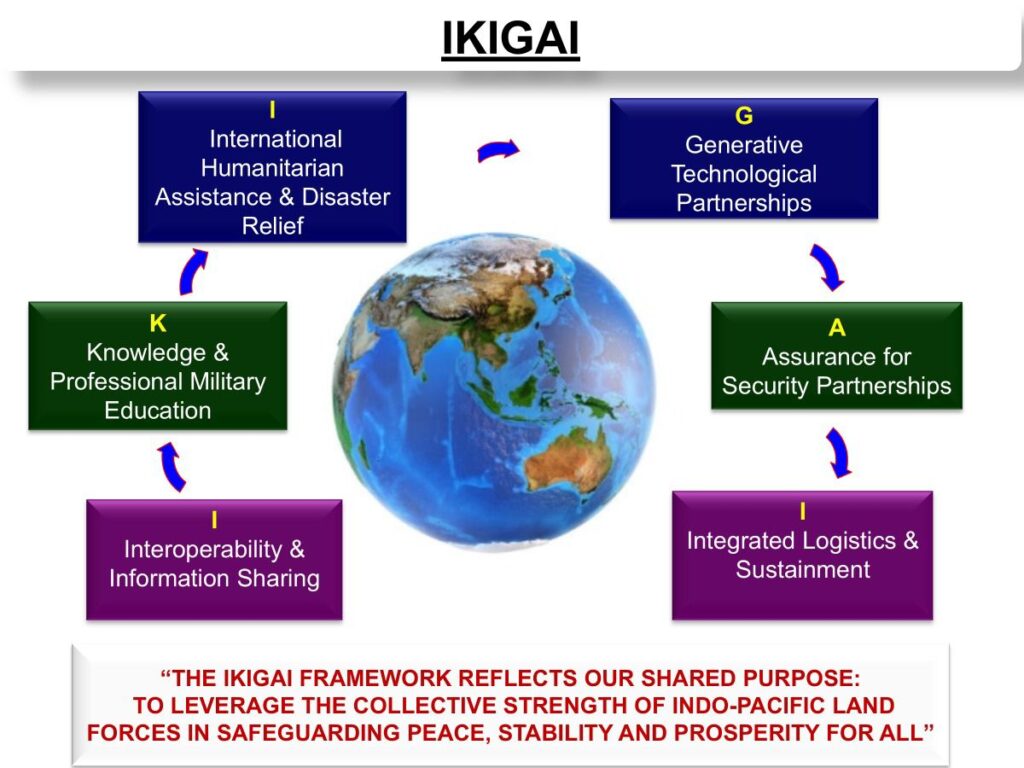
The fourth pillar, ‘Generative Technological Partnerships,’ recognizes the critical role of technological innovation in maintaining a military edge. This pillar encourages collaboration in research and development, technology transfer, and the joint production of military equipment. By pooling resources and expertise, participating nations can accelerate the development of cutting-edge technologies and reduce their dependence on external suppliers. Furthermore, it promotes the standardization of military equipment and procedures, enhancing interoperability and reducing logistical challenges. However, this pillar also requires careful consideration of intellectual property rights and the risk of technology leakage, necessitating a framework of trust and transparency.
The fifth pillar, ‘Assurance for Security Partnerships,’ emphasizes the importance of building trust and confidence between participating nations. This pillar calls for regular dialogues, joint exercises, and confidence-building measures to enhance transparency and reduce the risk of miscalculation. By demonstrating a commitment to peaceful dispute resolution and adherence to international law, participating nations can foster a climate of trust and cooperation, deterring potential aggressors and promoting regional stability. This pillar also necessitates a clear understanding of each nation’s strategic interests and security concerns, ensuring that partnerships are mutually beneficial and sustainable.
The final pillar, ‘Integrated Logistics and Sustainment,’ recognizes the logistical challenges of operating in a geographically dispersed region. This pillar emphasizes the need for improved coordination in logistical planning, resource sharing, and the establishment of standard supply chains. By leveraging each nation’s unique logistical capabilities and infrastructure, participating nations can reduce costs, improve efficiency, and enhance the sustainability of joint operations. Furthermore, it promotes the standardization of logistical procedures and equipment, streamlining the movement of personnel and supplies across national borders.
Beyond the six pillars of the IKIGAI Framework, General Dwivedi rightly emphasized the importance of three key pillars of convergence: Shared Diagnosis, Shared Principles, and Shared Actions. A ‘Shared Diagnosis’ involves a collective understanding of the threats and challenges facing the Indo-Pacific region, enabling participating nations to prioritize their efforts and allocate resources effectively. ‘Shared Principles’ refers to a common commitment to international law, peaceful resolution of disputes, and the principles of sovereignty and territorial integrity. Finally, ‘Shared Actions’ emphasizes the importance of translating shared understanding and principles into concrete actions, such as joint exercises, intelligence sharing, and coordinated patrols.
The IKIGAI Framework, as articulated by General Dwivedi, offers a compelling and practical blueprint for enhancing Indo-Pacific land power cooperation. By focusing on interoperability, knowledge sharing, humanitarian assistance, technological partnerships, security assurance, and integrated logistics, this framework provides a structured approach to building stronger, more resilient, and more effective military alliances. The emphasis on shared diagnosis, shared principles, and shared actions further reinforces the importance of a common purpose and a collaborative spirit. As the Indo-Pacific region continues to face evolving security challenges, the IKIGAI Framework offers a valuable roadmap to harness collective land power to support regional peace, stability, and prosperity. Its successful implementation will depend on participating nations’ commitment to embrace its principles and translate them into tangible actions, ultimately contributing to a more secure and prosperous future for the region.


