

Chaitali Bag
Vijay Diwas, observed annually on December 16th, serves as a potent reminder of India’s decisive victory in the 1971 war against Pakistan. This year, on the 54th anniversary of this momentous event, President Droupadi Murmu and Prime Minister Narendra Modi joined the nation in paying heartfelt tribute to the heroes who fought valiantly, showcasing unparalleled courage and sacrifice that ultimately led to the liberation of Bangladesh. Their words, echoing the sentiments of a grateful nation, underscore the enduring significance of this victory and its indelible mark on India’s military history and the geopolitical landscape of South Asia.
President Murmu, in her tribute, emphasized the armed forces’ unwavering devotion to the nation and acknowledged the supreme sacrifices made by soldiers in the service of the country. She rightly framed Vijay Diwas as a symbol of the indomitable spirit of the Indian Armed Forces, highlighting the profound impact of the 1971 war as one of the most significant chapters in India’s military narrative. Her pronouncements on platforms like X demonstrate the government’s commitment to preserving the memory of this pivotal event and ensuring that the heroism and patriotism of those who fought are never forgotten. The President’s words serve as a powerful reminder to future generations of the values of courage, selflessness, and dedication to the nation.
Echoing the President’s sentiments, Prime Minister Modi also commemorated Vijay Diwas, remembering the brave soldiers who fought relentlessly in the 1971 war. His tribute paid homage to their unmatched spirit of nationalism and sacrifice, recognizing the crucial role they played in securing a historic victory for India. The Prime Minister’s recognition of the enduring inspiration derived from their heroism reinforces the idea that their legacy extends beyond the battlefield, shaping the national character and inspiring future generations of Indians.
Beyond the formal pronouncements of national leaders, Vijay Diwas is commemorated nationwide through events that highlight the war’s historical significance. The Indian Army, through its tributes and commemorative activities, actively helps preserve and disseminate the historical narrative. The Eastern Command’s Military Tattoo in Kolkata, for instance, served as a vibrant showcase of military traditions, discipline, and ceremonial drills, connecting the contemporary armed forces with the rich history they represent. Furthermore, the Indian Army’s social media posts detailing the liberation of Bangladesh highlight the crucial role of the Indian Armed Forces in achieving a decisive victory.
The Indian Army’s assertion that Vijay Diwas “is not just a date – it stands as the symbol of the historic and decisive victory of the Indian Armed Forces in the 1971 War” captures the day’s significance. The war was not merely a military conflict; it was a transformative event that reshaped India’s military history, redrew the map of South Asia, and ultimately led to the birth of a new nation. The partnership between the Mukti Bahini and the Indian Armed Forces is a testament to the shared commitment to freedom and the power of collective action. The Indian Army’s role in ending the mayhem and cruelty perpetrated by the Pakistani Army, culminating in the surrender of approximately 93,000 Pakistani soldiers, marks this victory as a truly exceptional moment in military history. This swift and decisive campaign, completed in a mere 13 days, highlights the strategic brilliance and operational effectiveness of the Indian Armed Forces.
Vijay Diwas, observed annually on December 16th in India, commemorates the nation’s decisive victory over Pakistan in the 1971 war. This triumph not only liberated East Pakistan, leading to the creation of Bangladesh, but also underscored India’s strategic capabilities and commitment to humanitarian principles. The day serves as a solemn reminder of the sacrifices made by Indian soldiers and a celebration of the values of freedom, justice, and national unity.
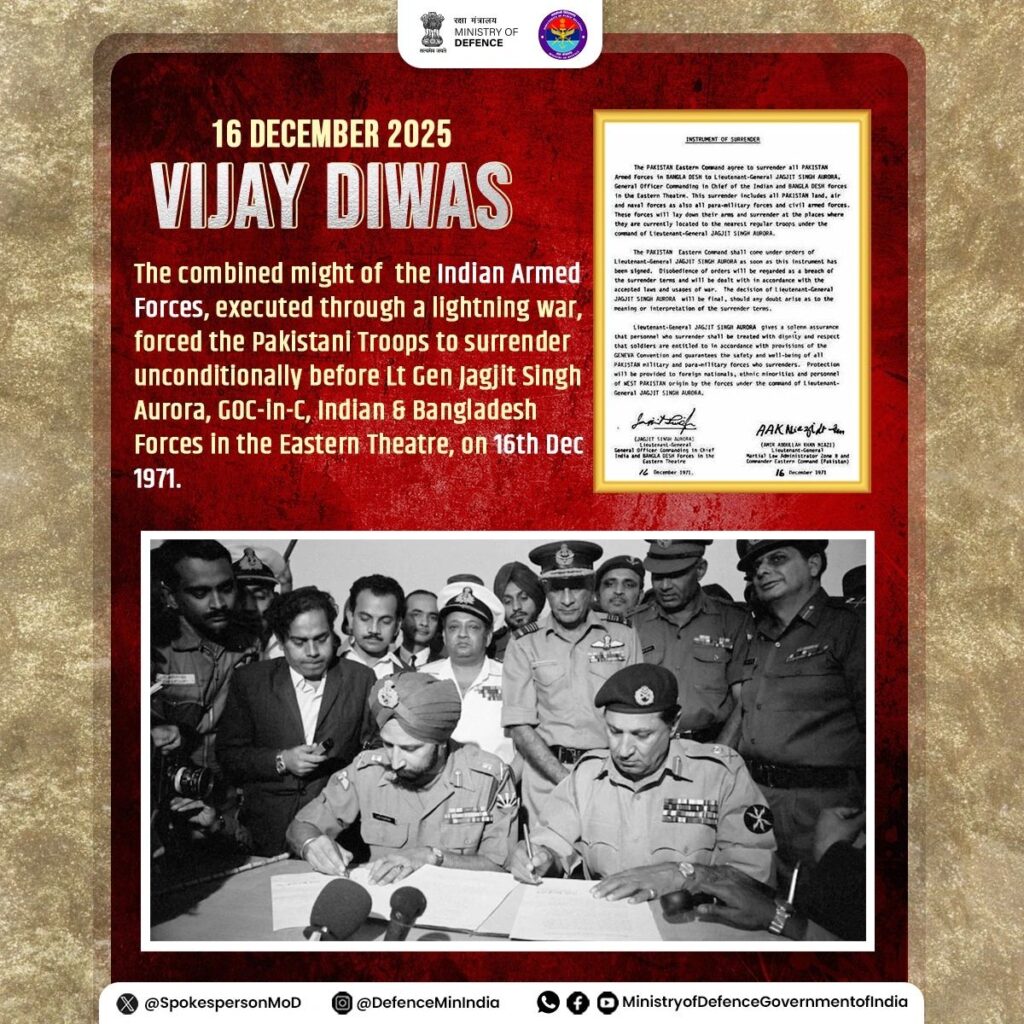
The 1971 war was precipitated by the escalating crisis in East Pakistan, where the civilian population faced egregious violence and repression at the hands of the Pakistani army. Millions were displaced, creating a humanitarian catastrophe that demanded international attention. India’s intervention was driven by a commitment to support the people of East Pakistan in their pursuit of independence, transforming the regional crisis into a full-scale conflict between India and Pakistan.
The swift and decisive victory, culminating in the surrender of approximately 93,000 Pakistani soldiers to the joint forces of the Indian Army and the Mukti Bahini in Dhaka, stands as one of the largest military surrenders in modern history. This victory brought an end to the atrocities inflicted upon the population of East Pakistan. It paved the way for the establishment of a new nation founded on the principles of self-determination and human rights.
Beyond the strategic and geopolitical implications, Vijay Diwas holds immense symbolic significance. It is a tribute to the courage and dedication of the Indian soldiers who fought and sacrificed their lives for the cause of freedom and justice. It serves as a poignant reminder of the human cost of conflict, with approximately 3,900 Indian soldiers perishing in the war. The day also resonates deeply with people in Bangladesh, marking the culmination of their struggle for independence and the realization of their aspirations for a sovereign nation.
Vijay Diwas is observed across India with commemorative events and ceremonies, including wreath-laying ceremonies at Amar Jawan Jyoti and other memorials. These observances honour the fallen, celebrate victory, and reinforce national unity and patriotism. Events like military tattoos and the display of captured enemy equipment, as seen in the 2025 commemoration, further contribute to public understanding of the conflict and the vigilance of the Indian armed forces.
The 54th Vijay Diwas serves as a potent reminder of the courage, sacrifice, and strategic brilliance that characterized India’s victory in the 1971 war. The tributes paid by President Murmu and Prime Minister Modi, coupled with the commemorative events held nationwide, underscore the enduring significance of this historic event. Vijay Diwas is not just a day of remembrance; it is a celebration of the human spirit, a testament to the power of collective action, and a source of enduring inspiration for generations of Indians. It remains a vital symbol of India’s commitment to safeguarding its sovereignty, promoting regional stability, and upholding the principles of justice and freedom. The memory of the 1971 war and its heroes must be diligently preserved, ensuring that their sacrifices continue to inspire and guide the nation towards a brighter future.

