
Chaitali Bag
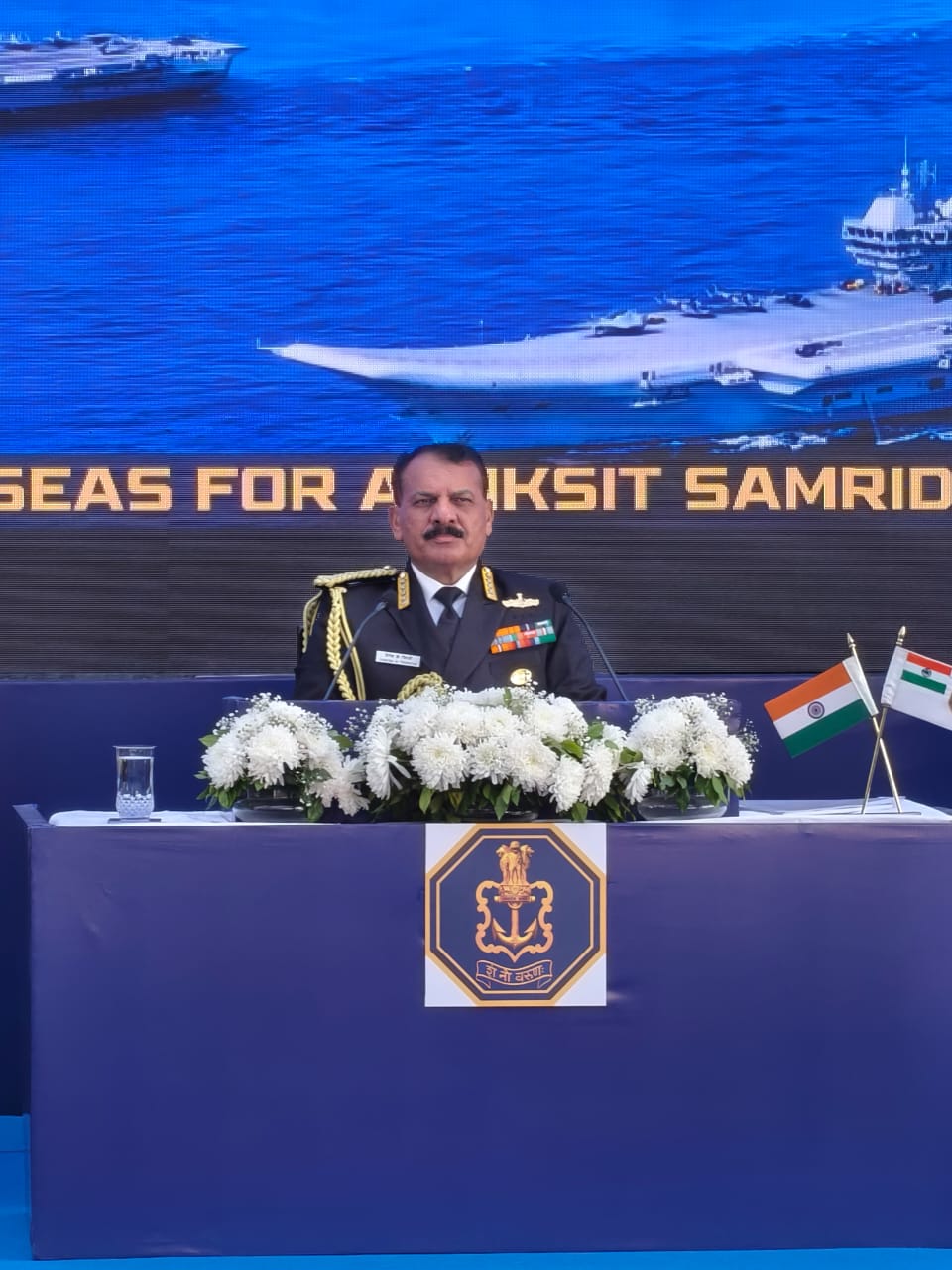
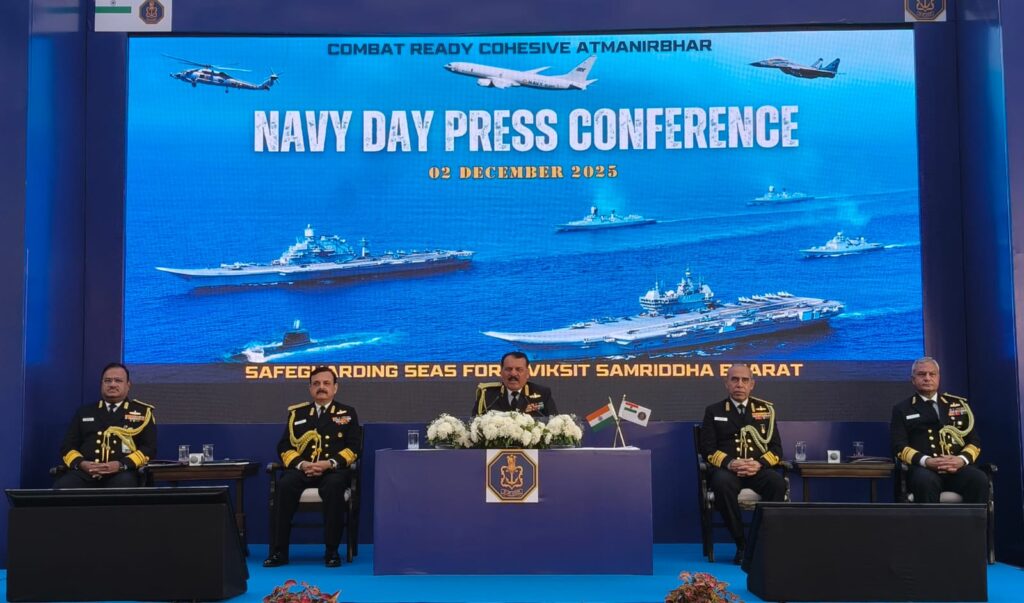
Addressing the media after a year, the Chief of the Naval Staff, Admiral Dinesh K. Tripathi, delivered a comprehensive overview of the Indian Navy’s multifaceted accomplishments and strategic vision, effectively setting the stage for the upcoming Navy Day 2024 celebrations. This highly anticipated interaction served as a platform to showcase the Navy’s sustained commitment to safeguarding national maritime interests and its proactive role in fostering regional and global maritime security. Admiral Tripathi underscored the profound significance of Navy Day, observed annually on December 4th, as a poignant occasion to commemorate Operation Trident, the decisive naval offensive during the 1971 Indo-Pakistani War that inflicted substantial damage on enemy assets and fundamentally altered the conflict’s trajectory. This day serves as a tribute to the unwavering courage, dedication, and sacrifice of naval personnel, past and present, whose contributions have been instrumental in shaping the Indian Navy into the formidable and technologically advanced force it is today, a force capable of projecting power and influence across the maritime domain.
Acknowledging the media’s vital role in fostering public maritime awareness, the officer expressed gratitude for their continued support in highlighting the Navy’s contributions to the nation.
Get ready, Trivandrum! This year’s Navy Day celebrations are set to be the biggest and best yet, taking place on the stunning shores of Shanghum Beach. The President of India, our esteemed Commander-in-Chief, will grace the occasion as the chief guest and witness firsthand the awe-inspiring operational demonstration of the Indian Navy’s capabilities. It’s a spectacle you simply cannot miss!
Operation Sindoor: A Show of Unwavering Resolve
But enough about the future – let’s delve into the now, because the Indian Navy has been a whirlwind of activity! Operation Sindoor, a resounding success, reaffirmed the Navy’s unwavering readiness, unparalleled capability, and potent deterrence. The carrier battle group’s aggressive yet measured posture in the Arabian Sea sent a clear message, effectively confining the Pakistan Navy to its ports and significantly impacting its economy. Talk about strategic brilliance!
And the Prime Minister himself? He was right in the heart of the action! During Diwali, he visited the Navy at sea and witnessed firsthand the force’s multidimensional operational capabilities, centered on the mighty INS Vikrant carrier battle group. A truly historic moment that cemented the Navy’s integral role in safeguarding our national interests!
Non-Stop Action: Across Oceans, Across Continents
The Indian Navy doesn’t believe in taking breaks. Over the last year, they’ve maintained a relentless operational tempo, logging 11,000 ship days and 50,000 flying hours across our vast areas of interest, from the Atlantic to the Pacific. They are the silent guardians, the ever-vigilant protectors, ensuring our seas remain safe and secure.
Pirate Plunderers Beware!
The Indian Navy’s commitment to anti-piracy operations is nothing short of legendary. Since 2008, a dedicated ship has been continuously stationed in the Gulf of Aden, ensuring the safe passage of over 3,700 merchant vessels. That’s dedication!
But the threats have evolved and so has the Navy’s response. Since November 2023, the Red Sea crisis and increased piracy incidents have demanded even greater vigilance. The Indian Navy responded, deploying 40 ships, apprehending 62 pirates, and safeguarding the safe transit of 152 lakh metric tons of cargo, valued at over US$6.5 billion! These are numbers that speak volumes!
And their humanitarian efforts? Simply breathtaking. The Indian Navy responded to more than 30 incidents, rescuing more than 520 people at sea. The INS Talwar even received a well-deserved commendation from the International Maritime Organization for their heroic efforts. This is the Indian Navy – bold, brave, and always ready to lend a helping hand.
Narcotics Nemesis: Crushing the Drug Trade
The fight against illegal narcotics is another front where the Indian Navy is leading the charge. In collaboration with other national agencies, they have seized contraband worth a staggering ₹43,300 crores! This isn’t just about stopping the flow of drugs; it’s about dismantling criminal networks and protecting our communities from the devastating impact of substance abuse.
First Responders Extraordinaire!
When disaster strikes, the Indian Navy is always among the first on the scene.
- Operation Brahma: Following the devastating earthquake in Myanmar, the Navy launched Operation Brahma, delivering over 500 tons of vital relief material within an incredible 48 hours. A testament to their rapid response capabilities!
- They rescued crew members from sunken tankers, evacuated 18 crew from the stricken MV Wan Hai 3, and even inserted a salvage team under treacherous conditions. Courage under fire, exemplified!
- And in the wake of Cyclone Detwa in Sri Lanka, Operation Sagar Bandhu saw the Navy swiftly deliver 12 tons of essential supplies and save eight precious lives. No borders, no hesitation – just pure, unadulterated humanitarianism.
Building Bridges: International Cooperation is Key
Guided by the Prime Minister’s visionary ‘SAGAR’ initiative (Security & Growth for All in the Region), the Indian Navy is actively fostering international cooperation and building strong partnerships worldwide. The numbers are astounding:
* 21 bilateral exercises
* 9 multilateral exercises
* 34 maritime partnership exercises
* 5 Coordinated Patrols (CORP)
* 13 Joint Exclusive Economic Zone (EEZ) patrols
These exercises aren’t just about flexing military muscle; they’re about building trust, sharing expertise, and strengthening regional maritime security.
Maiden Voyages and Landmark Initiatives
But the Indian Navy isn’t content to maintain the status quo; it’s constantly innovating and pushing boundaries.
- Indian Ocean Ship Saga (iOS Sagar): The INS TS Sunaina embarked on a historic 30-day voyage, carrying 44 crew members from nine Indian Ocean Region nations. The initiative, designed to foster camaraderie and cooperation, received resounding appreciation and is set to become an annual event. This is diplomacy at its finest!
- Africa-India Key Maritime Engagement (ACAM): Partnering with nine African countries in Dar es Salaam, Tanzania, the Navy facilitated the exchange of best practices in maritime security. Tanzania, recognizing the immense value of this initiative, has volunteered to host the next biennial edition in 2027.
- DSRV Debut: India’s Deep Submergence Rescue Vessel (DSRV) made its maiden participation in Exercise Pacific Reach in Singapore, successfully mating with submarines from South Korea, Singapore, and Japan. This showcases India’s growing capabilities in underwater search and rescue, a critical asset in modern maritime operations.
Navigating the Seas of Change: An Analysis of the Indian Navy’s Strategic Posture and Indigenization Efforts
Admiral Dinesh K. Tripathi’s recent address, which covers the Indian Navy’s operational effectiveness, modernization programs, and strategic outlook, offers a crucial glimpse into the evolving maritime landscape and India’s proactive adaptation to its challenges. His responses to queries regarding “Op Sindoor,” fleet expansion, and the ambitious ‘AatmaNirbharta’ (self-reliance) initiative highlight a multi-pronged approach designed to ensure India’s maritime security and project its naval power in the Indian Ocean Region (IOR).
The discussion surrounding “Op Sindoor” reveals the Indian Navy’s assertive operational capabilities. The Pakistan Navy’s containment within its harbours, achieved through aggressive posturing and robust Maritime Domain Awareness (MDA), demonstrates a clear deterrent capability. While the short-term economic impact on Pakistan’s trade, estimated at a 10-15% reduction, may be considered limited, the operation sent a potent signal of India’s capacity to influence regional maritime activity. The absence of direct Chinese involvement during “Op Sindoor,” despite Pakistan’s reliance on Chinese weaponry, is significant. It suggests a nuanced dynamic in the region, where overt military intervention by China remains a calculated risk, albeit one that necessitates continuous vigilance from the Indian Navy. The Navy’s institutional commitment to learning from its experiences, exemplified by the thorough post-operation analysis conducted by a dedicated task force, underscores a proactive approach to refining its operational strategies and tactics. This commitment to continuous improvement is crucial for maintaining a competitive edge in a rapidly evolving geopolitical environment.
The admiral’s statements on the future of the Indian Navy’s fleet, particularly regarding aircraft carriers and submarine programs, indicate a force actively preparing for upcoming challenges. The reaffirmation of the carrier battle group as a central tenet of naval strategy underscores the Navy’s understanding of the critical role these platforms play in power projection and sea control. The planned replacement of INS Vikramaditya and the long-term vision of a three-carrier navy signify a commitment to maintaining a significant naval presence across India’s coastlines. The affirmation of India’s anti-ballistic and anti-missile defence capabilities further reinforces the nation’s commitment to safeguarding its maritime assets from potential threats. Progress on the P75 India submarine program, nearing contract completion, and the imminent commissioning of INS Arighat underscore ongoing efforts to modernize the submarine fleet. Providing a submarine to Myanmar, along with training and support, demonstrates India’s commitment to fostering regional maritime security and building strong defence partnerships.
However, the most compelling aspect of Admiral Tripathi’s address lies in the emphasis on ‘AatmaNirbharta’ in defence production. The comprehensive approach to indigenization, spanning both platform and component levels, is a significant shift in India’s defence procurement strategy. The involvement of MSMEs, startups, and larger defence players underscores a “whole of nation” approach to achieving technological self-reliance. The reported 80% indigenous content in the latest P17A frigates, and the increasing indigenous content in submarines and smaller platforms, serve as concrete evidence of progress. Establishing special task forces to articulate naval requirements to industry fosters a collaborative ecosystem, facilitating the development of indigenous technologies. The acceleration of shipbuilding, evidenced by the simultaneous launch and commissioning of platforms, is a testament to streamlined approval processes, improved shipyard efficiency, and increased participation by private shipyards. The recent approval for four indigenously built Landing Platform Docks (LPDs), coupled with efforts to expedite their acquisition, demonstrates a commitment to bolstering India’s amphibious warfare capabilities.
The focus on developing indigenous solutions for critical components, such as gas turbines, diesel engines, and integrated electric propulsion (IEP) systems, is particularly noteworthy. Recognizing these areas as potential “weak links,” the Navy is actively pursuing partnerships with both domestic and international firms, such as Skeloska and Zorya (Ukraine), to address these technological gaps. The pursuit of the KVF project, a 4th-generation-plus aircraft from HAL, represents a long-term commitment to developing indigenous fighter aircraft capabilities for naval operations.
Charting a Course: Admiral Tripathi’s Address on the Indian Navy’s Strategic Orientation & Evolving Doctrine
The Chief of the Naval Staff’s address, which encapsulates the Indian Navy’s strategic outlook, operational capabilities, indigenization efforts, and evolving jointness with sister services, provides valuable insight into the nation’s maritime posture in a dynamic geopolitical landscape. His responses to queries shed light on India’s approach to the Indian Ocean Region (IOR) and the Indo-Pacific, its interactions with regional actors, its commitment to strategic autonomy, and the burgeoning inter-service synergy reshaping the Indian armed forces. A close examination of these key themes reveals a carefully calibrated strategy to safeguard India’s maritime interests, foster regional stability, and promote collaborative security.
The Admiral’s emphasis on the Indian Ocean Region as the “core focus” of the Indian Navy aligns with India’s historical and geographic realities. The IOR is a vital artery for global trade, connecting the East and West, and is critical to India’s energy security, economic prosperity, and overall national security. Given its geographic centrality and extensive coastline, India naturally assumes the role of a net security provider in the region. However, Admiral Tripathi aptly broadens the scope by recognizing the Indo-Pacific as an “important entity,” acknowledging that India’s maritime interests extend beyond the Indian Ocean. This recognition is reflected in India’s active participation in initiatives such as the “Indo-Pacific Ocean Initiative” and the “Indo-Pacific Regional Dialogue,” which aim to promote maritime security, connectivity, and sustainable development across the Indo-Pacific. These initiatives demonstrate India’s proactive approach to shaping a stable and prosperous maritime order grounded in inclusivity, respect for international law, and freedom of navigation.
Addressing concerns about Chinese research vessels in the IOR, Admiral Tripathi’s response underscores the Indian Navy’s vigilance and commitment to safeguarding India’s maritime domain. His assertion that the Navy is “fully aware of all activities” and takes “suitable actions per international regulations and government directives” provides reassurance and reaffirms India’s resolve to maintain situational awareness and uphold its sovereign rights. While avoiding inflammatory rhetoric, the Admiral’s statement conveys a clear deterrence message, signalling that India can monitor and respond to any activities that could undermine its maritime security.
The Admiral’s clarification regarding Indian Navy deployments in the South China Sea further illuminates India’s nuanced approach to regional security. While not undertaking specific deployments targeted at the South China Sea, the Indian Navy routinely transits through the region as part of larger deployments for exercises with like-minded nations, such as South Korea, the Philippines, and Japan, and for port calls. These deployments serve multiple purposes: enhancing interoperability with partner navies, projecting India’s maritime presence, and contributing to the maintenance of freedom of navigation in a region fraught with territorial disputes. By emphasizing that these transits are routine components of broader deployments, the Admiral avoids creating unnecessary tension while signalling India’s commitment to upholding international norms and safeguarding its maritime interests.
Central to India’s foreign policy is its commitment to “strategic autonomy,” a principle that allows India to pursue its national interests without being beholden to any single power bloc. Admiral Tripathi’s assertion that India is “capable of collaborating with various partners based on ‘issue-based convergences'” encapsulates this approach. India’s diverse engagements with countries worldwide, as evidenced by international visits and military diplomacy, demonstrate its ability to forge partnerships based on shared interests and mutual benefit without compromising its strategic independence. This flexibility enables India to navigate a complex, rapidly changing geopolitical landscape, maximizing its influence and contributing to a more balanced, multipolar world order.
The logistical agreements, such as the Logistics Exchange Memorandum of Agreement (LEMOA), are presented as practical arrangements designed to enhance operational efficiency and interoperability, without raising concerns about compromising sovereignty or creating undue dependence. Admiral Tripathi’s emphasis that these agreements do not present any “conflict or issues” for either party underscores the mutually beneficial nature of these arrangements. By facilitating access to logistical support and enhancing coordination, these agreements contribute to greater maritime security and regional stability.
Beyond strategic outlook and foreign relations, Admiral Tripathi’s address underscores the importance of “jointness” and a “change of mindset” within the Indian armed forces. He emphasizes the “complete synergy” among the three services, facilitated by regular meetings between the Chief of Defence Staff (CDS) and the three service chiefs. This institutionalized coordination ensures alignment of objectives, optimizes resources, and enhances overall operational effectiveness. The visible “shift towards jointness and integration” across services, with officers from different branches serving in various directorates, signifies a fundamental change in organizational culture. This cross-functional collaboration fosters a more holistic, integrated approach to national security, enabling the Indian armed forces to respond more effectively to complex, evolving threats. The acceptance of diverse views and leadership directives further reinforces the commitment to creating a truly integrated and synergistic fighting force.
A Force to be Reckoned With
The message is clear: The Indian Navy is not just a maritime force; it’s a dynamic, proactive, and globally engaged organization that is committed to safeguarding our national interests, promoting regional security, and serving humanity. As we commemorate Navy Day 2025, let’s celebrate the incredible achievements of these brave men and women who stand guard over our oceans, ensuring a secure and prosperous future for India. Jai Hind!

