

Chaitali Bag
The world is on the move—literally. Air travel connects continents, fuels global commerce, and brings people closer together than ever before. Yet, with international air passenger numbers projected to nearly double over the next two decades, aviation faces one of the most exciting and urgent challenges in its history: how to grow sustainably while drastically cutting carbon emissions. The industry’s bold goal to achieve net-zero carbon emissions by 2050 is not just ambitious—it’s revolutionary.
The stakes could not be higher. As passenger numbers soar, fuel consumption may climb to an astounding 370 million gallons per day. Without decisive action, aviation-related emissions could rise by 40% by 2040. This forecast underscores the need for immediate innovation and global collaboration. But the good news is that the aviation industry is already charting a course toward a cleaner, greener future. From industry leaders to policymakers and engineers, a shared commitment to decarbonization is energizing the skies.
Aviation and the Race Against Climate Change: Charting a New Flight Path to Net Zero
Aviation has always symbolized human progress, connecting people and economies across the globe. Yet, the very industry that unites us is now facing a turbulent challenge—its growing contribution to climate change. From the steady plume of carbon dioxide (CO₂) emissions to the fleeting but potent influence of short-lived climate pollutants (SLCPs), the aviation sector stands at the intersection of innovation, sustainability, and urgency. The need for decisive action has never been more apparent, nor more exciting.
In 2022, the International Civil Aviation Organization (ICAO) made a bold commitment: achieving net-zero CO₂ emissions by 2050. This target echoes the global ambition set out in the Paris Agreement—to limit warming well below 2°C, while striving to stay within the 1.5°C threshold. However, current trends indicate that aviation is not on track to meet that goal. Fuel efficiency improvements are progressing, but not fast enough. Sustainable aviation fuels (SAFs), hailed as a game-changer, are still produced in limited quantities. And while electric and hydrogen-powered aircraft spark enthusiasm, they remain primarily in development stages. The message is clear: ambition must now transform into acceleration.
But there’s a silver lining piercing through this complex cloud layer. Scientists are deepening our understanding of non-CO₂ climate effects from aviation, particularly the role of SLCPs such as nitrogen oxides, black carbon, and the mesmerizing but problematic contrail cirrus—those white streaks across the sky that can trap heat in the atmosphere. Recent research suggests that controlling these short-lived pollutants could bring relatively rapid climate benefits. For instance, contrail mitigation strategies—altering flight paths, adjusting altitudes, or developing cleaner combustion technologies—could cool the planet in the short term while longer-term CO₂ reduction technologies mature.
Despite this promising outlook, current aviation decarbonization roadmaps do not yet fully incorporate SLCP controls. This gap represents not a failure, but an opportunity. Integrating SLCP management into aviation’s net-zero strategy could significantly accelerate climate progress, providing a bridge between today’s emissions reality and tomorrow’s cleaner skies.

To put the challenge into perspective, the world’s remaining “warming budget” to stay within 1.7°C is shrinking rapidly. Studies warn that global temperatures may exceed 1.5°C before 2030—an alarm bell for every sector, including aviation. If the industry continues its current trajectory without deep innovation and coordinated global policy, its share of the climate burden will only grow. Yet, the aviation community has something powerful on its side: ingenuity. From the Wright brothers’ first flight to the jet age, aviation has proven that bold vision, science, and determination can transform the impossible into the achievable.
Reimagining aviation for a net-zero future is not just an environmental responsibility—it is a call to action for engineers, policymakers, and travellers alike. Every new aircraft design, every liter of sustainable fuel, and every rerouted contrail brings us closer to a future where the skies remain open, blue, and climate safe. The task is immense, but the opportunity is exhilarating. Aviation’s next great leap will not only be across continents—it will be toward a stable and sustainable planet.
Propelling Aerospace Toward a Cleaner Tomorrow: The Bold Journey to Net-Zero Flight!
The quest to decarbonize the aerospace industry is one of the most ambitious and inspiring challenges of our time. While other sectors have made rapid progress toward net-zero goals, aviation stands apart—flying high, quite literally, on the wings of immense technical complexity, safety imperatives, and energy demands. Yet, these challenges make the journey toward sustainable aviation all the more thrilling. The industry’s goal to achieve carbon neutrality by 2050 isn’t just an aspiration—it’s a moonshot that embodies human ingenuity, persistence, and the relentless spirit of innovation.
Aviation is inherently energy-intensive. Flying an aircraft at 35,000 feet and speeds surpassing 600 miles per hour requires an energy-to-weight ratio that very few materials or fuels can offer. Today, fossil-based jet fuel remains the only energy source capable of meeting these extreme performance demands at a competitive cost. Unfortunately, this dependence comes at a significant environmental price. Burning jet fuel emits vast amounts of carbon dioxide and other pollutants, contributing to global climate change. The world urgently needs an alternative, but replacing jet fuel is no simple task.
Achieving Net-Zero: The Trillion-Dollar Journey to Transform Aviation
Reaching net-zero emissions by mid-century is not just a matter of ambition—it’s the defining challenge and opportunity of our generation. The aviation industry sits at the heart of this transformation, a sector that connects the world yet relies heavily on fossil fuels. To achieve true sustainability, industry leaders, governments, and innovators must come together to invest over a trillion dollars in the next two decades. This monumental commitment will fuel the evolution of new technologies, reshape business models, and redefine what flight means in a greener future.
At the center of this transition lies Sustainable Aviation Fuel (SAF), which currently accounts for only 0.3% of global jet fuel use. That statistic alone emphasizes the uphill battle ahead. To close the gap between aspiration and reality, SAF production must scale exponentially. This won’t happen naturally or easily; it will require a symphony of global cooperation, with governments implementing forward-looking regulations, creating economic incentives, and ensuring that early adopters of sustainable solutions are not left at a disadvantage. Industry stakeholders must also innovate relentlessly, improving feedstock efficiency, building scalable supply chains, and driving down costs through technology and volume. The success of SAF will be measured not only in gallons produced but in the industry’s ability to make it a mainstream, economically viable alternative to conventional jet fuel.
Sustainable Aviation Fuels (SAFs) have emerged as a promising bridge toward a cleaner aviation future. These fuels can reduce lifecycle emissions by up to 70–80% compared to conventional jet fuel—a significant step in the right direction. However, the road to scalable adoption is steep. High production costs, limited access to feedstock, and constrained production capacities have slowed the ramp-up of SAF usage. Even though global SAF production is expected to triple to about 1.9 billion liters in 2024, this figure represents a mere 0.53% of total aviation fuel demand. Clearly, the sector has a long way to go before SAFs can make a substantial dent in emissions figures.
Beyond fuels, the frontier of aircraft and propulsion technology is equally exciting—yet similarly challenging. Hydrogen, electric, and hybrid-electric propulsion systems represent a bold vision for aviation’s future, but these innovations remain in the early stages of development. While breakthroughs are on the horizon, they haven’t yet matured to the point of large-scale deployment. In the near term, the industry will rely on incremental gains within conventional aircraft architectures, continuing the legacy of efficiency improvements that have defined aviation progress for the past 6 decades. Remarkably, every central new aircraft platform since the dawn of the jet age has improved fuel efficiency by about 15%. With ongoing research in aerodynamics, lightweight materials, and engine thermodynamics, there is confidence that the next-generation aircraft—likely entering service around 2034—can achieve similar gains.
However, the intricacies of the industry’s economics add layers of complexity. The typical aircraft development timeline spans eight to ten years, with several more years required to reach peak production. Moreover, the business model for aircraft and propulsion systems relies heavily on long-term aftermarket revenue—often peaking 10 to 15 years after a plane enters service. This means that even if a revolutionary new aircraft were introduced today, its actual market impact would stretch well into the 2040s. In this context, the idea of completely replacing fleets with zero-emission technologies by 2050 becomes practically impossible unless the industry accelerates its readiness for scaled transition technologies right now.
Despite these challenges, the tone of the future is remarkably optimistic. The pathway to net-zero is not one of despair—it’s one of discovery. Industry-wide collaboration, bold investments, and supportive public policy will drive technological evolution at an unprecedented pace. Every dollar invested today in clean energy research, SAF production, and next-generation propulsion moves us closer to an aviation system that connects humanity sustainably.
Re-Capturing Carbon: Paving the Path to Aviation’s Sustainable Future
The aviation industry stands at a thrilling crossroads—where innovation meets responsibility, and ambition embraces environmental stewardship. As airlines continue their journey toward a sustainable sky, the bold challenge that lies ahead is clear: to recapture all the carbon dioxide that cannot yet be avoided. This mission is not simply about offsetting emissions; it is about transforming the very foundation of how we fly.
In the near to mid-term, aircraft will inevitably continue to rely on conventional fossil-based aviation fuels. Despite rapid progress in developing sustainable alternatives, the global fleet cannot transition overnight. Many promising replacements—such as sustainable aviation fuels (SAF) derived from waste materials or synthetic sources—have the potential to reduce net emissions during flight significantly. However, even these advanced fuels are not entirely free of carbon impact; their manufacture and transport still leave a trace of CO₂ behind. Therefore, to truly achieve climate neutrality, the sector must invest vigorously in atmospheric carbon capture technologies and robust, verifiable carbon offset mechanisms.
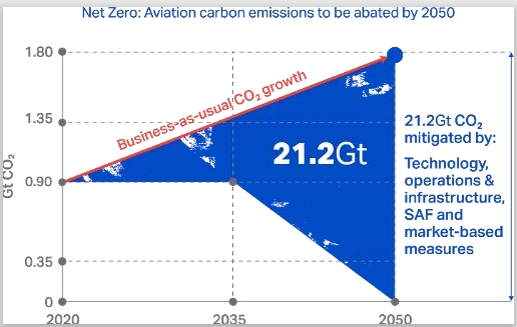
This is where the International Air Transport Association’s (IATA) Net Zero Roadmaps come into play. These five detailed and dynamic roadmaps outline a path toward net-zero emissions by 2050—a monumental goal that demands collaboration among scientists, engineers, policymakers, financiers, and operators worldwide. They represent more than a plan; they are a vision for an aviation ecosystem where every technological advancement, infrastructural investment, operational improvement, and financial model contributes coherently to a sustainable outcome.
What makes these roadmaps particularly inspiring is their adaptability. They acknowledge that the industry’s trajectory will evolve as research deepens and discoveries emerge. Progress in aircraft design, cleaner energy production, optimized flight operations, and supportive government policies will create a symphony of innovation that reshapes our understanding of flight. The journey to sustainable aviation is not linear—it’s an evolving exploration guided by creativity, determination, and global cooperation.
Re-capturing unavoidable carbon is both a technological challenge and a moral imperative. It calls upon the brightest minds to develop scalable carbon removal methods, from direct air capture facilities to nature-based restoration projects. The excitement lies in the possibility: a world where flying no longer contributes to climate change, but instead participates in a balanced, restorative cycle of energy and environment.
The Aircraft Technology Roadmap by IATA stands as a bold, visionary blueprint guiding the aviation industry toward a brilliantly sustainable future —one where technological innovation takes flight toward net-zero emissions! At its core, this roadmap addresses one of the most pressing challenges in aviation—fuel burn and its carbon footprint—by defining how cutting-edge aircraft and engine technologies can achieve revolutionary leaps in energy efficiency. Imagine jet-fuelled aircraft that are 15–20% more efficient than today’s best designs, saving up to 140 million tonnes of CO₂ by 2050 and slashing the sector’s in-flight energy needs by nearly a tenth! These next-generation aircraft will be designed to seamlessly operate on 100% Sustainable Aviation Fuels (SAF), marking a monumental stride in decarbonizing air travel. But the transformation does not stop there—visionary breakthroughs in hydrogen propulsion and electric aircraft promise to propel the industry into an age of zero-emission flight, potentially avoiding an additional 35–125 million tonnes of CO₂, depending on how rapidly these game-changing technologies conquer the skies. Supported by substantial investments and ongoing demonstrator programs in areas such as advanced aerodynamics, aircraft structures, propulsion systems, and intelligent flight controls, each advancement will progress through the TRL scale —from experimental trials to exhilarating first flights and finally to commercial service.
Meanwhile, the Energy and New Fuels Infrastructure Roadmap is laying the groundwork for a massive expansion in SAF production, calling for thousands of new biorefineries and a vast hydrogen network that could redefine global energy flows. By 2050, SAF is expected to account for nearly 90% of aviation fuel, reducing emissions by an astounding 62%, while carbon capture facilities extract over 700 million tonnes of CO₂ from the atmosphere, closing the loop. All of this will be powered by abundant, renewable energy sources, transforming not just aircraft, but the entire aviation ecosystem into a cleaner, smarter, and more inspiring engine of human progress. The future of flight has never looked more promising—innovation, sustainability, and ambition soaring together toward a net-zero horizon!
The global aviation industry is standing at a defining crossroads. As the world accelerates its pursuit of sustainability, air traffic management (ATM) and operations must evolve to meet an undeniably urgent challenge: achieving net—zero CO₂ emissions by 2050. The Operations Roadmap and its partner initiative, the Finance Roadmap, together form an inspiring, action-oriented blueprint for this transformation. They show us that sustainable civil aviation is not just a lofty ambition but a tangible, achievable goal—if we act collaboratively, decisively, and intelligently.
Operations lie at the very heart of aviation’s sustainability journey. Air Traffic Management, as an essential component of national infrastructure, must be prioritized in every strategic conversation about sustainable aviation. It is more than just coordinating airplanes in the sky—it is the nervous system of global aviation, influencing efficiency, fuel use, and ultimately, emissions. Yet today’s ATM systems are riddled with inefficiencies that waste fuel and generate unnecessary CO₂. The exciting truth is that solving these inefficiencies doesn’t require waiting for tomorrow’s technologies—progress can begin *now*. Through smarter routing, better coordination, and more intelligent resource use, operations can deliver meaningful near-term emission reductions.
However, operational improvements can only achieve their full potential through strong alignment and shared vision. Airlines, airports, and Air Navigation Service Providers (ANSPs) must synchronize their investment plans and implementation timelines. Without this integration, even the most advanced ATM programs will struggle to deliver on their promises. Airspace is both a scarce and shared resource, and its effective management demands joint stewardship. By fostering partnerships among stakeholders, the industry can turn local progress into global transformation.
The roadmap identifies several exciting strategies to accelerate progress. Local and regional projects can serve as “proof of concept,” showing the real-world benefits of innovative technologies and operational methods, and helping shape global standards. Benchmarking environmental and performance outcomes will track progress, spotlight best practices, and promote the transition toward Trajectory-Based Operations (TBO)—a more innovative, more predictable way to manage flight paths. Furthermore, regional consortia can ensure that the unique needs of airspace users are respected throughout the planning and implementation phases. Collaboration, transparency, and innovation become the fuel for progress.
The Finance Roadmap, updated in September 2024, complements this operational vision by quantifying the investments required to reach net-zero emissions. Its message is clear: achieving sustainability demands not only technological and procedural innovation but also bold financial commitment. The required average annual investment—around USD 128 billion per year until 2050—may sound enormous. Still, it is far less than what the world has already invested in renewable energy markets like solar and wind. This comparison underscores both the feasibility and necessity of the aviation sector’s transition. Governments also have a crucial role to play: redirecting subsidies from fossil fuels to renewable energy production can accelerate this process dramatically, especially in the scaling of Sustainable Aviation Fuels (SAF).
The Economics team’s projections remind us of the magnitude and urgency of the task. Transition costs—estimated at USD 1.4 billion in 2025 and potentially rising to USD 744 billion by 2050—underline the need for speed, innovation, and scale. Every year of delay increases both the financial and environmental costs. Yet with unified purpose and wise investment, the aviation industry can turn these challenges into opportunities—creating a cleaner, more resilient ecosystem that benefits not just airlines, but all of society.
Adding to the complexity are structural characteristics unique to aviation. Aircraft have incredibly long lifespans—often flying safely for 20 to 30 years. This extended service life is an engineering marvel, but also means that replacing or upgrading airline fleets with newer, cleaner models happens at a measured pace. Furthermore, each aircraft must undergo rigorous certification to meet strict safety and performance standards. These certification processes, while essential, can take a decade or more, delaying the adoption of cutting-edge technology. This ensures public safety but slows innovation cycles compared to other industries.
The Green Sky Race Takes Off: Global Push to Supercharge Sustainable Aviation Fuels
The global race to scale up sustainable aviation fuel (SAF) production is on, and it’s nothing short of exhilarating! Current project pipelines fall far short of what’s needed—we must multiply capacity by five to six times before 2030 to keep the aviation industry on track for net-zero emissions by 2050. That means bringing both bio-based jet fuels and power-to-liquid (PtL) fuels to market fast, with investments in 300–400 new production plants and supportive infrastructure. The timeline is tight—since it takes at least 5 years to build and commission a SAF plant, planning must begin within the next 2 to 3 years. Clever policy design will be essential, prioritizing sustainable biomass for aviation and leveraging the upcoming electrification of road transport to redirect ethanol toward jet fuel via the alcohol-to-jet process. Combined with optimization of existing HEFA plants to produce more jet fuel, these actions could deliver an additional 14–22 Mt of SAF by 2030—covering up to half of projected demand.
The race to decarbonize aviation is on, and the pace of progress in renewable electricity costs will shape which sustainable fuels take the lead! If renewable power prices drop quickly, Power-to-Liquid (PtL) fuels—produced using renewable electricity and green hydrogen—are poised to soar, capturing a dominant market share by 2050 as outlined in the optimistic ORE scenario. This rapid decline in electricity costs would make green hydrogen and PtL production far more affordable, eventually outcompeting biofuels. However, if renewable power becomes cheaper more slowly, biofuels will remain the frontrunners, provided that sufficient sustainable biomass is available, which underpins the PRU scenario. In reality, the skies of the future will likely be powered by a blend of solutions—biofuels, PtL, and hydrogen—working together to push aviation toward a cleaner, more sustainable future!
By the late 2030s, hydrogen and battery-electric aircraft are poised to transform global aviation, paving the way for cleaner, more efficient skies. Hydrogen-powered planes could debut around 2035 and soar in market share through 2050, supplying up to one-third of aviation’s total energy demand if range and storage breakthroughs continue. Though early models may be limited to roughly 2,500 kilometers due to hydrogen’s lower energy density, innovation in airframe design and fuel storage could soon unlock longer routes without sacrificing passenger capacity. Meanwhile, advances in battery chemistries are opening new horizons for fully electric aircraft, making regional flights up to 1,000 kilometers feasible by mid-century. While electric planes might replace over 15% of the global fleet, their impact on emissions will complement hydrogen’s broader potential. The first step toward this sustainable revolution lies in “green corridors”—dedicated routes between airports equipped for refuelling and recharging—ushering in a new era of cleaner, smarter, and more sustainable aviation.
Flying Into the Future
Achieving this transformation will require much more than incremental improvements. It calls for a sweeping overhaul of technology, infrastructure, and operational practices. Sustainable Aviation Fuel (SAF) is one of the most promising tools in this effort. Derived from renewable sources like waste oils and agricultural residues, SAF can reduce lifecycle carbon emissions by up to 80% compared to conventional jet fuel. To meet future demand, however, production must be scaled up massively—an exciting opportunity for innovation and investment worldwide.
Equally transformative are new technologies such as hydrogen-powered and electric aircraft. Green hydrogen, generated using renewable electricity, could power short-haul flights while producing only water as a byproduct. Electric propulsion, though still in its infancy for commercial aviation, promises silent, zero-emission operations for regional routes. Airports, too, will play a crucial role, evolving into hubs of clean energy complete with charging and hydrogen fuelling infrastructure.
Policy and collaboration will be just as important as technology. Governments, manufacturers, airlines, and fuel producers must coordinate to create incentives, establish clear regulatory frameworks, and invest in research and infrastructure. Incremental progress is already visible: modern aircraft are 80% more fuel-efficient than the first generation of airliners and emit 50% less CO₂ than those flying in 1990. Each new aircraft design improves fuel efficiency by an impressive 15–25%, proving that innovation is part of aviation’s DNA.
The journey to net-zero will not be easy, but it will be exhilarating. It represents an unprecedented opportunity to reinvent an industry that has always symbolized human progress and possibility. By combining visionary technology, sustainable fuels, robust policies, and a spirit of global cooperation, aviation can continue to connect the world—this time, with a lighter footprint and a brighter future. The sky is not just the limit; it’s the beginning of a sustainable revolution in flight.
As the aviation sector charts its course to 2050, one thing is sure—the dream of guilt-free flight is no longer science fiction. With innovation at full throttle and sustainability as its compass, the skies of tomorrow promise to be not only busier but also bluer, cleaner, and infinitely more hopeful.

