

Chaitali Bag
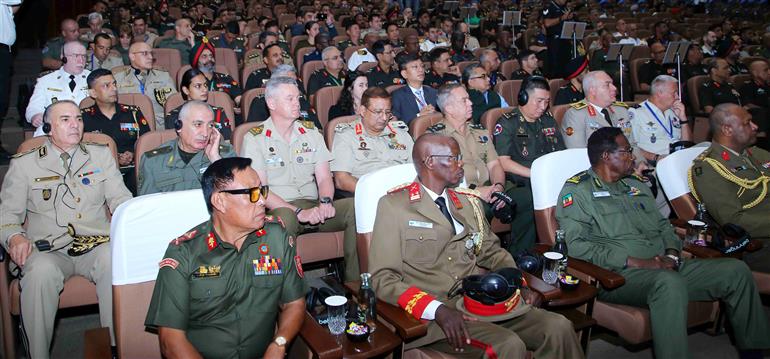
In October 2025, New Delhi stood at the very heart of global peacekeeping as the Indian Army hosted the prestigious United Nations Troop Contributing Countries’ (UNTCC) Chiefs’ Conclave. From 14 to 16 October, delegations from 32 nations—spanning continents and cultures—gathered at the iconic Manekshaw Centre to deliberate on the future of UN peacekeeping. This conclave, a first-of-its-kind event hosted by India, symbolized not only India’s steadfast commitment to international peace but also the spirit of Vasudhaiva Kutumbakam— “the world is one family.”
The conference brought together the senior military leadership of nations that form the backbone of UN peacekeeping missions across the world. Delegations representing countries from Asia, Africa, Europe, and the Americas reached New Delhi on 13 October 2025, ready to engage in dynamic discussions on operational challenges, new-age threats, interoperability, inclusivity in decision-making, and the transformative role of technology and training in modern peacekeeping. The gathering underscored how collective experience and shared resolve can enhance the effectiveness of global peace operations.
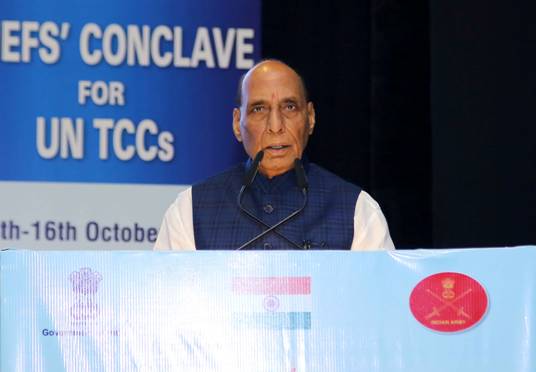
Raksha Mantri Shri Rajnath Singh inaugurated the conclave with an inspiring address that resonated deeply with military leaders and peacekeeping experts alike. He put forward the guiding principle of *Consultation, Cooperation, Coordination, and Capacity Building*—the “4C” formula—as the cornerstone for all countries committed to the UN’s peacekeeping mandate. He eloquently highlighted that the peacekeepers of today are operating in increasingly complex environments, where asymmetric warfare, terrorism, fragile political settlements, and humanitarian crises frequently intersect. In such contexts, he stressed, peacekeeping requires not only courage but also adaptability, communication, and innovation.
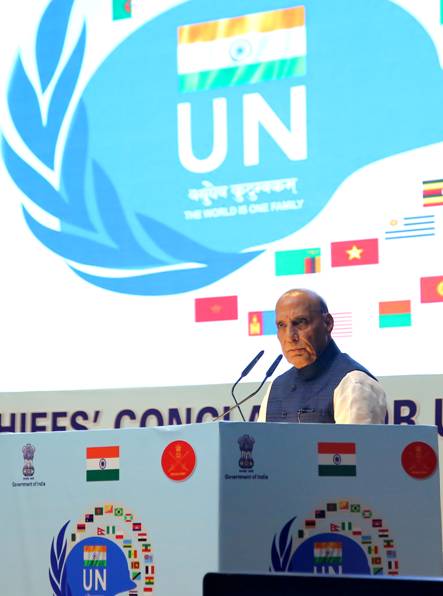
In his address, the Raksha Mantri emphasized the need for advanced nations to shoulder greater responsibility by providing enhanced logistical, financial, and technological assistance. The inclusion of secure communication systems, surveillance tools, and unmanned platforms, he noted, could significantly improve both the safety and efficiency of peacekeepers deployed across volatile regions. These innovations are not just luxuries—they are vital enablers of mission success in today’s rapidly evolving conflict zones.
Equally thought-provoking was Shri Rajnath Singh’s call for *reformed multilateralism*. He underscored that outdated global structures are ill-equipped to meet the realities of contemporary conflict and called for reforms that give an equitable voice to all stakeholders. Only through inclusive global dialogue, he argued, can peacekeeping truly address the root causes of conflict and restore confidence in the UN’s noble mission.
Peacekeeping has always been one of the noblest missions of the United Nations — a pursuit to calm conflicts, rebuild societies, and defend humanity from the forces of division. Among all the nations that have walked alongside this endeavour, India stands as a pillar of commitment, innovation, and moral strength. Shri Rajnath Singh’s recent remarks brilliantly captured how India is not only contributing troops but also transforming the very philosophy and practice of peacekeeping in the 21st century.
The Raksha Mantri emphasized a vital truth: peacekeeping is not about mere numbers. It is about preparedness, collaboration, and the spirit of global unity. The Centre for United Nations Peacekeeping (CUNPK) in New Delhi exemplifies this vision. Having trained participants from over 90 countries, it has become a hub of learning and cooperation — a living symbol of India’s leadership in fostering interoperability and mutual understanding among global peacekeepers. This exchange of ideas and experiences strengthens the foundation of every mission, ensuring that peacekeeping is not just an act of intervention but a shared journey of trust and progress.
Under the dynamic vision of Aatmanirbhar Bharat, India’s defence ecosystem has blossomed into a source of innovation for peacekeeping missions worldwide. Shri Rajnath Singh highlighted how India’s indigenous technologies — from secure communications and surveillance systems to unmanned aerial vehicles and advanced medical solutions — are empowering operations with cost-effective, reliable tools. These initiatives underscore India’s ingenuity and its commitment to building a resilient, self-reliant nation that also aids the international community with practical and scalable defence solutions.
One of the most heartening aspects of India’s peacekeeping narrative is the growing participation of women. The transformative inclusion of women peacekeepers has redefined the human dimension of UN missions. India’s all-women Formed Police Unit, deployed to Liberia in 2007, became a beacon of empowerment — their professionalism and compassion inspiring local women to join the Liberian police force. Today, Indian women officers serve in regions like South Sudan, the Golan Heights, and Lebanon, not only maintaining peace but also mentoring local communities and nurturing trust. The 2024 recognition of an Indian Army woman peacekeeper with the UN Military Gender Advocate of the Year Award is a proud testament to their courage and leadership.
The humanitarian spirit of Indian peacekeepers extends far beyond the battlefield. Indian medical teams have healed thousands of peacekeepers and civilians in field hospitals across Africa, often under testing conditions. Their unflinching service mirrors the very ethos of India — where compassion, service, and peace form the moral bedrock of every mission undertaken.
Beyond technology and fieldwork lies India’s more profound aspiration: to be a *Vishwa Guru* — a universal teacher, not through dominance, but through the sharing of wisdom and values. Shri Rajnath Singh rightly emphasized that the call for a rules-based international order and the belief in harmony and non-violence stem directly from India’s philosophical roots. The teachings of Mahatma Gandhi — that peace is not simply the absence of war but the presence of justice, truth, and moral strength — continue to guide India’s worldview.
As Chief of the Army Staff, General Upendra Dwivedi reaffirmed, India’s legacy in peacekeeping is rich with excellence and innovation. Through the CUNPK and Aatmanirbhar Bharat initiatives, India is championing scalable, inclusive, and future-ready solutions for global peace operations. With the steadfast support of its defence leadership and the cooperation of international partners, the country’s contributions to the UN’s cause are stronger than ever.
In essence, India’s peacekeeping journey embodies the spirit of collective humanity — where courage meets compassion, and innovation serves peace. As global challenges evolve, India’s unwavering commitment and leadership promise not only to uphold harmony but to inspire the world toward a more just, inclusive, and peaceful tomorrow.
The Spirit of Global Partnership: India and the Future of UN Peacekeeping
The UN TCC Chiefs’ Conclave emerged as a dynamic platform celebrating both collaboration and vision for the future of peacekeeping. The gathering was graced by Mr. Jean‑Pierre Lacroix, Under Secretary‑General of the United Nations Department of Peace Operations (DPO), whose words set an inspiring tone for the proceedings. He commended India’s leadership in convening the Conclave and underscored the pivotal role of troop‑contributing countries (TCCs) in shaping the credibility and sustainability of United Nations missions. In an age marked by asymmetric threats, complex political environments, and daunting humanitarian challenges, Mr. Lacroix’s message was clear: the strength of UN peacekeeping lies in the unity and commitment of its contributors.
Ambassador Parvathaneni Harish, India’s Permanent Representative to the UN, further invigorated the audience with his address on “The Future of Peacekeeping: A Perspective on Collective Security.” Highlighting India’s remarkable legacy of contributing nearly 300,000 troops to more than 50 UN missions, he reaffirmed the nation’s steadfast dedication to global peace and justice. His call to restore peacekeeping to its core purpose resonated deeply—he pressed for realistic mandates, adequate resources, robust safety measures for personnel, gender inclusion, and the integration of technological innovation. Ambassador Harish also emphasized India’s “No National Caveat” policy, reflecting transparency, accountability, and an unwavering sense of duty. His tribute to women peacekeepers, especially India’s pioneering all-female police contingent in Liberia, illustrated how inclusivity and courage continue to redefine peacekeeping.
The day’s three plenary sessions on “The Way Ahead for UN Peacekeeping Operations” became engines of reflection and forward thinking. Chiefs and representatives of various TCCs shared invaluable insights drawn from diverse operational experiences. Their collective voice called for more inclusive mandate‑setting, enhanced interoperability, and innovative training methodologies that keep pace with the changing face of conflict. A recurring theme was the responsible use of emerging technologies—a reminder that progress in peacekeeping must be both ethical and effective. Delegates also echoed the necessity of aligning mandates with local realities, ensuring that missions remain credible and deliver tangible outcomes to communities yearning for peace.
In the spirit of camaraderie and partnership, Gen Upendra Dwivedi, Chief of the Army Staff (COAS), held bilateral meetings with the Army Chiefs of Kazakhstan, Kyrgyzstan, and Vietnam, building on earlier engagements with counterparts from France, Mongolia, Uruguay, Sri Lanka, and Bhutan. These discussions were rooted in a shared commitment to strengthen defence cooperation and enhance coordination in future peacekeeping ventures. Lt Gen Pushpendra Singh, Vice Chief of the Army Staff, similarly engaged with delegations from Italy and Armenia, reinforcing India’s proactive stance on collaborative security and capacity building among friendly nations.
The Conclave thus stood as a testament to India’s leadership and the global community’s shared aspiration for peace. It was not merely a meeting of military and diplomatic minds but a celebration of collective resolve. The spirit that animated the discussions promises to guide the UN peacekeeping enterprise toward a future where solidarity, innovation, and compassion continue to safeguard humanity’s most cherished ideal—peace.
India’s leadership in organizing the UNTCC Conclave was both timely and symbolic. As one of the largest and most respected contributors to UN peacekeeping operations, India’s experience spans more than seven decades and over 50 missions. Nearly 2,90,000 Indian soldiers, police officers, and medical professionals have served under the UN flag, earning global admiration for their professionalism, bravery, and compassion. From the battlefields of Korea and the jungles of Congo to the humanitarian relief missions in South Sudan and Lebanon, Indian peacekeepers have left an indelible mark on the global quest for peace.
The 2025 UNTCC Chiefs’ Conclave stands as a shining example of what international cooperation can achieve when nations come together with shared purpose and vision. By fostering candid discussions, sharing best practices, and embracing innovation, the Conclave strengthened the collective resolve of troop-contributing nations to build a safer and more peaceful world. More importantly, it reaffirmed the idea that peacekeeping is not merely a military mission—it is a humanitarian calling that binds nations in mutual trust, respect, and hope.


